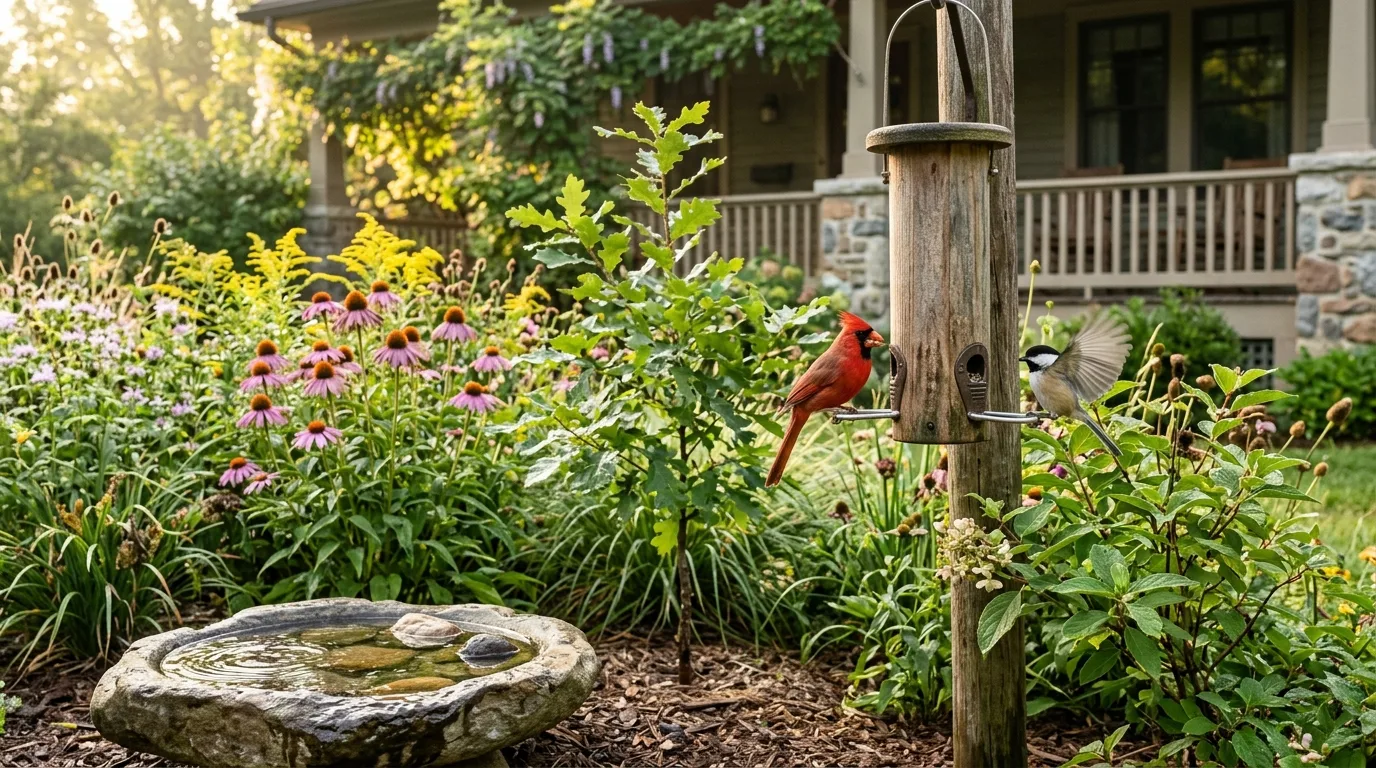
Most advice on how to attract birds to your yard starts and ends with a feeder. Hang one, fill it with a cheap seed mix, wait. And it works, a little — you'll get house sparrows and the occasional cardinal. But a feeder is the smallest lever you have, and leaning on it alone is why so many yards stay quiet.
The bigger truth, the one the research keeps pointing at, is that birds go where the habitat is. They need four things: food, water, shelter, and somewhere to raise young. Give them all four and you stop running a snack bar and start running a place worth living. One Georgia naturalist put the priorities bluntly: "you can attract more wildlife to your backyard with water than food". And the single biggest food source in any yard isn't seed at all — it's the insects that native plants produce, because 96 percent of land birds rely on insects to feed their chicks.
So if you want the short version: plant native, add water, then feed smart and keep the yard safe. The feeder is the fun part, not the foundation. Here's how to do all of it, ranked roughly by how much it actually moves the needle.
Why this matters more than it used to
There's a reason to bother beyond the pleasure of a busy window. North America has 2.9 billion fewer breeding birds than it had in 1970 — a 29 percent net loss, more than one in four. The losses hit common, beloved species hardest: 90 percent of them come from just 12 bird families, including sparrows, warblers, finches, and swallows. "We were astounded by this result of a net loss across all birds on the continent," said Ken Rosenberg, who led the landmark 2019 study.
The flip side is genuinely hopeful. The same study shows waterfowl up 56 percent and hawks and eagles up 78 percent, with Osprey populations more than quadrupled — proof that when people act, birds come back. Your yard is a small piece of that. A patch of native plants, a clean water source, a window birds can see — these add up across a neighborhood.
Start with native plants (the move almost nobody makes)
If you do one thing, do this. Native plants are the closest thing to a cheat code for a bird-rich yard, and they're the step most people skip because it isn't as instant as a feeder.
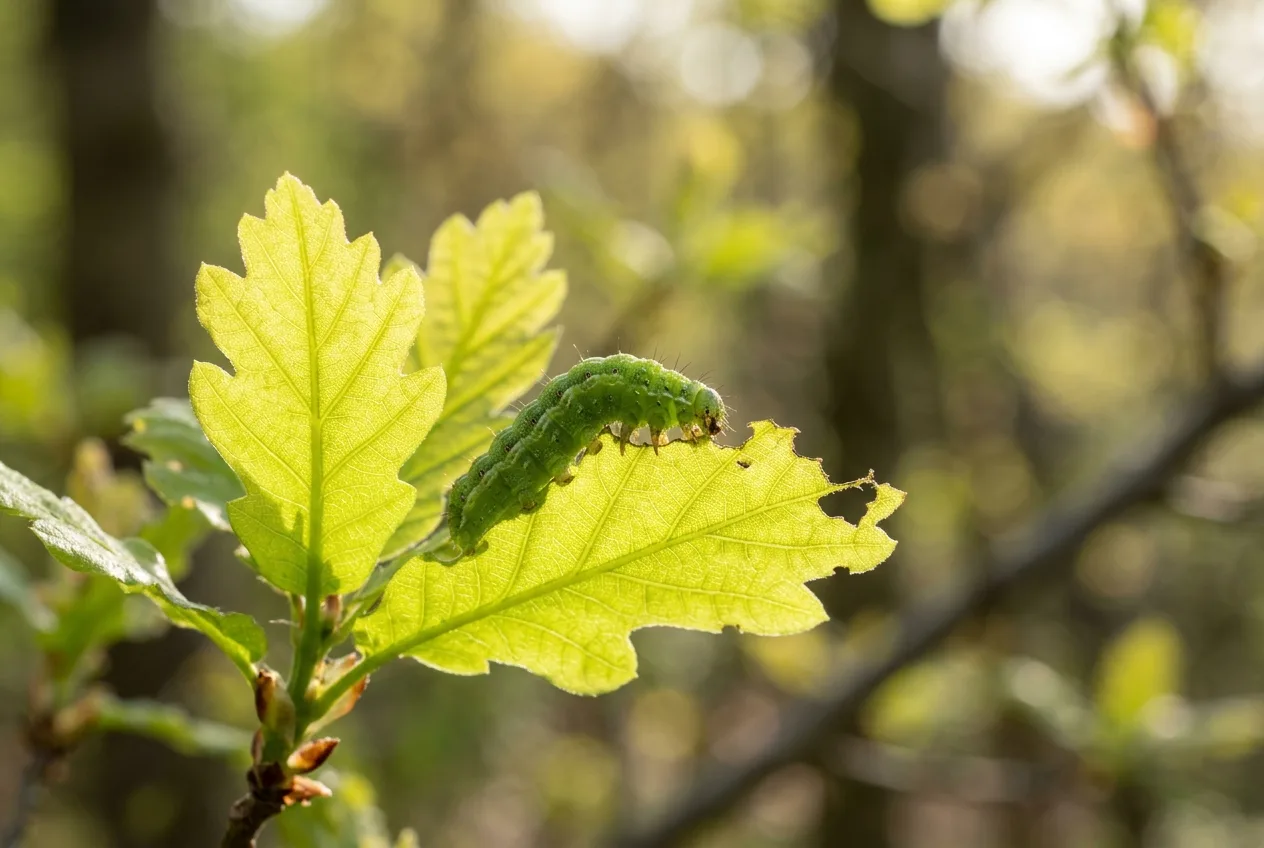
The logic runs through bugs. Native trees, shrubs, and wildflowers coevolved with local insects over millions of years; the caterpillars and other insects that birds need to raise their young can only thrive on the plants they evolved alongside. A non-native ornamental is, to a caterpillar, mostly inedible. The numbers are stark: a native oak supports 557 species of butterflies and moths, while a non-native ginkgo supports just 5.
And not all natives pull equal weight. Entomologist Doug Tallamy's research found the work is wildly lopsided — 90 percent of what caterpillars eat is produced by only 14 percent of native plant species, the ones he calls "powerhouse plants," with just 5 percent of those powerhouses accounting for 75 percent of all caterpillar food. "The magnitude of the differences surprised us," Tallamy said. "It is extremely skewed toward these powerhouse plants". His advice for where to start is refreshingly simple: "Start with oaks." A single oak can feed more than 500 kinds of caterpillars, which is exactly why oaks anchor a food web.
You don't need a forest. Here's how to think about it:
- Plant for bugs first. Oaks, willows, birches, and maples are caterpillar factories; native goldenrod, milkweed, and sunflowers carry their weight among herbaceous plants. These feed the nestlings — remember, 98 percent of songbirds feed their young insects.
- Layer in fruit and seed. Serviceberry and cherry ripen for breeding season; dogwood and spicebush fuel fall migrants; cedar and holly carry birds through winter. Native sunflowers, asters, and coneflowers throw off the tiny seeds finches and sparrows love. Rose-breasted Grosbeaks lean so hard on native berries during fall migration that fruit makes up 95 percent of their diet then.
- Add red tubular flowers for hummingbirds — native columbine, penstemon, and honeysuckle serve up nectar without a feeder in sight.
- Plant in masses. Group five or more of the same species; it looks better and pollinators prefer feeding from a block of one flower.
If you want specific birds, plant their plants. Sparrows want blackberry thickets and wild grasses. Cardinals, grosbeaks, and tanagers go for sunflowers, elderberries, and serviceberries. Chickadees and titmice are drawn to birches and sumacs. Crows and jays want oaks and beeches for the mast crop. It's no accident — "birds and native plants are made for each other, thanks to millions of years of evolution".
Audubon keeps a free native-plant database you can search by zip code, which beats guessing.
If you want specific birds, plant their plants.
Then put out water — the cheapest big win
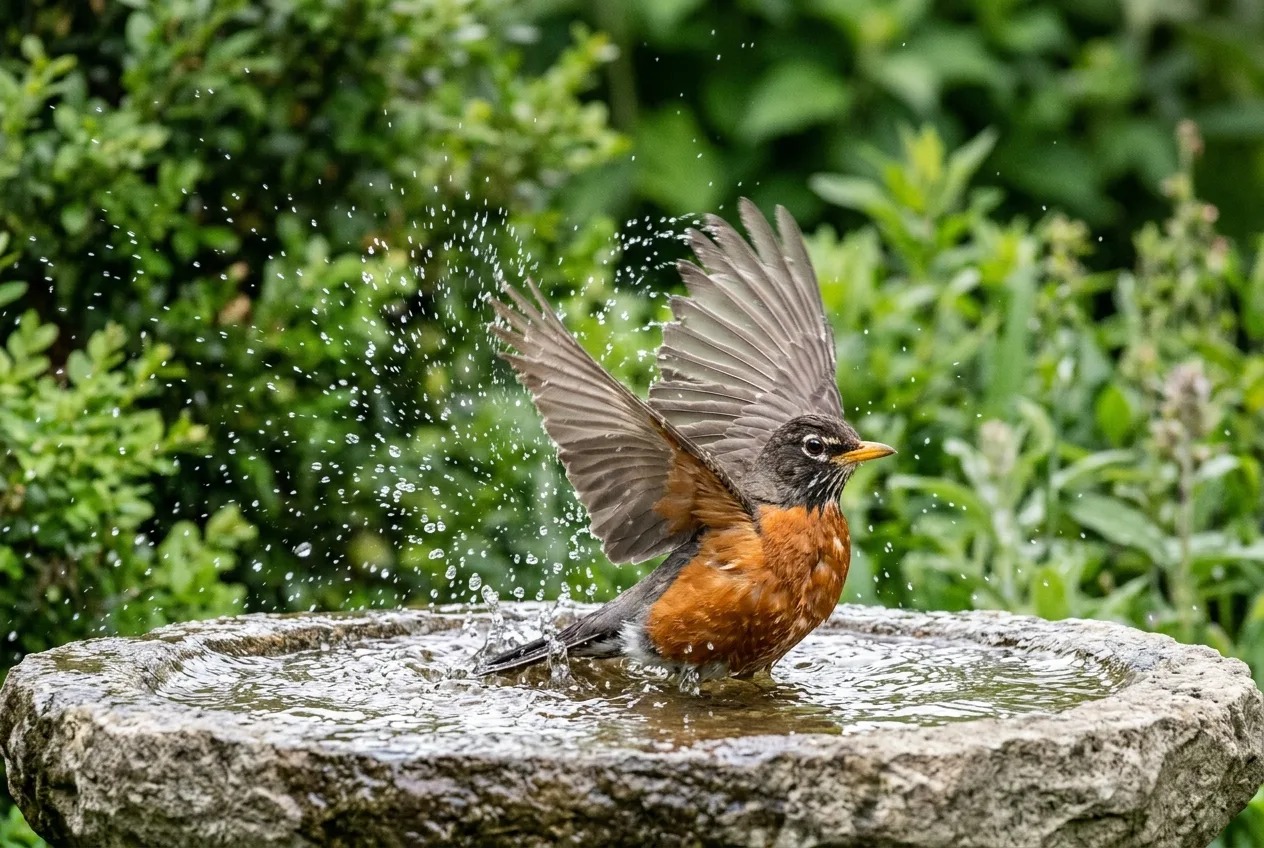
Water is the most underrated thing in this whole list. Every bird needs it to drink and bathe, year-round, and a lot of birds that will never touch your feeder will visit a birdbath. Some backyard enthusiasts have logged at least 65 species of birds using the water features in a single yard.
The mistakes people make are all about depth and placement. Birds want shallow. The best baths "have rough, gently sloping bottoms and are only 1½ to 2 inches deep at their deepest point" — shallow enough for a chickadee, with a slope a robin can wade into. If yours is a deep concrete bowl, don't toss it: drop in a layer of coarse gravel or a sloping rock to bring the water up. A smooth, slick surface gives small birds nothing to grip, which is also why ground-level dishes work well with a few stones arranged for perching, especially in winter.
Two more things matter:
- Movement is a magnet. "The surest way to increase use of a birdbath is by creating moving water," and the simplest version costs nothing: punch a tiny hole in a bucket or two-liter bottle, fill it, and hang it so it drips into the bath. The sound and sparkle pull birds in, and the same trick gets cited again and again — a drip or a mister can bring birds "flocking during migration".
- Keep it away from ambush cover and keep it clean. Place the bath no closer than 15 feet from a shrub or small tree so a cat or hawk can't launch a surprise attack from point-blank range. Where cats prowl, a pedestal bath three feet up gives a soaked, heavy-feathered bird a better shot at escaping. Change the water regularly — standing water breeds mosquitoes. In freezing climates a birdbath heater keeps it usable; never add antifreeze, which is poisonous to everything.
Water is the most underrated thing in this whole list.
Now the feeders — and which seed actually earns its keep
Feeders are where this guide started because they're what everyone reaches for. They're great. Just treat them as the supplement, not the meal.
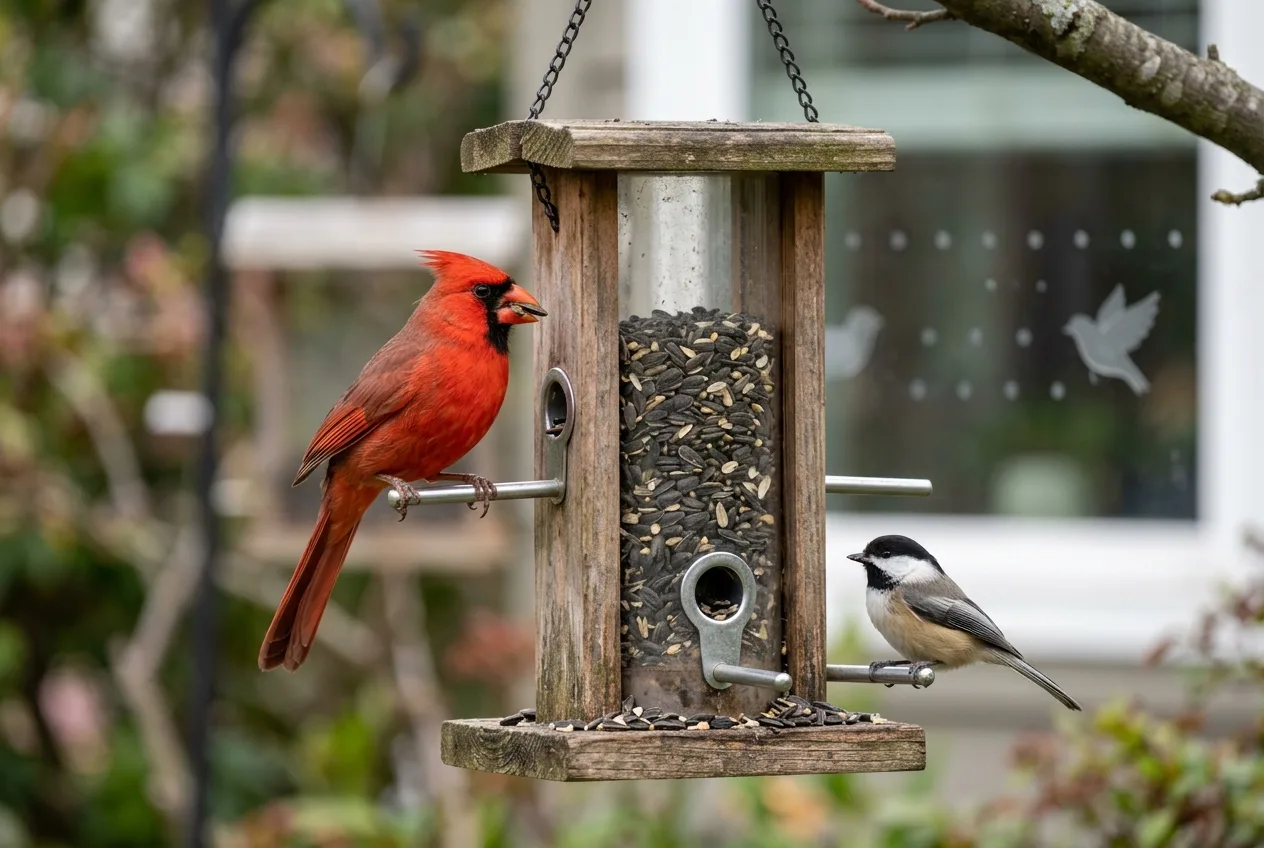
If you buy one seed, buy black-oil sunflower. It's "the most common type of seed offered at feeders in North America" for a reason: high oil content, thin shell that small birds can crack, and it pulls in the widest variety — cardinals, chickadees, finches, sparrows, even the occasional woodpecker. WVU's extension flatly calls sunflower the seed that "attracts the largest variety of birds". Striped sunflower has a thicker shell that favors bigger-billed birds like jays and cardinals but stumps the little guys.
Beyond that, match the seed to the bird:
| Food | Who it brings | Notes |
|---|---|---|
| Black-oil sunflower | Cardinals, chickadees, finches, sparrows, woodpeckers | The all-rounder; start here |
| Nyjer (thistle) | Goldfinches, Pine Siskins, redpolls | Needs a special small-port feeder; offer it alone |
| White proso millet | Juncos, sparrows, doves | Cheap; scatter on the ground |
| Peanuts / peanut hearts | Jays, chickadees, titmice, nuthatches, woodpeckers | High energy; watch for mold |
| Safflower | Cardinals, big-billed birds | Most birds prefer sunflower, but useful |
| Suet | Woodpeckers, nuthatches, chickadees, wrens | Cool-weather only; goes rancid in heat |
| Mealworms | Bluebirds, chickadees, titmice, wrens | "One of the only food items that reliably attract bluebirds" |
| Fruit (orange halves, raisins) | Orioles, robins, waxwings, mockingbirds, bluebirds | Fruit specialists rarely touch seed |
A word on cheap mixes: skip the ones loaded with milo, the reddish round grain that fills out bargain blends. "It is not a favorite of most birds, and the seed often goes to waste," especially in the East. Birds toss it on the ground, and that wasted seed is exactly what draws rodents. A better move is to offer different seeds in separate feeders so sunflower specialists aren't flinging millet everywhere.
The feeder itself should suit the birds you want. Sparrows, juncos, doves, and towhees "prefer to feed on large, flat surfaces" and may never land on a hanging feeder — give them a platform or a scoop of seed on the ground. Tube feeders with short perches let finches in and keep grackles and jays out. Hopper feeders keep seed dry and draw a broad crowd. For suet, a cage that's open only at the bottom is a quiet bit of genius: woodpeckers, nuthatches, and chickadees feed clinging upside down, while European starlings — which don't like that pose — are largely shut out.
It pays to feed at different heights, too, because different birds forage at different levels: ground feeders down low, finches and cardinals in the shrubs, woodpeckers and chickadees up in the trees.
Hummingbird nectar, done right
Hummingbird feeders come with more myths than any other, so here's the clean version. The recipe is one part white sugar to four parts water — a quarter cup of sugar in a cup of water. Boil it briefly to dissolve the sugar and sterilize, then cool it before filling; you can refrigerate the extra.
The rules that matter:
- Never use honey — fermented honey can cause a fatal fungal disease in hummingbirds — and skip brown sugar, molasses, and artificial sweeteners.
- Skip the red dye. It's unnecessary and the coloring chemicals "could prove to be harmful"; the red on the feeder itself does the attracting.
- Clean often. In hot weather, empty and clean the feeder every day or two; every three days in mild weather; twice a week when it's cool — and immediately if you see mold or a sick bird.
Put the feeder out about a week before hummingbirds normally return to your area. And no, leaving it up in fall won't strand them — hummingbirds migrate on cues from day length and the angle of the sun, "not a lack of nectar source or colder weather".
They're great. Just treat them as the supplement, not the meal.
Add shelter and a place to nest
Food and water bring birds in; cover keeps them around. Place feeders near natural cover like trees or shrubs so birds have a refuge while they wait their turn — evergreens are ideal, hiding birds from predators and blunting winter wind. But don't tuck a feeder right against branches that give squirrels and cats a launch pad; about 10 feet of clearance is a sensible compromise. A loosely stacked brush pile near the feeder gives ground birds like Song Sparrows a place to dive for cover.
Then resist the urge to tidy. A slightly messy yard is a bird-friendly yard:
- Don't rake all the leaves. Leaf litter and woody debris shelter the insects and moth pupae that baby birds eat.
- Leave the seedheads. Spent flowers left standing feed birds through fall and winter.
- Keep dead trees where it's safe to. Standing snags become nest cavities for chickadees, titmice, nuthatches, bluebirds, Tree Swallows, and more.
- Lose some lawn and lay off the pesticides. There are 40 million acres of lawn in the U.S. and 80 million pounds of pesticides dumped on them yearly; a diverse native planting keeps pests in check on its own.
Where natural cavities are scarce, nest boxes fill the gap. "For many species of birds, there is a shortage of great places to nest," and NestWatch offers free, downloadable nest-box plans for a wide range of cavity-nesters — bluebirds, swallows, wrens, woodpeckers, owls, even Wood Ducks. Get the details right, because they're species-specific: the entrance-hole size, mounting height, and timing that suit a bluebird are different from what a Tree Swallow or a screech-owl needs, so match the box to the bird you're after rather than buying a generic "birdhouse." NestWatch's per-species plans spell out those numbers — start there before you build or place a box. A couple of principles hold across the board: mounting small boxes on free-standing metal poles or PVC pipe rather than on trees makes life harder for climbing predators, and you'll want them sited away from anywhere you spray pesticides. How to Set Up a Nest Box and Watch It With a Camera
Food and water bring birds in; cover keeps them around.
Keep your yard from killing the birds you attract
This is the part the cheerful guides skip, and it's the part that separates a yard that helps birds from one that quietly hurts them. You're concentrating birds; you owe them a safe place.
Windows are the big one. Birds don't see glass — "transparent glass is invisible to both humans and birds," and when a bird sees sky or your shrubs reflected in a window, "they perceive it as habitat" and fly straight in. The toll is staggering: somewhere between 365 million and 1 billion birds a year in the U.S., with a median estimate of 599 million, and a 2024 study put the real number above a billion. Counterintuitively, it's not skyscrapers doing most of the damage — low-rise homes and small buildings account for the largest share, roughly 253 million deaths a year, simply because there are so many of them. Worse, the body count is undercounted: many birds fly off with internal injuries and die later, and one estimate found only about 20 percent of victims are ever found. The 2024 study drove that home — even with expert rehabilitation, 60 percent of collision victims died of their injuries. As researcher Kaitlyn Parkins put it, "Birds generally cannot see or recognize glass".
What works:
- Break up the reflection on the glass. Decals, films, paracord strings, external screens — the rule that matters is spacing. Markers must leave "no spaces more than two inches wide," or a bird will simply aim for the gap, and the pattern needs to be visible from at least 10 feet away. Widely spaced hawk silhouettes don't cut it.
- If your windows are dirty during migration, leave them. Grime makes glass easier for birds to see.
- Mind feeder distance. Audubon and WVU recommend placing feeders within three feet of the glass, so a startled bird can't build up dangerous speed before impact. It's worth knowing this one isn't fully settled — Virginia's wildlife agency notes that current research "does not provide a clear answer" on the ideal feeder-to-window distance, so they leave the specific number out. The safer read: very close (under three feet) or well away, not in the dangerous middle distance — and treat the glass itself with markers regardless.
Keep cats indoors. There's no soft way to say it. Outdoor cats kill an estimated 2.4 billion birds a year in the U.S., which makes them "the top source of direct, human-caused bird mortality" in the country. They're especially lethal in spring when fledglings are on the ground, and they pick off birds already dazed by window strikes. Bells on collars don't reliably work. A catio or a leashed stroll gives a cat fresh air without the carnage.
Keep the feeders clean, because a dirty feeder spreads disease. Crowding birds at a shared food source is exactly how illness moves. House Finch eye disease leaves birds with "red, swollen, runny, or crusty eyes" and can blind them; salmonellosis spreads through droppings in the seed and regularly kills Pine Siskins, redpolls, and goldfinches. The protocol isn't complicated: clean feeders and baths about every two weeks (more in heavy use or damp weather), wash off debris with hot soapy water, then soak in a dilute bleach solution — nine parts water to one part bleach — for 10 minutes, rinse well, and dry completely before refilling. Rake up spilled seed and droppings underneath, where mold and bacteria build up. One pointed tip from Virginia's agency: skip open tray feeders, because "birds poop as they feed, contaminating seed in the tray". And if a visibly sick bird shows up, take the feeders down for a couple of weeks to let the birds disperse and break the chain — "prevention is the key to avoiding the spread of disease".
One more, depending on where you live: if a bear finds your feeder, the feeding season is over for a while. Bears are wild for black-oil sunflower, and once one connects your yard with an easy meal it will keep coming back. Take the feeders down for at least two weeks until it moves on; in much of bear country, feeders are best left in only from late fall through late winter.
The payoff — and a way to see who's really showing up
Do the work and the yard changes. The feeder crowd is just the visible slice; the platform feeders and brush piles and the bath pull in ground birds and shy species you'd otherwise miss. In Pennsylvania, dark-eyed juncos turn up at 97 percent of winter feeders, mourning doves at 94, tufted titmice at 93, cardinals at 91 — and a well-planted yard there can host 35 species over a winter.
Start with native plants and water this season, get the feeder and the glass right, keep the cat in — and let the yard fill in. The birds were always out there. You're just building them a reason to stop.
Frequently asked questions
What is the single best way to attract more birds to my yard?
Plant locally native plants. They produce the insects birds need to raise their young — 96 percent of land birds feed insects to their chicks — and a native oak supports 557 kinds of butterflies and moths versus 5 for a non-native ginkgo. A feeder helps, but native plants do the heavy lifting.
What seed attracts the most birds?
Black-oil sunflower seed. It has a high oil content and a thin shell that small birds can crack, and it draws the widest variety — cardinals, chickadees, finches, and sparrows among them. If you only buy one seed, buy that one.
How deep should a birdbath be?
Shallow — only about 1½ to 2 inches at the deepest point, with a rough, gently sloping bottom so small birds can wade in safely. If your bath is deeper, add coarse gravel or a sloping rock to raise the water level.
How do I stop birds from hitting my windows?
Make the glass visible. Apply decals, film, or strings with no gaps wider than two inches, visible from at least 10 feet away — widely spaced markers fail because birds aim for the openings. Placing feeders within three feet of the window also keeps startled birds from building up dangerous speed.
Do I need to take down my hummingbird feeder in fall so they migrate?
No. Hummingbirds migrate based on day length and the angle of the sun, not on whether nectar is available, so leaving a feeder up won't keep them from leaving — it may just help a late migrant refuel.
How often should I clean my bird feeders?
About every two weeks, and more often in heavy use or wet weather. Wash off debris, soak in a nine-to-one water-to-bleach solution for 10 minutes, rinse, and dry fully before refilling. Hummingbird feeders need cleaning every two to five days, daily in hot weather.