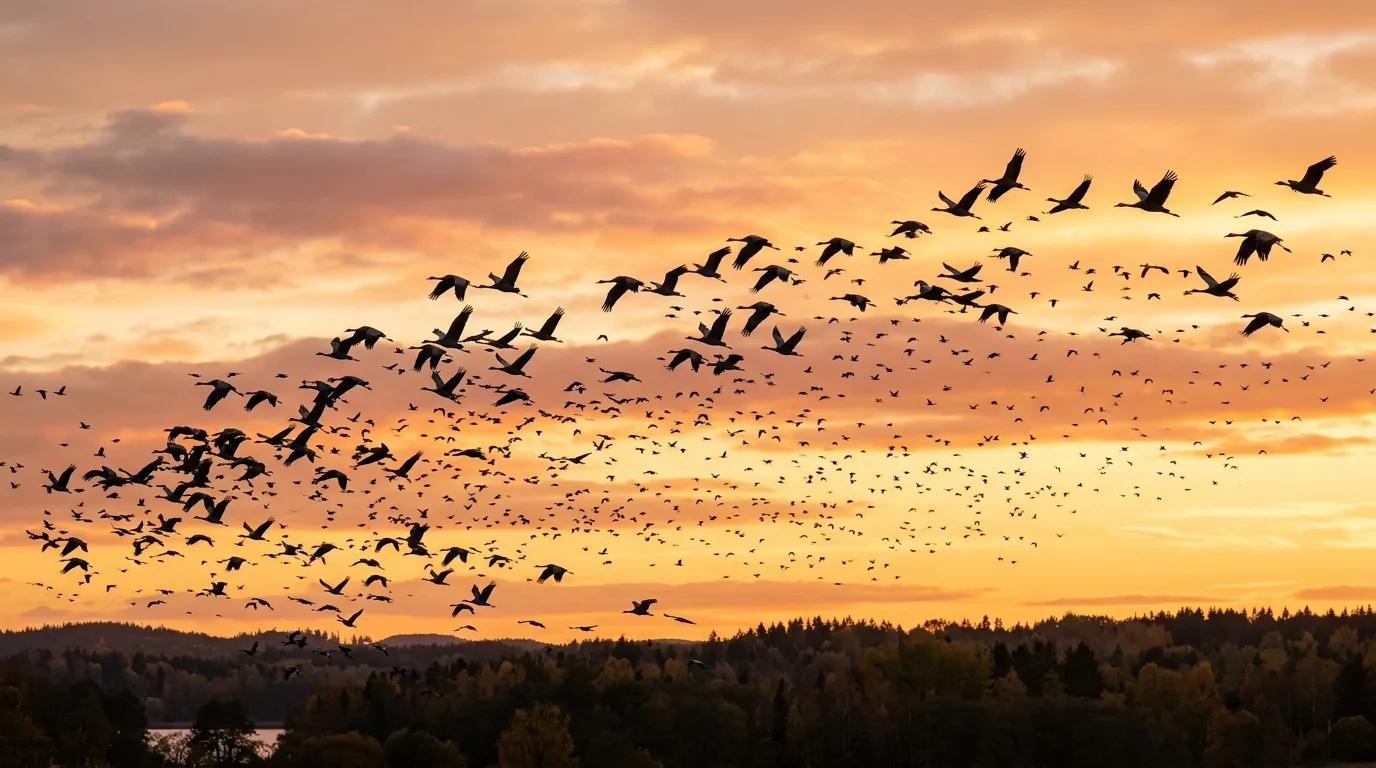
Here is the thing nobody tells you about fall migration: it has already started by the time you notice it. While the rest of us are still thinking about summer, the first shorebirds are heading for the coast — in the Northern Hemisphere, some adult sandpipers turn south not long after the longest day, weeks before a single leaf has turned. By the time the trees are bare, the last geese are still trickling through. Fall migration isn't an event. It's a slow, layered procession that runs for months, and the trick to watching it is knowing which layer is moving when.
Spring gets all the press — the dawn chorus, the warblers dripping off the trees in fresh color, the feeders suddenly busy. Fall is quieter, longer, and in some ways more interesting. Many of the birds passing over are juveniles you've never seen before, making their first journey with no adult to follow. The drama is in the radar, the wind, and the count totals — not the soundtrack.
This is a guide to that procession: what actually drives birds to leave, why fall behaves so differently from spring, the order the major groups move in, and how to put yourself in the right place to see it. It's written to travel — the phases and drivers are the same everywhere, but the calendar and the routes are not, so we'll keep flagging which hemisphere and which flyway we're talking about.
What actually makes a bird leave
Strip away the romance and migration is a scheduling problem. A bird has to be in the far north to exploit the brief explosion of summer food and the long daylight for raising young, and somewhere milder when that runs out. The hard part is timing the move — and birds solve it with two systems working together.
The first is an internal calendar. Birds carry an endogenous circannual rhythm, an inherited annual clock that runs even with no outside cues, and it's kept in sync with the real world mostly by photoperiod — the changing length of the day. Day length is the one signal that's perfectly reliable year after year; it doesn't lie the way a warm spell in October might. So the clock uses shortening days to start the machinery: birds put on fat, some organs shrink and others grow, and a restlessness sets in. Caged birds show it plainly — they flutter toward one side of the cage in spring and the opposite side in fall, a behavior the early German researchers named Zugunruhe, "migratory restlessness". It's the urge to go, switched on by the season itself.
Day length tells a bird roughly when to leave. The weather tells it which night to actually fly.
But the clock only sets the window. Within that window, weather calls the shots. Watch the radar on a fall night and you'll see migration switch on and off with the passage of fronts — birds wait out headwinds and pour out on the tailwind behind a cold front. In one of the most detailed radar studies anywhere, on the Levant flyway in the Eastern Mediterranean, temperature turned out to be the single most important weather variable: warm nights substantially increased how many birds were aloft, in both seasons. The internal clock says "this month." The wind says "tonight."
Here's a myth worth killing while we're at it: birds don't migrate to escape the cold. Cold itself isn't the enemy — plenty of species, even hummingbirds, can handle freezing temperatures as long as there's food. They leave because the food leaves. That distinction matters most for waterfowl, which we'll come back to, because it explains why they're the last to go.
Why fall doesn't behave like spring
If you only know spring migration, fall will keep surprising you. The differences aren't cosmetic — they come straight out of the different pressures on the bird in each season.
In spring, the clock is ticking; in fall, it isn't. A bird racing north in spring is trying to claim a territory and a mate before the competition — arrive late and you get the worse real estate. So spring migrants are in a hurry. The Levant radar study caught this beautifully: in spring, when birds hit unfavorable winds, they pushed harder, raising their own self-powered airspeed by about 18% to keep their schedule, and they were noticeably less choosy about wind — they'd launch into headwinds rather than wait. In fall, that urgency is gone. There's far less competition for a wintering spot, so birds can prioritize saving energy over saving time. The upshot for the watcher: fall migration is generally slower than spring, with longer stopovers, and birds are more willing to sit tight until the wind is right. Radar over the continental U.S. backs the scale of it — more than four billion birds stream south in fall, but fewer return the following spring, because not all of them survive the winter and the round trip.
Many birds don't even take the same road back. This is one of fall's best-kept secrets: a huge number of species fly a different route south than they flew north — "loop migration." In North America, scores of species trace a clockwise loop, heading north in spring on a more westerly track and coming south in fall on a more easterly one. The Connecticut Warbler is the poster child: a bird most birders in the U.S. Northeast have essentially no chance of seeing in spring, because in spring it's somewhere to the west. The likely engine is seasonal wind — the prevailing patterns differ enough between seasons that a different route pays off each way. Out on the Pacific, the bar-tailed godwit runs a spectacular version of the same idea: north in spring via the Yellow Sea, then south in fall direct and nonstop across the open ocean to the Southern Hemisphere. Same bird, two completely different journeys.
A Connecticut Warbler is nearly impossible to find in spring in the Northeast — not because it's rare, but because in spring it's taking the other road.
The crowd is younger, and it shows. Fall is the first time a year's new juveniles travel, and for many species they go alone — no parents, no flock of elders, just an inherited program and the sky, often only a couple of months after hatching. That has consequences. Lifetime tracking of white storks found that the first autumn migration is the single riskiest period of a young bird's life. The juveniles that did best were the ones that fledged early and didn't go as far — short-distance, "closer-to-home" young storks survived better, and most of the tracked population ended up wintering in Europe or North Africa rather than pushing deep into the Sahel. When a bird leaves shapes the whole trip, too: storks that departed later took shorter, more direct lines across the Sahara but burned more energy doing it, flying through less supportive winds. The clean version of the lesson, true across species: the youngsters are inexperienced, they move differently from the adults, and fall is when they're tested.
And identification gets harder. A huge share of the movement happens at night, where you can't see the bird at all — so the birder leans more on shape, on flight style, and, increasingly, on sound of a very different kind: the short night flight calls birds give as they pass overhead in the dark, little chips and buzzes that sound nothing like their breeding songs. One study along the Rhode Island coast logged the flight calls of at least 22 songbird species in a single fall — 14 warblers and 8 sparrows — and used them to read the species makeup of the night's migration, something even radar can't do. This is also why "fall warbler" has a reputation as a humbling identification challenge.
The order of the procession
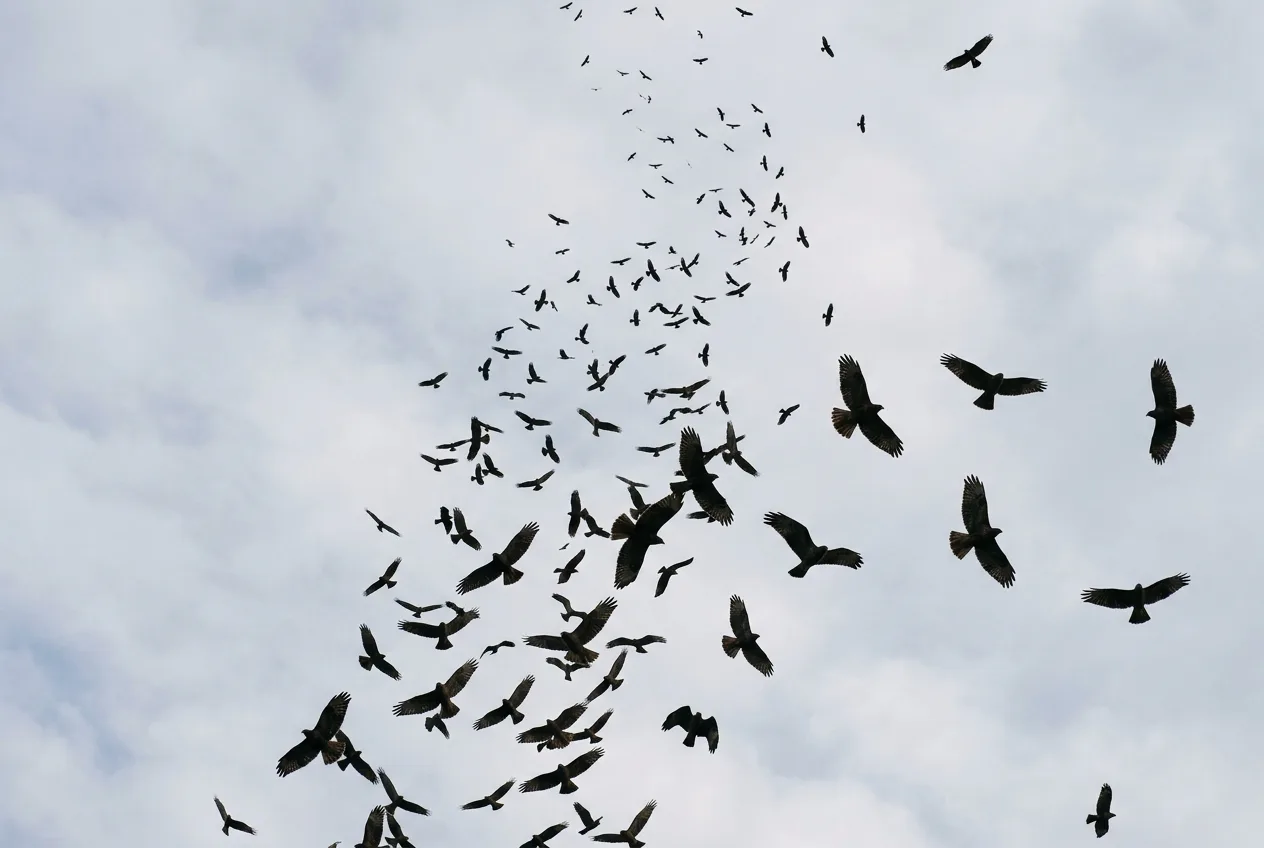
Fall migration moves in waves, and the waves are roughly sequenced by group. Radar over the northeastern U.S. captured the turnover cleanly across one autumn: early in the season the night skies were full of small-to-medium long-distance migrants — shorebirds and songbirds — while late in the season the composition shifted to big-bodied, shorter-distance waterfowl. That's the skeleton of the whole season. Here's how it fleshes out, group by group. (Months below are for the Northern Hemisphere's fall; flip the calendar for the Southern Hemisphere, and see the flyway section for how the routes differ by continent.)
| Group | When they move (N. Hemisphere fall) | What drives the timing | Where to watch |
|---|---|---|---|
| Shorebirds | Earliest — adults can start mid/late summer, juveniles after | Internal clock + favorable winds; they leave the breeding grounds first | Coastlines, mudflats, tidal estuaries, sewage ponds, flooded fields |
| Raptors | Through the middle — broad fronts of soaring hawks peak around mid-autumn | Thermals + wind; big days follow cold fronts | Ridgelines, coastlines, and narrow land/sea crossings (hawk-watches) |
| Songbirds | Through the middle — long stretch, peaking mid-autumn | Night flights on tailwinds behind fronts | Anywhere, but coastal/migrant traps concentrate them after fallouts |
| Waterfowl | Latest — can run right up to freeze-up | Cold and snow that lock up food and water, not the calendar | Lakes, rivers, marshes, coastal bays |
Shorebirds: gone before you're ready
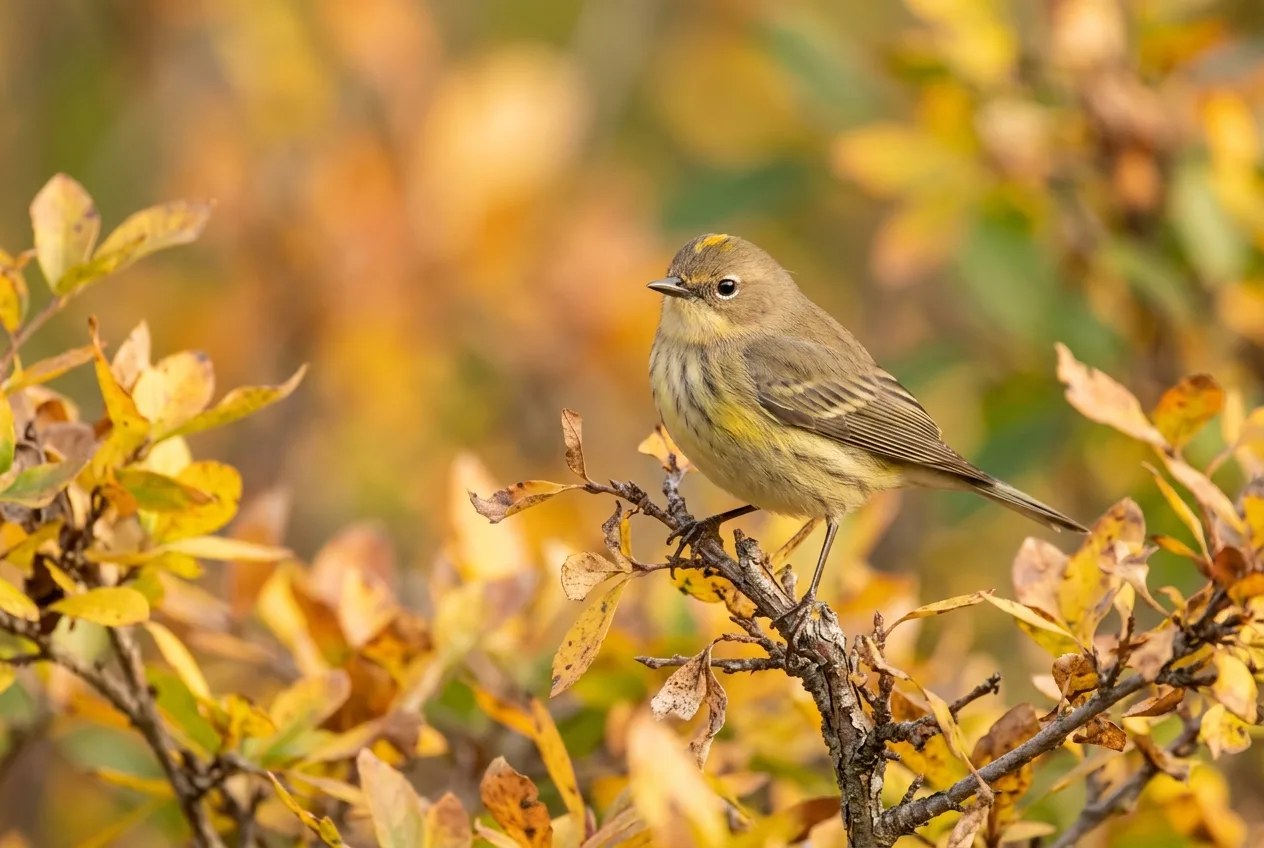
Shorebirds are the leading edge. Many adults peel off the Arctic breeding grounds remarkably early — while it still feels like summer to us — and the radar turnover confirms they're among the first long-distance migrants in the night sky. Their schedule has a poignant twist: in many species the adults leave first and the juveniles follow weeks later, finding their own way to a coastline they've never seen.
This is also where fall migration goes properly global, because shorebirds run some of the planet's longest flights and they don't all run on a Northern-Hemisphere calendar. On the East Asian–Australasian Flyway — the chain of coasts and wetlands linking Arctic Russia and Alaska to Southeast Asia and Australasia — birds heading "south" for the austral summer time their departures to the monsoon winds, riding seasonal tailwinds the way North American birds ride the wind behind a cold front; a shift in wind direction at the breeding grounds is the signal to go. The Yellow Sea is the great pinch-point on that route: surveys of Korean tidal flats counted on the order of a quarter-million shorebirds on northward passage, with habitat loss from coastal reclamation steadily eroding the staging grounds these birds can't skip.
At the far end, in Australia, the seasons are inverted: 37 migratory shorebird species arrive for the austral spring and summer, most of them spending up to six months there and only about six weeks on their Northern-Hemisphere breeding grounds. On Queensland's Moreton Bay the birds start arriving from late August, build through late September, then turn around and head north again from March — and they stagger their exits, with Eastern Curlews among the first to leave and stage in the Yellow Sea. The single most jaw-dropping fact in all of this belongs to a juvenile. A four-month-old bar-tailed godwit tagged in Alaska and known as "B6" flew nonstop for 11 days — about 13,560 km (8,425 miles) — from Alaska to Tasmania, a world record, on its very first migration, with no adult to show it the way.
A four-month-old godwit flew eleven days without landing, from Alaska to Tasmania, on its first trip — and no adult showed it the route.
Raptors: the show with a schedule and a weather report
If shorebirds are the hardest group to catch in the act, raptors are the easiest — and the most addictive. Most hawks, eagles, and falcons migrate by day, riding rising air, and that habit makes them gloriously countable. Soaring birds save enormous energy by gaining height in a thermal and gliding to the next one, but thermals form over land, not water — so where the geography forces birds to avoid a long water crossing, they pile up into rivers of raptors. Hawk-watchers call the spiraling flocks "kettles."
These funnels are where the counting happens, and they're worth a pilgrimage. Birds concentrate along prominent mountain ridges, coastlines, and river valleys, which is exactly why hawk-watch sites sit where they do. In eastern North America, Hawk Mountain in Pennsylvania has run the longest-running raptor count in the world — since 1934 — tallying around 18,000 raptors across a roughly mid-August-to-mid-December season, with single September days topping 3,000 birds when the broad-winged hawks pour through. That mid-September broad-wing pulse is the signature event of the eastern North American season; the site's long records include a single-day count of over 21,000 broad-wings. The species take their turns across the autumn — falcons and kestrels early, the broad-wing surge in mid-September, accipiters and red-tails through October, and golden eagles and vultures bringing up the rear in November and December.
The reason hawk-watchers obsess over the forecast is simple: the flight is weather-driven. At Hawk Mountain, the best flights come one to two days after a cold front passes, on northwest winds. On calm, sunny days the birds ride strong midday thermals and climb so high they're hard to pick out; early and late in the day, with the sun low and the air cooler, they fly lower and closer. A windy day can put birds in the air from dawn to dusk.
And this is emphatically not just a North American story. The East African–Eurasian flyway funnels soaring migrants — eagles, buzzards, harriers — through a handful of legendary bottlenecks where Europe and Asia pinch down toward Africa: the Bosphorus, the Strait of Gibraltar (where the continents are barely 25 km apart), Suez, Bab-el-Mandeb, and the Batumi gap on the eastern Black Sea, among ten major sites where over a million birds can pass each season. At Batumi in Georgia alone, the autumn count recently tallied about 1.5 million raptors in a single season. The soaring birds funnel here for the same reason they do over an American ridge: they need land under them, so they avoid the open sea and crowd the narrow crossings.
The night shift, and the morning after
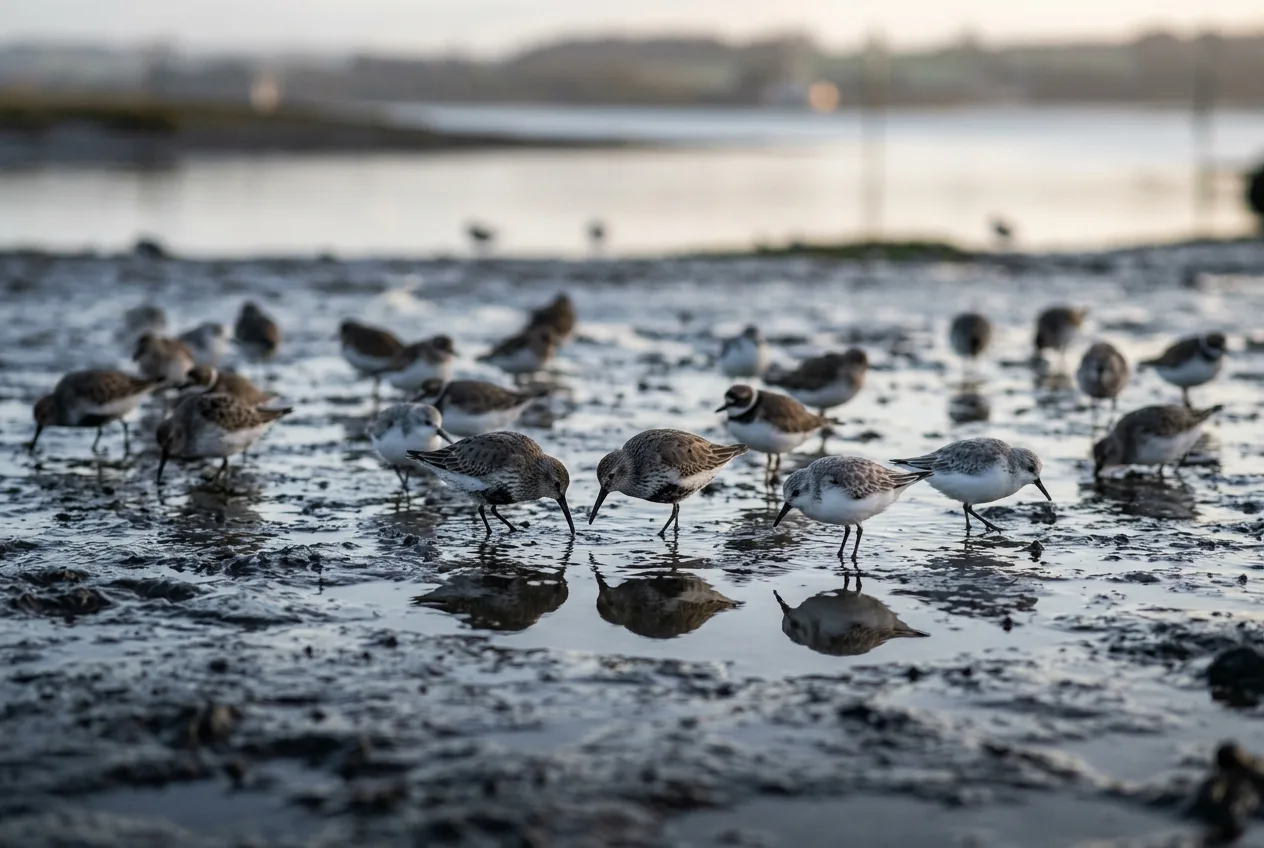
Here's the part that surprises most people: the majority of the birds passing over your house in fall do it in the dark, and you never see them. In the U.S., at least 80% of migratory bird species migrate at night, with an estimated 3–5 billion birds on the move over a season.
Why fly at night? A few good reasons stack up. The atmosphere is calmer and more stable after sunset, which makes holding a steady course easier; cooler air sheds the heat a bird generates on a long flight; the daytime predators — the very hawks and falcons filling the hawk-watch counts — are roosting; and flying at night leaves the daylight hours free for the other essential job, refueling. Birds navigate in the dark using the stars, the Earth's magnetic field, and the fading glow of sunset, among other cues.
The flights aren't spread evenly through the night. The heaviest movement comes in the first half, usually 2–4 hours after local sunset, as birds that launched at dusk reach cruising altitude — often somewhere around 900 m above the ground, though they range well higher. And because we can now read all of this on weather radar, you don't have to guess. In the U.S., BirdCast turns radar into a nightly migration forecast, predicting how intense the movement will be a few hours after sunset and updating through the night. A big forecast tonight means a good chance of a "fallout" tomorrow morning — a place suddenly full of tired migrants that dropped out of the sky at dawn to rest and feed.
Fallouts are the night shift made visible, and they're how most birders actually cash in on nocturnal migration. A patch of trees that held nothing yesterday can be dripping with warblers after a heavy flight, especially along a coast or any "migrant trap" where birds funnel up against a barrier. There's a darker version, too: nocturnal migrants get drawn to and disoriented by the lights on towers and tall buildings, and thousands can pile up — one reason "lights out" campaigns during migration season matter. If you want to hear the night shift directly, you can: stand in a quiet, open spot on a big migration night and listen for the thin flight calls of thrushes, sparrows, warblers, tanagers, and grosbeaks passing overhead in the dark.
The busiest hours of fall migration happen over your roof, in the dark, two to four hours after sunset — and a radar forecast can tell you when.
Waterfowl: the ones who wait
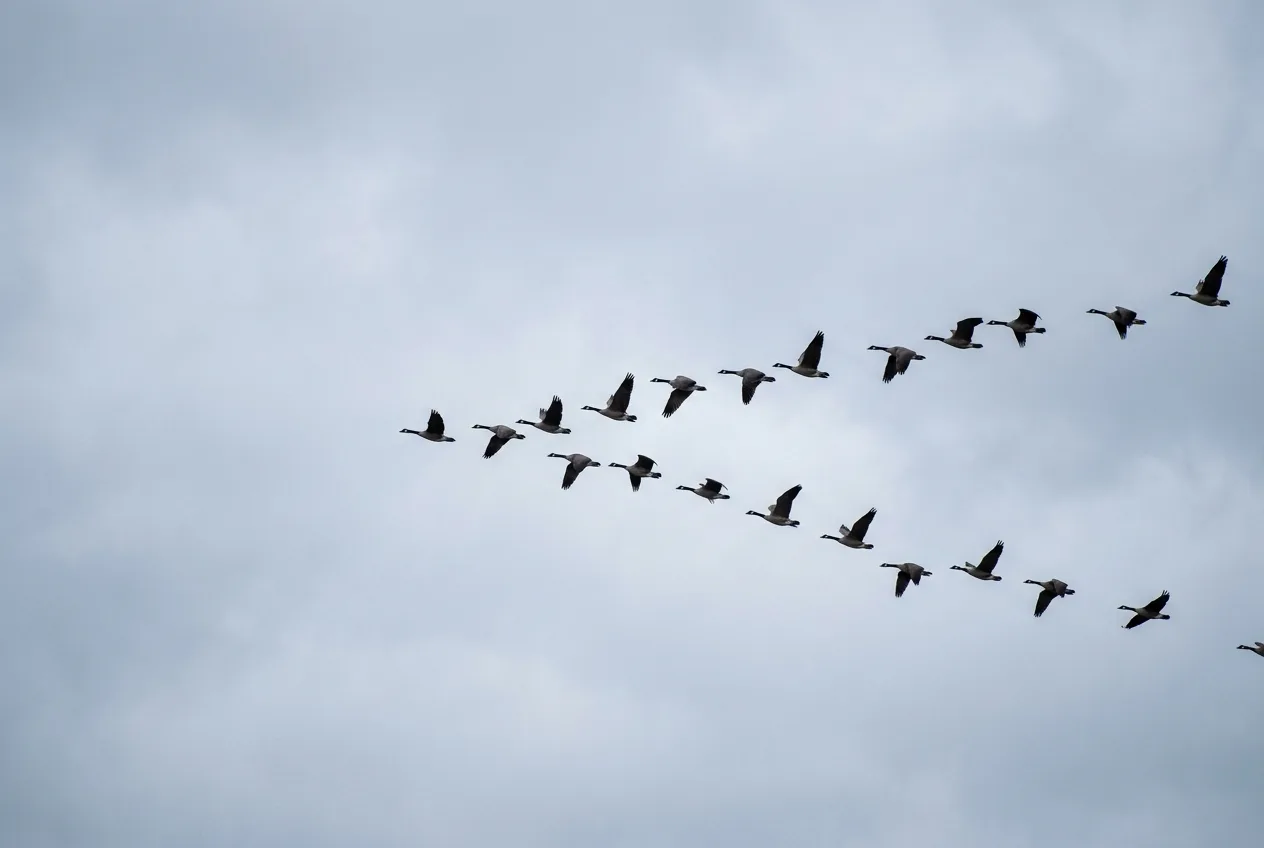
Ducks, geese, and swans close out the season, and they close it on their own terms. Photoperiod primes them like everyone else — shortening days set the biological clock and trigger the fat-building that fuels the trip. But for most waterfowl, day length isn't what finally pushes them south. Cold is. Specifically, the freezes and snows that lock up open water and bury food are the trigger; until then, a well-fed duck has every reason to stay put.
That makes the waterfowl migration the most weather-contingent of all — and it's why a duck season can feel "late" in a mild fall and slam shut overnight when a hard front arrives. Waterfowl even sort themselves by cold tolerance. The early movers, which clear out on the first real cold snaps, include blue-winged teal, pintails, shovelers, gadwalls, wood ducks, and canvasbacks. The cold-hardy holdouts — mallards, American black ducks, big Canada geese, and sea ducks like goldeneyes and buffleheads — sit tight until a serious freeze finally forces them, and on radar you can watch them leave just ahead of the weather, "moving from adversity" as a major front sweeps in. It can be sudden and enormous: one November in the 1990s, a single front reportedly set tens of millions of waterfowl in motion across North America. The radar turnover study saw the same thing from a different angle — those big-bodied Anseriformes dominating the late-season night sky after the shorebirds and songbirds had largely cleared out.
The big picture: flyways, and why they matter
Zoom out and the procession resolves into a few great highways. Some groups — shorebirds, waterfowl, cranes — really do follow defined flyways, threading between traditional staging and stopover sites that they cannot afford to lose. Soaring raptors trace their own land-hugging routes through those bottlenecks. And many songbirds barely use flyways at all, instead migrating on broad fronts across the whole landscape, drifting with the wind and the food.
The major systems are worth knowing by name, because the when and the where of fall migration depend entirely on which one you're standing under:
- The Americas (Nearctic–Neotropical): birds funnel from Arctic and temperate North America toward the tropics, with major concentration along the coasts and the great river valleys; this is the BirdCast-mapped, hawk-watch-counted system most North American readers live inside.
- African–Eurasian: roughly two billion birds a year link Europe and Asia to Africa, soaring migrants squeezing through the Bosphorus–Gibraltar–Suez–Batumi bottlenecks while songbirds and shorebirds cross the Mediterranean and the Sahara — an expanse so hostile it's crossed twice a year.
- East Asian–Australasian: the coastal chain from Arctic Russia and Alaska down through the Yellow Sea to Southeast Asia and Australasia, governed by monsoon winds and anchored on a network of tidal-flat staging sites, coordinated across 22 countries.
Naming them isn't trivia. These routes are also where the trouble concentrates. Up to 40–50% of the migratory species using the African–Eurasian flyway are in decline, with climate change and collisions among the drivers. On the East Asian–Australasian flyway, some Australian shorebird populations have fallen by up to 80% over thirty years, largely from the loss of the coastal staging grounds they depend on. It is exactly why the long-running counts and observatories matter so much.
A migratory bird is only as safe as the weakest link in a chain of places that can span an entire hemisphere.
How to actually watch it
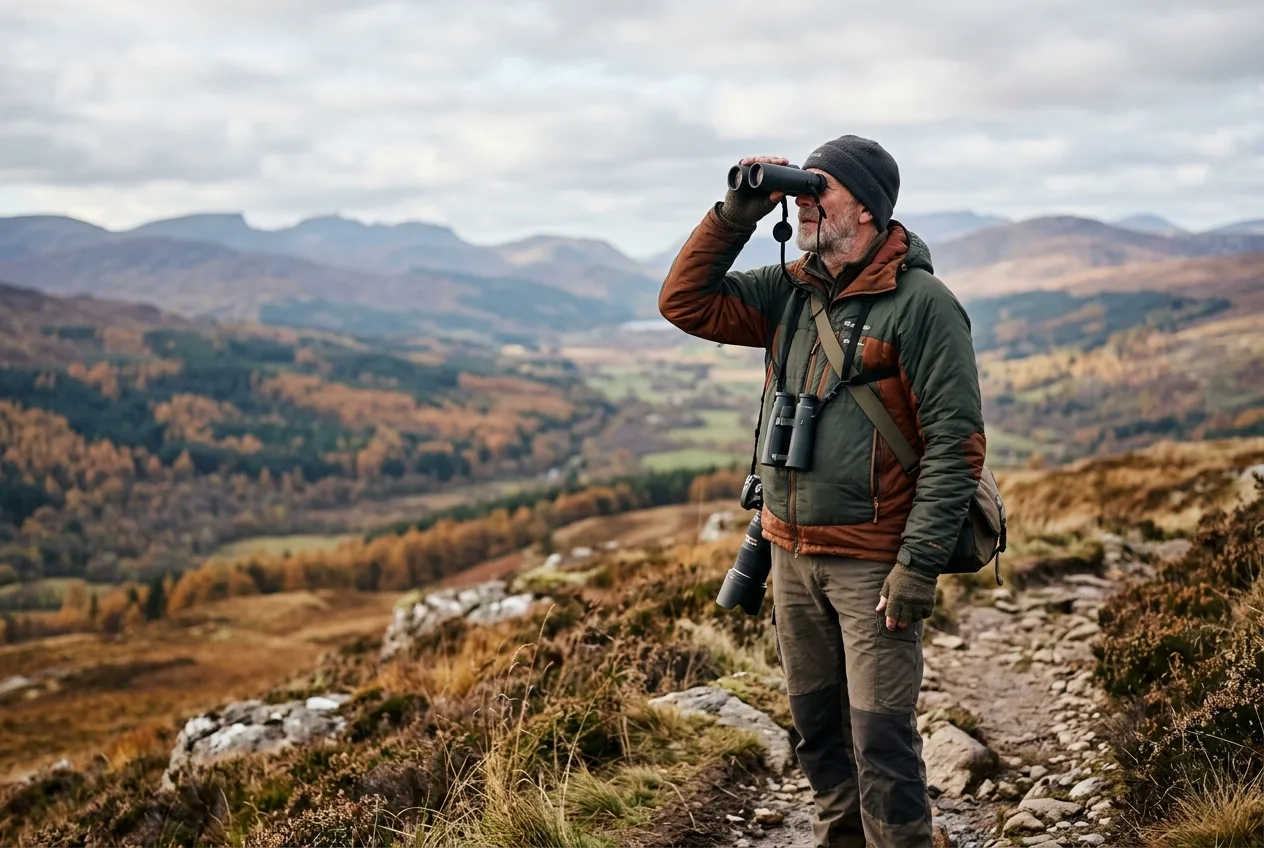
You don't need much. The single most useful move is to stop using someone else's calendar. Fall migration timing is intensely local, and it's tied to your latitude, your flyway, and — day to day — your weather. The general sequence holds everywhere (shorebirds early, raptors and songbirds through the middle, waterfowl last), but the dates do not travel.
A few concrete habits pay off:
- Watch the weather, not the date. For a hawk-watch, target the day or two after a cold front, on the right wind. For songbirds, a big overnight flight on a tailwind means a good chance of a fallout the next morning.
- Use the forecast tools. Where you have them, nightly radar-based migration forecasts tell you when the night shift will be heavy, so you can plan a dawn outing. Recording schemes that log departure dates do the same work over the long haul.
- Go where birds funnel. Coastlines, ridgelines, peninsulas, and isolated patches of habitat ("migrant traps") concentrate what's passing through. The same geography that makes a hawk-watch work makes a coastal woodlot magic after a fallout.
- Learn flight calls and shapes. Much of fall migration passes overhead at night, unseen — so the night flight call and the in-flight silhouette become your best tools.
- Support — or just visit — a count. Observatories like Long Point in Ontario have quantified songbird passage through daily counts and banding since 1960, and you can often turn up and watch. Networks like HawkWatch International and the hawk-watch sites of the East African–Eurasian flyway turn a morning's birds into the long-term data that tracks whether these populations are holding on.
Fall migration rewards patience and a little planning more than any single piece of gear. Read the wind, know roughly which layer of the procession is due, get yourself to a place where birds concentrate, and look up. The procession has been running for months. You just have to catch the part that's passing now.
Frequently asked questions
When does fall bird migration start and peak?
Earlier than most people think, and over a long span — it's a procession, not a single peak. Shorebirds can begin moving in the Northern Hemisphere by mid-to-late summer, well ahead of waterfowl, which may not move until freeze-up. In the contiguous U.S., the broad fall window runs roughly mid-August to mid-November, with the songbird peak typically mid-September to mid-October — but the exact dates depend entirely on your latitude and flyway, so use a local source, not a national average.
Why do birds migrate at night?
Most songbirds fly after dark because the air is calmer and more stable, cooler temperatures prevent overheating on long flights, daytime predators like hawks are inactive, and it leaves the daylight free for feeding. In the U.S., at least 80% of migratory species migrate at night, with the heaviest movement 2–4 hours after sunset.
How is fall migration different from spring?
It's slower and younger. With no race to claim breeding territory, fall migrants take their time and are pickier about waiting for favorable winds, whereas spring birds push through headwinds to arrive early. Fall also carries the year's juveniles on their first, riskiest trip, and many species fly an entirely different route south than they took north.
Which birds migrate first in the fall, and which are last?
As a rule, shorebirds move earliest, raptors and songbirds through the middle of the season, and waterfowl last. Waterfowl are the stragglers because cold — not the calendar — is what finally pushes them: they wait until freezes lock up food and water.
What is a "fallout," and how do I catch one?
A fallout is when large numbers of nocturnal migrants drop out of the sky at dawn to rest and feed, suddenly filling a patch of habitat that was empty the day before. They follow heavy overnight flights, especially along coasts and other migrant traps. Watch a nightly migration forecast: a big radar night often means a productive morning after.
Do hawks really migrate on a predictable schedule?
Yes and no — the season is predictable, but the best days are weather-driven. Soaring raptors funnel along ridges, coasts, and narrow crossings, and at established hawk-watches the biggest flights reliably come a day or two after a cold front passes on the right wind. The species also take turns across the autumn, like the famous mid-September broad-winged hawk peak in eastern North America.