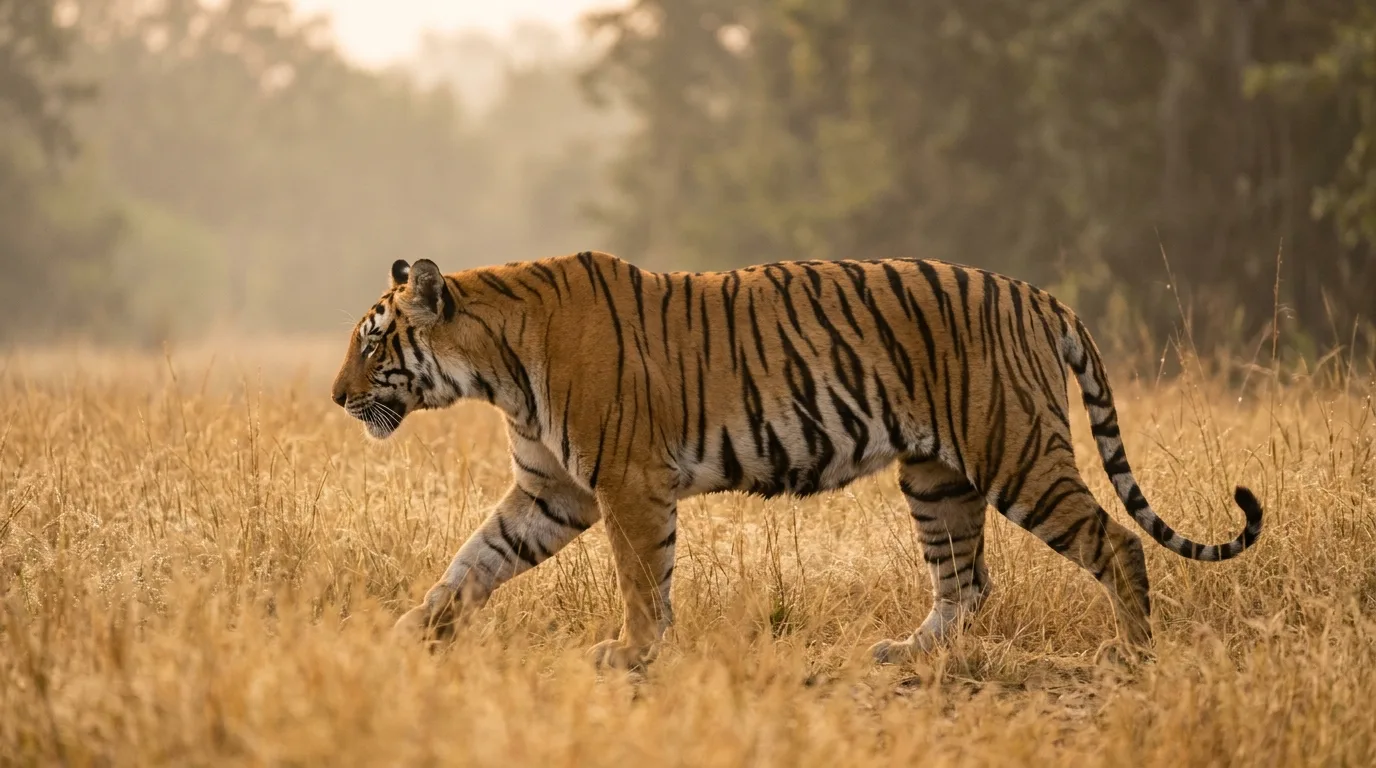
Here is an uncomfortable number to start with. In 2020, a team put 16 captive snow leopards in front of camera traps, photographed them on 40 occasions, and handed the images to eight observers to sort into individuals — the exact task that underpins half the big-cat population estimates in the literature. The observers misclassified 12.5% of all capture occasions. That doesn't sound catastrophic until you trace where the errors went: because the mistakes weren't random, they inflated the resulting population estimates by an average of about a third — 35% too high, give or take. The authors' conclusion was blunt: identifying individually unique animals from camera-trap photos "may not be as reliable as previously believed".
That's the whole problem of this article in one study. Telling individual animals apart in photos is the engine behind capture-recapture density estimation — the gold-standard way to count elusive wildlife without trapping them — and it is far less foolproof than it looks. Get it right and you can monitor a tiger population to within a few percent. Get it subtly wrong and you can report a third more animals than actually exist, with a confidence interval that looks reassuringly tight around the wrong answer.
So this is a methods piece, aimed at the citizen scientist or early-career researcher who wants to do this properly: which natural marks actually let you separate individuals, which species defeat the whole approach, how observers go wrong, why the left side of an animal is a different animal from the right side as far as your data are concerned, and where computer vision genuinely helps versus where it just launders the same errors faster. I'll define the jargon as we go. The short version up front: **the reliability of individual ID depends almost entirely on the species, and most of the hard work is in being honest about the photos you can't identify, not the ones you can.**
Why bother identifying individuals at all
Counting animals you can't round up is one of ecology's oldest headaches, and individual ID is the cleverest answer to it. The logic is borrowed from mark-recapture: if you can recognize the same individual across separate photographs, you can build an "encounter history" for each animal — when and where it was seen — and from the pattern of who gets re-seen and who doesn't, a statistical model estimates how many animals you didn't see. Modern versions are spatially explicit (the field calls it SECR, spatially explicit capture-recapture), which also use where each detection happened to estimate density per unit area rather than just a raw count.
The appeal is that it's noninvasive. Natural marks — a tiger's stripes, a giraffe's spots — let you "capture" an animal with a camera instead of a dart gun, and they're arguably better than artificial tags, because they identify the animal "without the dangerous and invasive act of physical capture," and they don't fall off or change. A long-running Masai giraffe study leans on exactly this: giraffes are individually identifiable from their "unique and unchanging coat patterns," and scientists have used those spot patterns to recognize individuals since the 1950s, long before anyone called it a camera trap.
When it works, it's the best tool we have for rare, wide-ranging animals. A review of the SECR camera-trap literature found the method is "currently focused on rare, elusive, large-ranging, and individually identifiable carnivores, specifically large felids," and called it "one of the best ways to study these species". The catch is hiding in that sentence — individually identifiable — and it's a far narrower club than the field's enthusiasm suggests. That same review found that 90.9% of camera-trap density estimates were of carnivores, and 82% of those were of cats; more than a third of all the studies were of just three animals — leopard, tiger, and jaguar. That's not because nobody cares about deer or wild boar. It's because those three wear barcodes and most animals don't.
It's because those three wear barcodes and most animals don't.
What makes a species "individually identifiable"
The dividing line is whether an animal carries a natural mark that is unique to the individual, stable over time, and visible to a camera. Hit all three and you're in business. Miss any one and you're improvising.
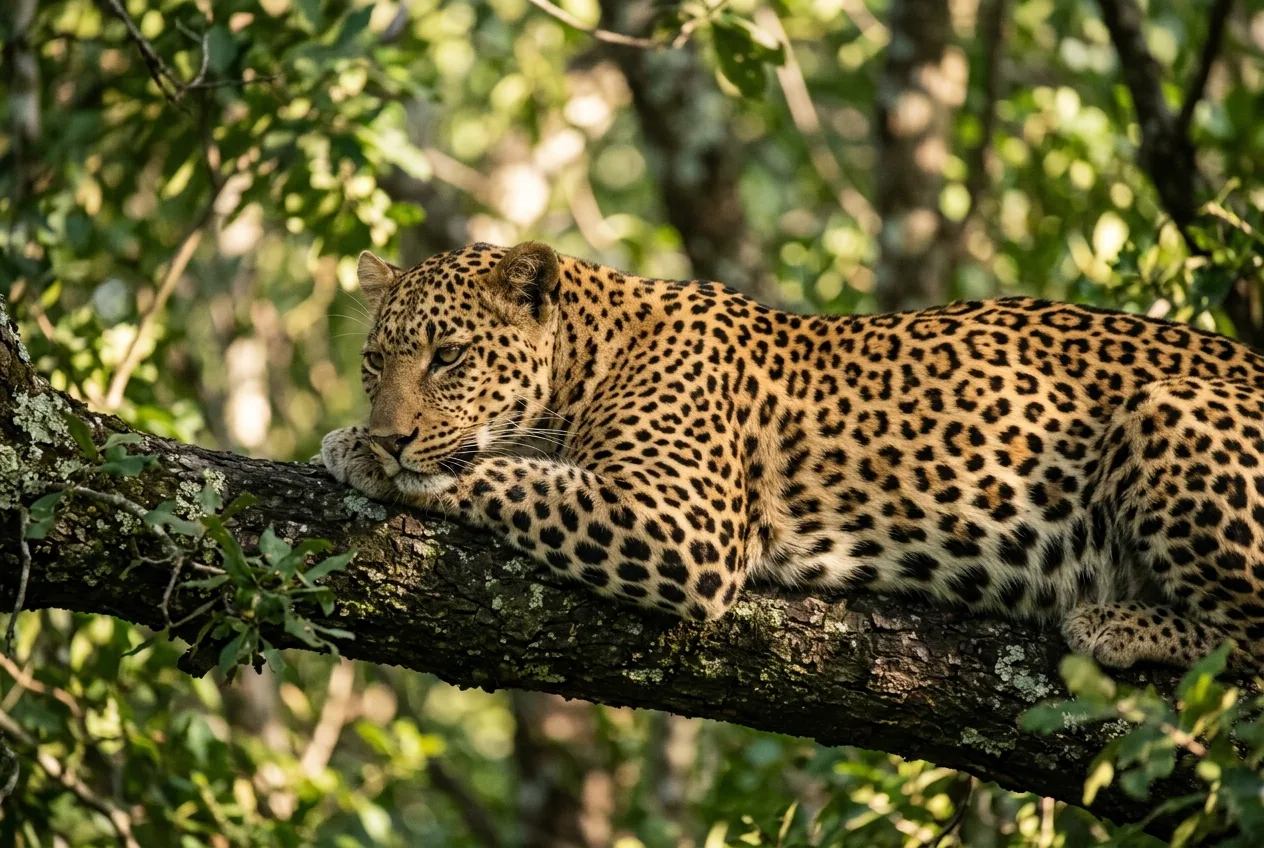
The cleanest case is a high-contrast pelage pattern — the coat markings of spotted and striped animals. In a tiger-and-leopard SECR study in India, observers identified animals by examining "the shape and pattern of natural markings; stripes in tigers and rosettes in leopards," cross-referencing flanks, limbs, tails, and forequarters. These patterns behave like fingerprints: an ocelot study describes the HotSpotter algorithm (more on that later) as software that "analyzes the textures in an image to find recognizable patterning" precisely because the spot texture is individually diagnostic. Bobcats get sorted by "groupings of leg spots, groupings of body spots, facial markings, and tail markings" — the protocol in one California study required matching "at least three natural pelage features" before two photos were called the same cat. European wildcats, which are subtler, get keyed on "shape and position of stripes and spots, the number and shape of tail rings," plus a checklist of dorsal line, shoulder stripes, and neck stripes.
Notice the discipline in those examples. Nobody is matching on a single fuzzy spot — they're requiring multiple independent features to agree. A Sri Lankan leopard team formalized this into a "multi-point" system, segmenting the coat into 15 defined points by spot and rosette formation, and requiring a "minimum 9 MPC points out of the 15" to match before calling two sightings the same leopard. That redundancy is the entire defense against the misidentification errors we started with. The more independent points you demand, the harder it is for two different animals to fake a match.
But "unique and stable" is doing a lot of work, and even on well-marked cats it's not absolute. The same Sri Lankan study documented something most ID protocols quietly assume away: patterns change. Over continuous observation, they recorded 29 instances where a leopard's spots and rosettes shifted — spots lost, reduced, or changed in "prominence, shape, and size" — and 16 of those leopards had changed after a documented injury. An earlier, less rigorous method at the same park had duplicated leopards badly enough to produce "an error rate of more than 15%," counting the same cat as several. So even the best-marked animals aren't a free lunch; a scar that helps you today can rewrite the very pattern you're matching on tomorrow.
Marks on otherwise-uniform animals: scars, ears, and antlers
Most animals don't wear spots. The instinct, then, is to fall back on whatever's distinctive — a torn ear, a body scar, a buck's antler rack — and for some purposes that's legitimate. But this is exactly where individual ID gets dangerous, and the sources are split in a way worth understanding.
Antlers are the obvious example for anyone watching deer. A big, asymmetric rack with a broken tine or an extra point genuinely does separate that buck from the others on your property, at least for a season. The deer-density literature uses this: a study of 13 deer populations recognized individuals by "obvious antler shapes and deformations," along with "distinctive scarring on both sides of the body" and limb deformations. The hard limits are obvious once you say them out loud. Antlers are seasonal — they're shed and regrown every year, so an antler-based ID expires each winter and can't link an animal across years. They're male-only, leaving does and fawns unmarked. And subtler marks turn out to be slippery: that same study found that potential cues like "ear notches or scarring on a single flank" were "often ambiguous" in practice and couldn't be used reliably.
For uniform-coated cats, researchers reach for scars, ear damage, and kinked tails. A puma study makes the case for one of these being genuinely excellent: damaged or missing ear flaps (the pinnae). When observers compared puma photos, there was "perfect agreement for event pairings in which one puma exhibited pinnae damage and the other did not" — a missing chunk of ear is binary and obvious, so it never caused disagreement. That's the model of a good idiosyncratic mark: unambiguous, permanent, visible.
And then there's the warning that should make you cautious about the whole approach. A large puma density study flatly refused to identify unmarked animals by their perceived natural marks, "because of the inherent uncertainty that could bias density estimates". Their reasoning is the crux of the matter: assigning identities ad hoc from "scars, ear nicks, body shapes, or carriages" can produce "biased and unreliable density estimates," because "multiple individuals may have similar physical features, causing observers to agree on incorrect identity assignments or disagree on correct identity assignments". Read that twice. The failure isn't just missing a scar — it's two different animals sharing a similar look and getting merged, or one animal looking different across two photos and getting split. Those are precisely the errors that warped the snow-leopard estimates.
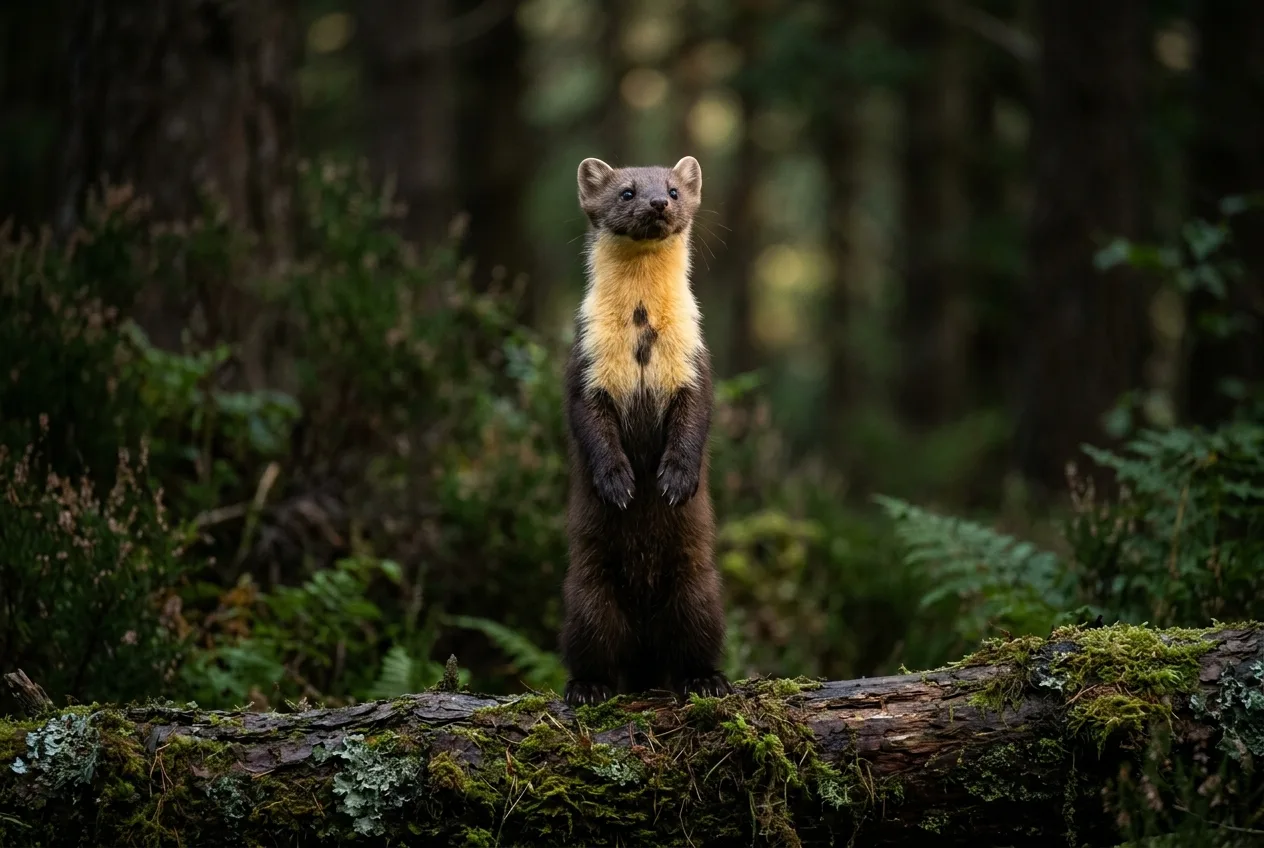
There's a real middle ground here, and it's worth being honest about it rather than picking a side. A creamy throat or chest patch can be a genuine fingerprint when it's complex enough. Pine martens are the textbook case: each has a "uniquely patterned bib" — a creamy-yellow chest patch — that "acts like a fingerprint, making it possible to tell individuals apart," with distinct edge shapes and darker internal markings. That's a legitimate natural mark, more like a coat pattern than a scar. But even the practitioners who use it flag the seasonal trap: a marten's bib "can appear noticeably different between the thick winter coat and the sleeker summer fur". The lesson that generalizes: a structural pattern (a bib, a spot field) is far safer to identify on than an incidental feature (a scar that heals, a notch you might be imagining).
A structural pattern (a bib, a spot field) is far safer to identify on than an incidental feature (a scar that heals, a notch you might be imagining).
The unmarked-species problem
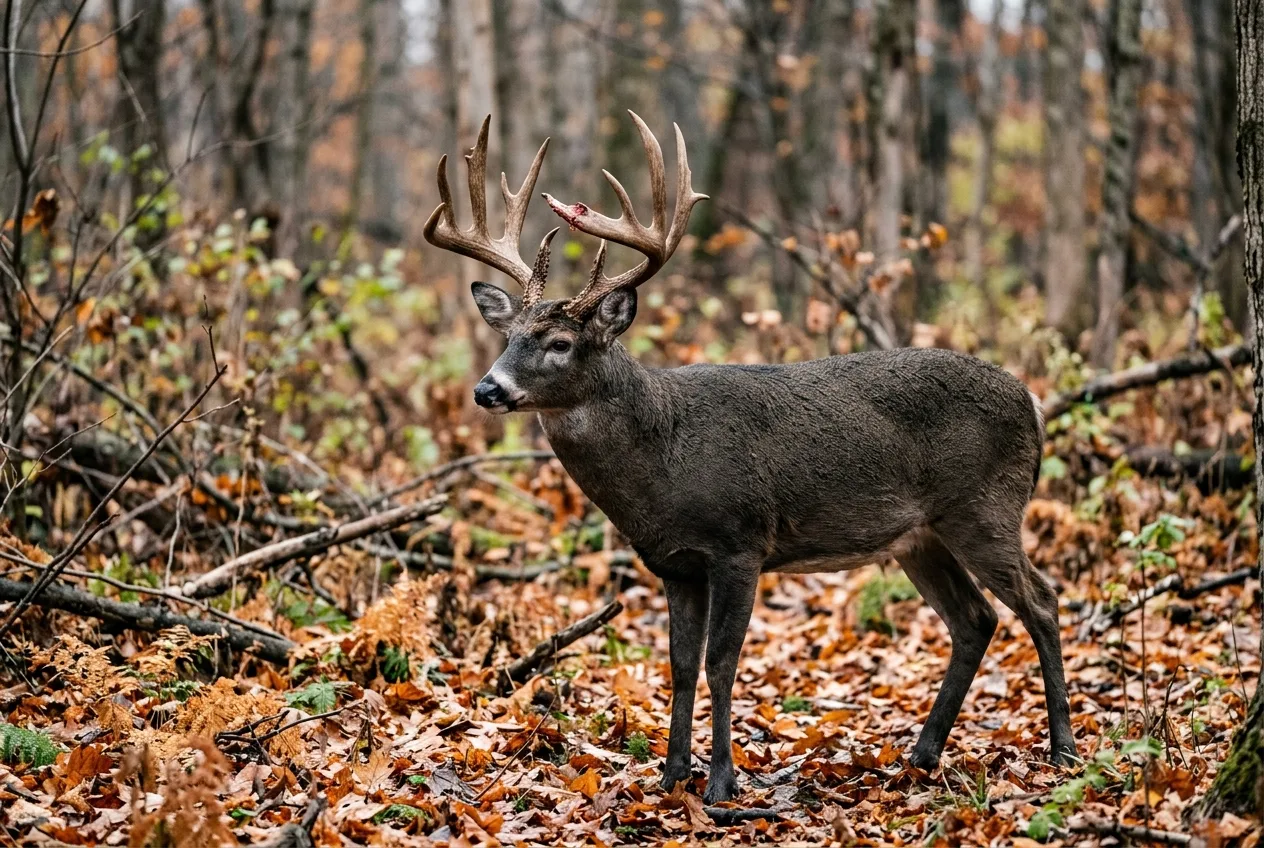
Put all that together and you arrive at the field's central, under-advertised obstacle. Most animals simply cannot be reliably told apart by eye. In a survey of 176 carnivore species, over 60% had uniform flank coloration — no spots, no stripes, nothing to match. Deer are worse, not better: "most deer species are characterized by a high proportion of nondescript individuals," and it's routinely the case that "too few naturally marked and identifiable deer are detected" for capture-recapture to work at all.
The numbers behind that are sobering. In that 13-population deer study, the share of detections that could be tied to an identifiable individual ranged from just 3% to 28% — meaning that at most sites, the "vast majority of detections could not be reliably assigned to an identifiable individual". Camera-trap identification rates across species tell the same story: one review put the achievable range at roughly 2% to 54% identified, from 2% of raw images in Asiatic black bears up to 54% in leopards. If only a fraction of your animals can be named, classic capture-recapture quietly breaks — there aren't enough recaptures to estimate anything stable.
So the field built workarounds, and knowing which one fits your situation is most of the methodological skill. Here's the practical map:
- Spatial mark-resight (SMR). The most common fix. You physically mark a subset of animals — GPS collars, ear tags — so a known number are individually identifiable, then use the photos of marked and unmarked animals together. The deer study above used SMR to get densities across populations where only 3–28% of detections were identifiable. A bobcat study built a "hybrid" version that folds in the full known histories of collared cats and tightened its confidence intervals to "not exceeding 57%," better than the photo-only models. The price is real fieldwork: you have to catch and collar some animals.
- Partial identity. Instead of demanding a full ID, you use partial information to rule combinations in or out. A puma study modeled the sex of unmarked animals as a "partially identifying categorical covariate," which sharpened its estimate — a male detection simply can't be the same individual as a female one, and that constraint alone buys precision.
- Random thinning. A newer model that drops the rigid "marked vs. unmarked" split entirely. It treats identity as "a random thinning process, where samples lose their individual identities at random" — some photos are identifiable, some aren't, and the model uses both classes together without forcing you to pre-sort animals into camps. Applied to brown bears with about 60% identification success, it cut the variance of the density estimate by 11.8% versus standard methods, just by salvaging the unidentified detections instead of binning them.
- Double-observer / paired cameras. For fully unmarked populations, two cameras watching the same small spot "from different directions" can estimate how many animals each one missed, correcting for imperfect detection — but only if the two cameras detect "nearly independently". That study found cameras can miss animals by 4–36%, which translates directly into underestimating density by the same order if you ignore it.
- Skip individual ID altogether. The random encounter model (REM) estimates density "without the need for individual recognition" by treating animal-camera encounters like gas molecules colliding — it needs the animals' movement speed and the camera's detection geometry, not their identities. Its generalized successor (gREM) extends this to "monitoring unmarked animal populations across broad spatial, temporal and taxonomic scales". If your species can't be told apart at all, this is often the honest path.
The striking thing, given how much these methods matter, is how little they're used. That SECR review found mark-resight models appearing in "< 5% of included studies" — most of the field is still either working only on the handful of spotted, identifiable species or reporting cruder relative-abundance indices. If you're choosing a method for an unmarked species, you're already ahead of most of the published literature simply by reaching for the right tool.
The left-side animal and the right-side animal
Here's the trap that catches almost everyone the first time, and it's pure geometry. Many animals are bilaterally asymmetrical — the markings on their left flank are completely different from those on their right. An ocelot's "left-side marks are different from those on the right-side," and crucially, "not all individuals cross the camera showing all their sides". So if your camera photographs one ocelot's left flank and another camera photographs a different-looking right flank, you have no way to know whether that's two animals or one animal seen from both sides.
This isn't a minor annoyance; it forks your dataset in half. The bobcat study spelled out the consequence: because they used a single camera per station, they "were unable to match left-side photos with right-side photos," so the data had to be "split into left- and right-side encounter histories" and analyzed separately. You essentially run the whole analysis twice, on two non-overlapping sets of animals. In that study the right-side data implied 44 bobcats and the left-side data 36 — though, to be fair, those weren't statistically distinguishable given overlapping confidence intervals. The European wildcat team hit the same wall: to merge an animal's two sides into one record, "an individual must be photographed bilaterally at least once," and they simply "could not identify both flanks of all individuals detected". Their final tally captured the mess precisely — 13 individuals matched on both flanks, plus 5 lone right flanks and 3 lone left flanks they couldn't tie to anyone.
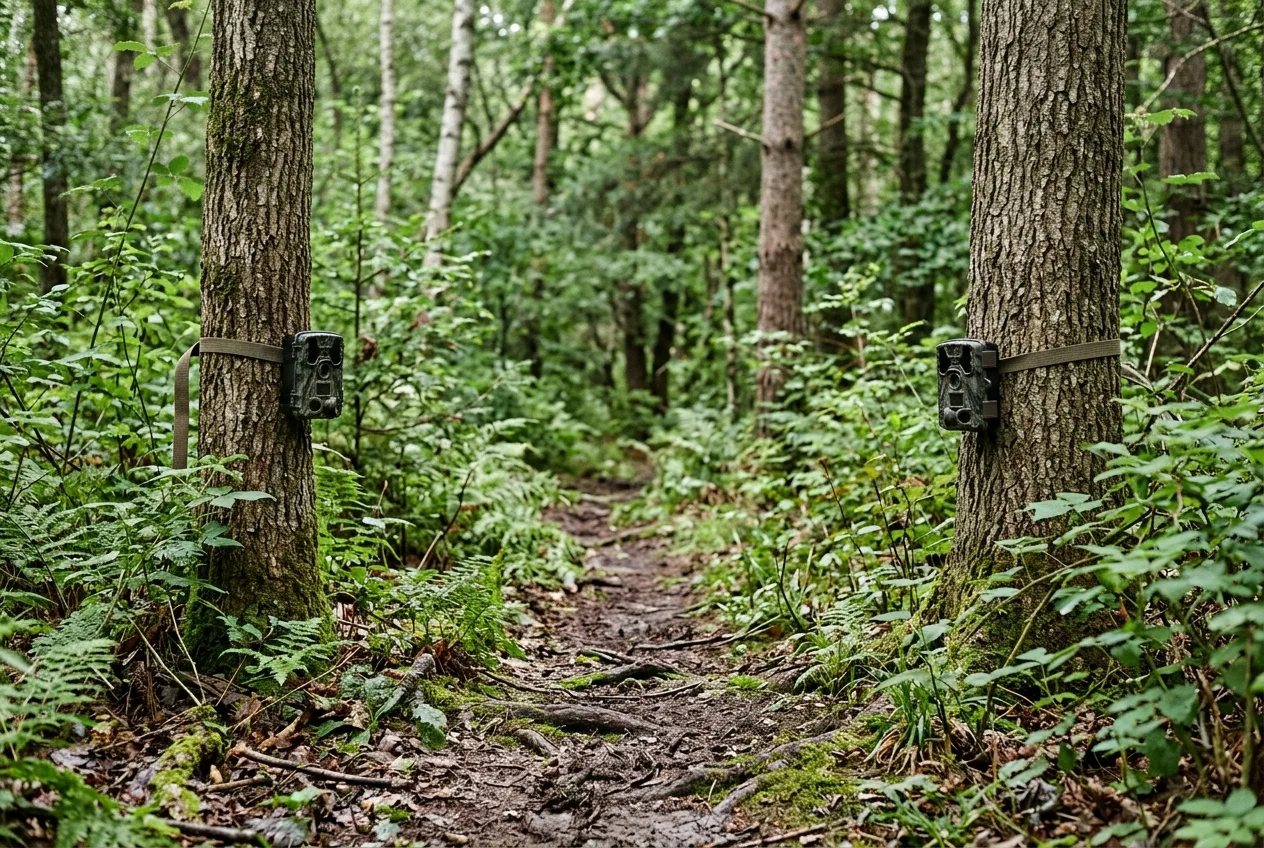
The practical fix is mechanical and non-negotiable for asymmetric species: deploy paired cameras facing each other across the trail, so almost every passing animal is photographed on both flanks at once, giving you the bilateral link. The India tiger study did exactly this with 35 paired stations and matched on "both right and left flanks" as a matter of course. If you run single cameras on a striped or spotted animal, you've built the flank problem into your design before you've collected a frame.
If you run single cameras on a striped or spotted animal, you've built the flank problem into your design before you've collected a frame.
Observers are the instrument — and the instrument drifts
Step back and notice what every section above quietly depends on: a human looking at two photos and deciding they're the same animal. That human is your measuring instrument, and like any instrument, they have an error rate, they vary from one another, and they can be calibrated. Treating ID as obvious — "you can just tell" — is how the errors creep in.
We've already met the headline figure: 12.5% of capture occasions misclassified, biasing population estimates up by about a third. The reason a 12.5% error rate becomes a 35% overestimate is worth internalizing, because it's the failure mode you're trying to avoid. That study laid out a taxonomy of three mistakes. A combination error merges two individuals into one. A splitting error does the opposite — it splits one individual's photos into two and "creates a 'ghost' individual," inflating the count. A shifting error moves a capture from one animal's history to another. These don't cancel out. Splitting errors that conjure ghosts tend to dominate, which is why sloppy identification overestimates rather than evening out.
How good are observers, really? The most honest experiments swap individual ID for the closely related task of telling apart look-alike species — same skill, same failure modes, but with a verifiable right answer. The results aren't flattering. Observers using standard field guides to separate two similar chipmunk species hit only 78.2% accuracy, and untrained observers on a harder dataset managed 51.3% — barely above a coin flip. The study's verdict: "even experts do not always accurately identify species from photographs when morphologically similar species co-occur". Pumas show the same spread: independent assessors scoring the same face photos reached only "moderate to good" agreement (a Fleiss' kappa of 0.54, where 1.0 is perfect), which only climbed to a "substantial" 0.76 after the team reconciled cases where a single rater was the lone holdout.
The encouraging half of this is that observers can be trained, and it works dramatically. Give the chipmunk observers a purpose-built identification key and their accuracy jumped from 78.2% to 93%; add training on top and it reached 98.8%, with the most confident observers hitting 100%. Inter-observer agreement rose in lockstep, from a weak kappa of 0.47 for observers using literature to 0.95 after training with the key. The takeaways are concrete and you should bake them into any protocol:
- Write an explicit identification key for your species and population — the named features that must match, like the leopard 15-point system or the bobcat "three pelage features" rule — rather than relying on gestalt.
- Use more than one observer and measure their agreement (report the kappa), then reconcile disagreements explicitly rather than letting one person's call stand.
- Train before you score, and re-score; the gains from a key plus training are larger than most people expect.
Report the photos you couldn't identify
This is the part beginners skip and reviewers should demand, and it follows directly from everything above. Your individual-ID dataset is defined as much by what you threw out as by what you kept — and that discard pile is where the bias lives.
The honest studies are scrupulous about it. The chipmunk team captured 15,847 photographs and confirmed identifications for only 7,300 of them — roughly 54% of the images were excluded for low confidence or observer disagreement. The deer study reported its identifiable-detection ratio (that 3–28%) as a headline result, not a footnote. One review pointed out that in camera-trap work "the identification rate is rarely reported" at all — which is exactly the gap that lets a study quietly present a confident number resting on a thin, cherry-picked slice of its data. If you only ever report the animals you successfully named, your reader has no way to judge whether that was 90% of the captures or 9%.
And precision is not the same as accuracy, which is the trap that closes on people who've done everything else right. That SECR review found the median study reported a coefficient of variation (a precision measure) of 30%, and only about a fifth of studies achieved a tight CV of 20% or better. Why care? Because imprecise estimates can't detect change: with a typical CV of 31%, a monitoring program has only a 32.7% chance of detecting a real 50% decline in a tiger population over ten years — rising to 68% if you can get the CV down to 20%. You can run a flawless ID protocol and still produce a number too noisy to do the conservation job it was meant for. Reporting your identification rate, your unidentified fraction, and your CV honestly is what lets anyone tell the difference.
You can run a flawless ID protocol and still produce a number too noisy to do the conservation job it was meant for.
Where computer vision actually helps
The obvious hope is that software makes all of this go away — that you upload your photos and an algorithm hands back the individuals, no fatigued observers, no drift. The reality is more interesting and more limited: AI is genuinely good at suggesting matches and terrible at being trusted blindly, and the distinction matters.
First, clear up a common confusion. The famous deep-learning camera-trap results are about species, not individuals. The Snapshot Serengeti project trained a network on 3.2 million images of 48 species and hit 94.9% top-1 accuracy at naming the species, automating 99.3% of the labeling at the same accuracy as crowdsourced volunteers and saving over 17,000 hours of human effort. That's transformative for clearing out the empty frames and sorting "this is a hyena" from "this is a gazelle" — but it does not tell you which hyena. Individual re-identification is a separate, harder step that runs after detection and species ID.
For that re-ID step, the workhorse in wildlife circles is HotSpotter, a pattern-recognition algorithm that finds the distinctive texture in a coat or shell and returns a ranked list of likely matches from your library — "one-vs-one" comparing image to image, or "one-vs-many" against the whole database, with a similarity score on each. It's free and runs on ordinary computers. Its accuracy on well-marked animals is solid but not magic, and it degrades exactly where you'd predict. On hawksbill turtles, HotSpotter put the correct match in the top choice 80% of the time, rising to 91% within the top six choices. On Costa Rican carnivores it nailed jaguars (85.7%) and ocelots (83.3%) on the highest-scoring match, but managed only 57.1% on oncillas — the smaller, less boldly patterned cat — and accuracy correlated with how many images each animal had. The pattern is consistent: bold markings and more photos help; faint patterns and sparse data hurt.
The most useful framing comes from a study that compared manual identification against the HotSpotter pipeline directly. Manual ID overestimated populations by 7% for cheetah and 22% for leopard relative to the algorithm-assisted analysis — the same upward bias we keep meeting, with the software acting as the more consistent referee. That's the real value proposition: not that the AI is infallible, but that it doesn't get tired, bored, or attached to a hunch, so it makes the consistent errors a human reconciliation step can catch, rather than the idiosyncratic ones that quietly inflate a count.
Where is this heading? The current direction is general-purpose re-ID models trained across many species at once. One 2024 model trained on 49 species and 37,000 individuals and beat per-species models by an average of 12.5% in top-1 accuracy, with a version already "in production use for 60+ species". Researchers frame the long-term promise as software that can "re-ID animal individuals beyond the capabilities of a human observer," matching animals as they "exit and re-enter the camera frame".
Two cautions keep the hype grounded, and a careful researcher should hold both. The software-landscape reviews compare these tools on cost, platform, and matching method but publish no accuracy figures of their own — so your real-world accuracy is whatever the published field studies above suggest for an animal like yours, not a vendor's claim. And benchmark accuracy can be inflated by a subtle leak: if visually similar images of the same animal land in both the training and test sets, a model can look better than it is. The newest re-ID benchmarks deliberately use a "time-aware and similarity-aware split" to prevent exactly this kind of "training-to-test data leakage," which means the honest accuracy figures are often lower than the headline ones you'll see quoted. AI re-ID is a powerful assistant. It is not yet, and may never be, a reason to skip the human review step.

The honest workflow, in order
Putting it together, here's how a careful individual-ID project actually runs, and why each step is there:
- Decide if your species is even identifiable. Spotted or striped (tiger, leopard, ocelot, giraffe, wildcat) — yes, with discipline. Uniform-coated (most deer, puma, and 60% of carnivores) — probably not by coat, and you should plan for mark-resight, random thinning, or REM from the start, not as a rescue later.
- Build your camera geometry around the flank problem. Pair cameras across the trail for any asymmetric animal so you capture both sides at once.
- Write an explicit identification key — the named, multiple features that must agree — and require redundancy before declaring a match.
- Use multiple trained observers, measure their agreement, and reconcile disagreements rather than trusting a single eye.
- Let computer vision suggest, and let a human decide. HotSpotter to rank candidates; a person to confirm.
- Report what you couldn't identify — your identification rate, your unidentified fraction, your CV — as prominently as what you could.
None of this makes individual ID effortless. It makes it defensible — which, given that a 12.5% slip can become a 35% overcount, is the entire job.
None of this makes individual ID effortless. It makes it defensible — which, given that a 12.5% slip can become a 35% overcount, is the entire job.
Frequently asked questions
Can you identify deer individually from trail camera photos?
Only partially, and mostly bucks. Antler shape and obvious deformations can separate individual bucks within a single season, along with distinctive body scarring — but antlers are shed and regrown yearly, does and fawns are largely "nondescript," and in practice only about 3–28% of deer detections can be reliably tied to an individual. For a real population estimate of deer, researchers use spatial mark-resight (collaring a subset) or methods that need no individual ID at all, like the random encounter model.
What natural marks are best for telling individual animals apart?
Stable, structured patterns beat incidental ones. Coat patterns are the gold standard — tiger stripes, leopard and ocelot rosettes, giraffe spots — because they're unique, largely unchanging, and texture-rich enough for software to match. Among non-patterned features, permanent and unambiguous ones work best — a missing or damaged ear flap, or a pine marten's complex chest "bib" that "acts like a fingerprint". Healable scars and faint single-flank marks are the least reliable and can actively bias estimates.
Why do researchers photograph both sides of an animal?
Because many animals are bilaterally asymmetrical — the left flank's markings differ entirely from the right's. If you only photograph one side per pass, you can't tell whether a left-flank photo and a right-flank photo are two animals or one, so the data have to be split into separate left- and right-side analyses. To link the two sides into a single individual, the animal "must be photographed bilaterally at least once," which is why striped and spotted species are surveyed with paired cameras facing each other across the trail.
How accurate is AI at identifying individual animals?
Good as an assistant, not good enough to trust blindly. On well-marked species, re-ID software puts the correct match in its top choice 80–86% of the time and higher within the top several candidates, and it beats manual ID for consistency. But accuracy drops sharply for faintly patterned animals, and published accuracy rates are scarce and easily inflated. Treat AI as a way to rank candidates for a human to confirm.
How wrong can individual misidentification make a population estimate?
Badly, and usually in the upward direction. Misclassifying just 12.5% of capture occasions can inflate a population estimate by about 35%. The reason it doesn't cancel out is that "splitting" errors create phantom "ghost" individuals that don't exist, dominating over the merging errors that would lower the count. This is why reporting your identification rate and using multiple trained observers isn't bureaucratic box-ticking — it's what keeps the number honest.
What can I do if my species can't be identified individually?
Use a method designed for unmarked animals. Spatial mark-resight identifies a physically marked subset and uses the unmarked detections statistically; random thinning combines identified and unidentified encounters without forcing a marked-versus-unmarked split; double-observer designs with paired cameras correct for animals each camera missed; and the random encounter model estimates density purely from encounter rates, movement speed, and detection geometry, "without the need for individual recognition". Choosing one of these for an unmarked species already puts you ahead of most published camera-trap work, where mark-resight appears in under 5% of studies.