Here's the mistake almost everyone makes, and it costs them a whole season: they see tunnels in the lawn, decide "moles," and dump a bag of grub killer on the grass. Then the damage gets worse, not better — because the thing chewing their tulip bulbs was never a mole at all. It was a vole, living rent-free in tunnels the mole dug.
Three different animals churn up our yards from below, and people lump them together constantly. They shouldn't. A mole is an insect-eater that almost never touches a plant. A vole is a little rodent that eats your garden from the roots up. A pocket gopher is a bigger rodent that can pull an entire plant underground while you watch. They leave different signs, they do different damage, and — this is the part that matters — the trap and the tactic that beats one will do nothing to the other.
Treat all three as "moles" and you'll spend the summer fighting the wrong animal with the wrong tools.
So before you buy anything, learn to read the ground. The good news: once you know what to look at — the shape of the mound, whether there's an open hole, whether there are surface runways through the grass — telling them apart is usually quick. This guide walks through all three: how to identify each one, what damage to expect, and the control that genuinely works (and the popular "fixes" that genuinely don't).
A quick note on geography before we start, because it changes what's even possible in your yard. Moles and voles live almost everywhere people garden — across North America, the UK, continental Europe, and well into Asia. The European mole (Talpa europaea) is found right across Europe, even turning up in city greenspaces. Pocket gophers do not. They're a strictly North American animal, ranging "from Panama in the south to Alberta in the north". There is no European pocket gopher. So if you're gardening in Britain or Germany and something is tunneling, it's a mole or a vole — full stop. North American readers get all three, which is exactly why the confusion is worst here.
First, look at the ground — not the animal
You will almost never see the animal. All three spend nearly their whole lives underground and come up rarely, often by accident. That's fine. The signs they leave are more reliable than a fleeting glimpse anyway, and you can read them on any walk across the lawn.
Three questions sort out most cases:
Is there a mound of pushed-up soil? Moles and gophers both make mounds; voles don't. If you've got conical or fan-shaped piles of fresh dirt, you're dealing with a mole or a gopher, and the shape tells you which. If there's no mound — just holes and trails — think voles.
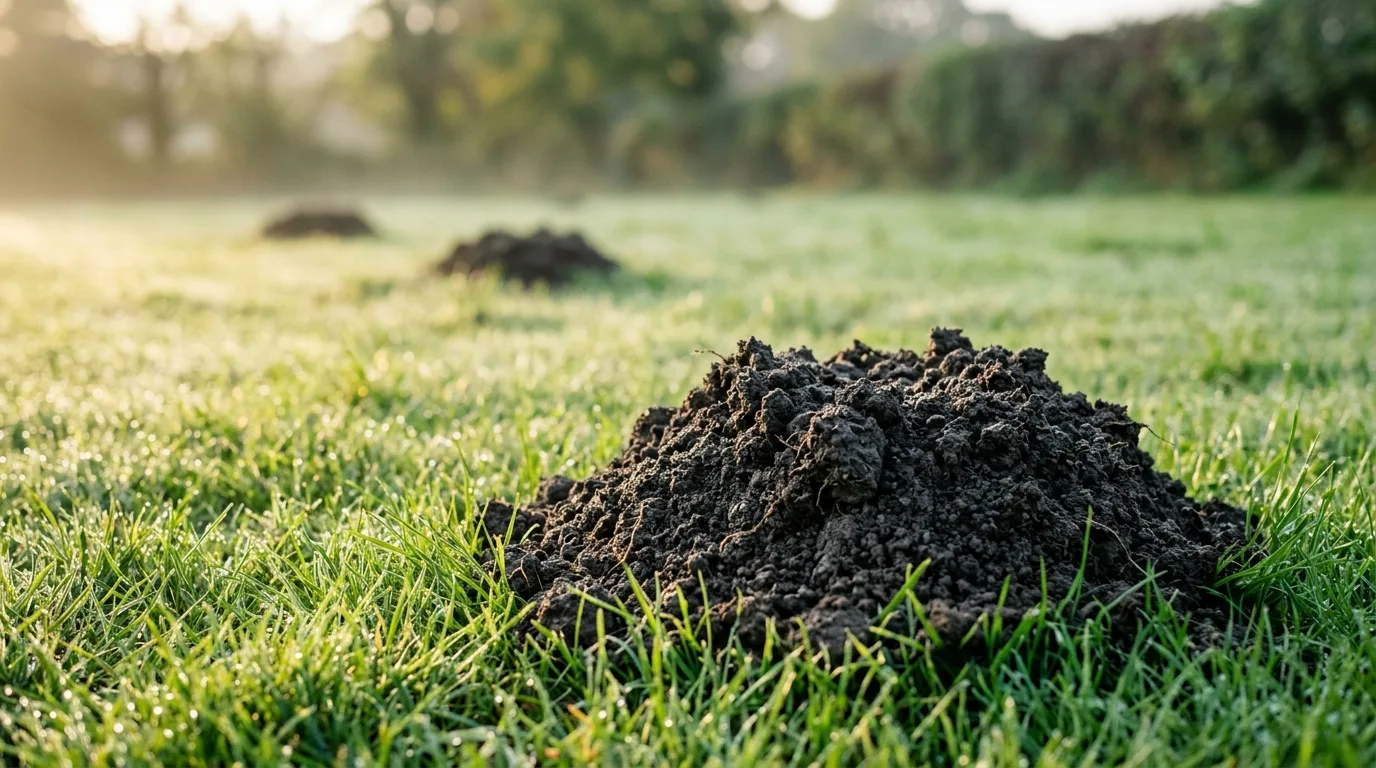
If there's a mound, where's the hole? This is the single most useful tell. A mole pushes soil straight up a vertical shaft, so the dirt "falls evenly in all directions" and the mound comes out round and symmetrical, like a little volcano, with the plug in the center (often you can't even see it). A gopher digs up to the surface at an angle — roughly 45 degrees — so its mound spreads out "in the shape of a tear drop," fan- or horseshoe-shaped, with the plugged hole sitting clearly off to one side. One more pattern: gopher mounds tend to cluster in tight groups, while mole mounds usually appear singly, strung out in a line as the mole works a deep runway.
Are there open holes and worn runways in the turf? That's the vole signature. Voles keep "well-traveled, aboveground runways that connect burrow openings," usually tucked under the grass canopy. Pull back the overhanging grass and you'll find narrow paths — one to two inches wide — where the vegetation is clipped short or dead, dotted with open holes about an inch to two inches across. The ground may feel oddly soft or "cushiony" underfoot from all the shallow tunneling.
A round hill with the hole in the middle is a mole; a fan-shaped hill with the hole off to the side is a gopher; bare runways and open holes with no hill at all are voles.
Get those three questions answered and you've usually got your animal. Now let's go through each one properly — what it is, what it does, and how to stop it — because the control is where people waste the most time and money.
The mole: an insect-eater that wrecks your lawn by accident
Start with the biggest misunderstanding in the whole subject. A mole is not a rodent and does not eat your plants. Moles belong to the order Insectivora — "insect-eaters" — and are related to shrews and hedgehogs, not to mice. Their diet is earthworms, white grubs, beetle larvae, and other soil invertebrates. As Oregon State wildlife specialist Dana Sanchez puts it, "People say moles are eating my garden, but moles are adapted for swimming through the soil to hunt prey… looking for worms, grubs and insects". They take plant material only by accident.
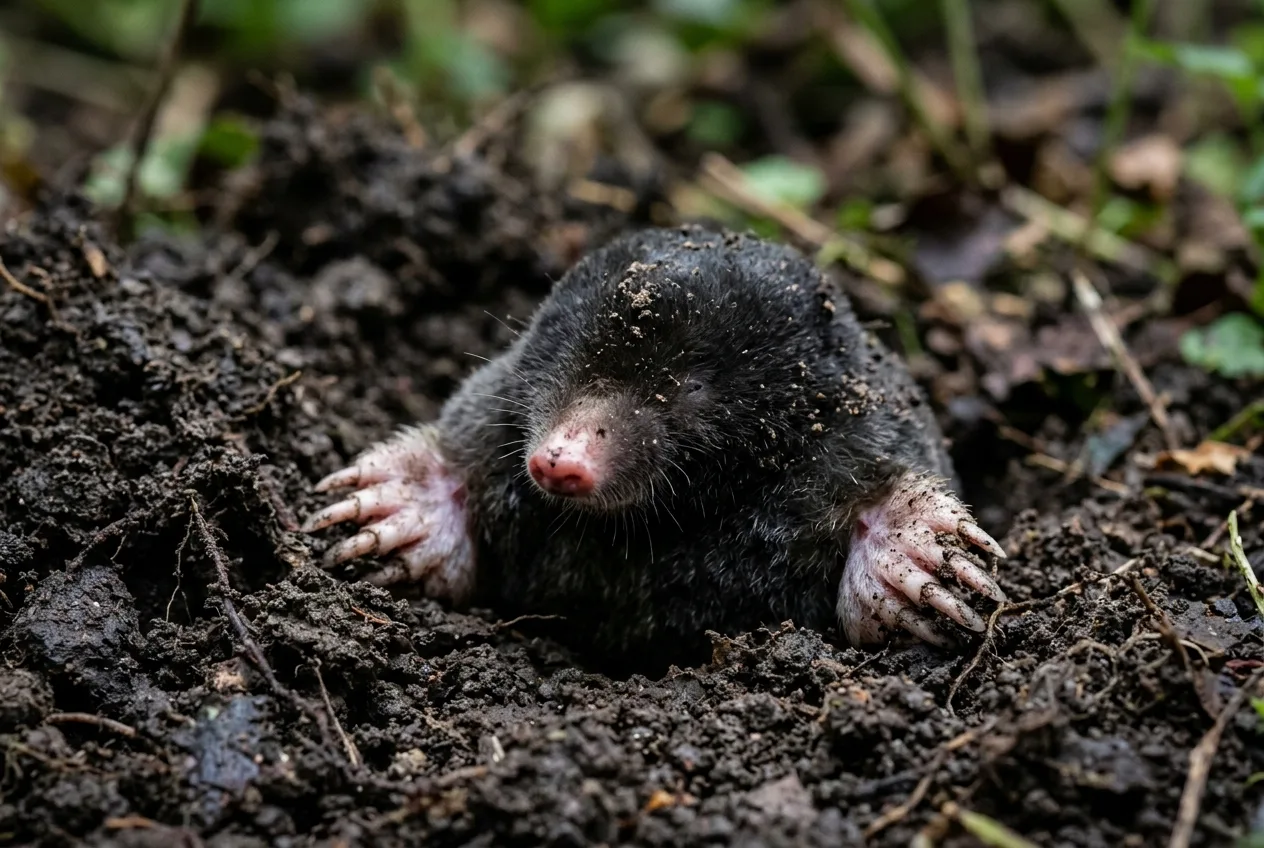
You can read the whole animal in its body. A mole has huge, paddle-shaped front feet with the palms turned outward, a hairless pointed snout that sticks out past its mouth, tiny eyes, and no external ears at all. Its velvety fur lies in no particular direction, which lets it reverse through a tunnel as easily as it goes forward. It's built entirely for digging — and dig it does, sometimes at "1 to 3 feet per minute" near the surface.
What mole damage looks like
Two signs, and they come from two kinds of tunnel.
The raised ridges snaking across your lawn are surface feeding tunnels — the mole plowing just under the sod, hunting. These can grow shockingly fast; one source clocks surface runways extending up to 100 inches in a single day. Many are used once and abandoned. They heave up the turf, dry out the grass roots, and get "scalped" by the mower.
The molehills — those round, volcano-shaped mounds, often with concentric "ripple marks" from each load of soil — are something else. They're spoil from the deep runways, three to twelve inches down, that the mole uses as travel corridors and pushes up through short vertical shafts. Deep runways tend to follow sidewalks, driveways, fence rows, and the woody edge of a yard.
Here's the thing about the actual harm: it's mostly cosmetic and structural, not a threat to your plants. Moles disturb roots as they tunnel and make a mess of a manicured lawn, but they "seldom eat roots, bulbs, or other plant materials". In fact they do real good — aerating soil, improving drainage, and eating grubs that damage turf. So why do moles get blamed for chewed bulbs? Because **their tunnels become highways for the animals that do eat plants.** Voles, deer mice, and house mice move into mole runways and gnaw the bulbs and seeds, and the mole takes the fall. Keep that in mind — it's the root of half the mole-vole confusion.
The mole isn't eating your bulbs. The vole using the mole's tunnel is — and you'll never fix that by going after the mole.
One more reassurance: you have far fewer moles than you think. A mole needs a lot of territory to find enough food, so a yard "rarely exceeds a density of three moles per acre," and often it's just one animal making what looks like the work of a dozen.
How to control moles (and what's a waste of money)
If the damage genuinely warrants action, trapping is the most effective and practical method — full stop, by consensus across every serious source. Because lawns hold so few moles and moles breed slowly, you can realistically clear them out and keep up.
The how matters. Mole traps — harpoon (plunger) types, scissor-jaw types, and choker-loop types — all work when set right, and they exploit the mole's instinct to reopen a blocked tunnel. The keys, drawn straight from the extension guides:
- Find an active runway. Look for fresh ridges that run fairly straight, connect two mounds, or follow a sidewalk or fence line — those are travel routes, not the aimless feeding tunnels. Confirm activity by gently flattening a short section and checking in 24 hours; if it's pushed back up, it's live.
- Set on the active tunnel, and don't over-dig. For a harpoon trap, flatten a small section of the ridge and push the trap in until the trigger pan rests on it; for scissor or choker traps, excavate a bit of tunnel, repack loose soil, and set so the jaws straddle (or the loop encircles) the run. Avoid disturbing the rest of the system.
- Use several, and be patient. The guides recommend at least three traps at once; if one hasn't fired in two to three days, move it. Spring and fall, especially after rain, are the best windows, because that's when moles work near the surface.
Now the part that saves you a season of frustration — what doesn't work:
- Grub killers and soil insecticides. This is the famous trap. Grubs are only part of a mole's diet; its "Main Mole Meal" is earthworms, which no grub product kills. Strip out the grubs and the mole keeps eating worms — and in the short term it often digs more, not less, hunting for food. Iowa State calls the insecticide cure "the great landscape lie," kept alive by wishful thinking and a profit motive to sell unnecessary chemicals. Soil insecticides are also expensive, slow, and hard on songbirds and beneficial invertebrates.
- Repellents. Castor-oil products have shown, at best, "minor effectiveness" and inconsistent results in testing. Penn State notes the one well-known castor-oil product, Mole-Med, had its registration canceled back in 2005, and "no chemical repellents [are] currently registered for use on moles". As for the fabled "mole plant," caper spurge — whose root exudates are claimed to repel moles — the RHS calls it "worth a try," but warns it can become invasive if you let it seed, so deadhead it before that happens.
- Fumigants and home remedies. Gas cartridges are "only occasionally effective" because moles quickly wall off a treated tunnel, and their extensive shallow runways let the gas escape. As for chewing gum, broken glass, pinwheels, vibrating windmills, and ultrasonic gadgets — none have ever been shown to work.
If you garden in Britain, the Royal Horticultural Society makes a gentler case worth hearing: since a single territorial mole usually accounts for all the activity in a small garden, and since molehills can simply be raked off before mowing, the kindest and easiest option is often to live with it.
The vole: the quiet rodent that girdles your trees
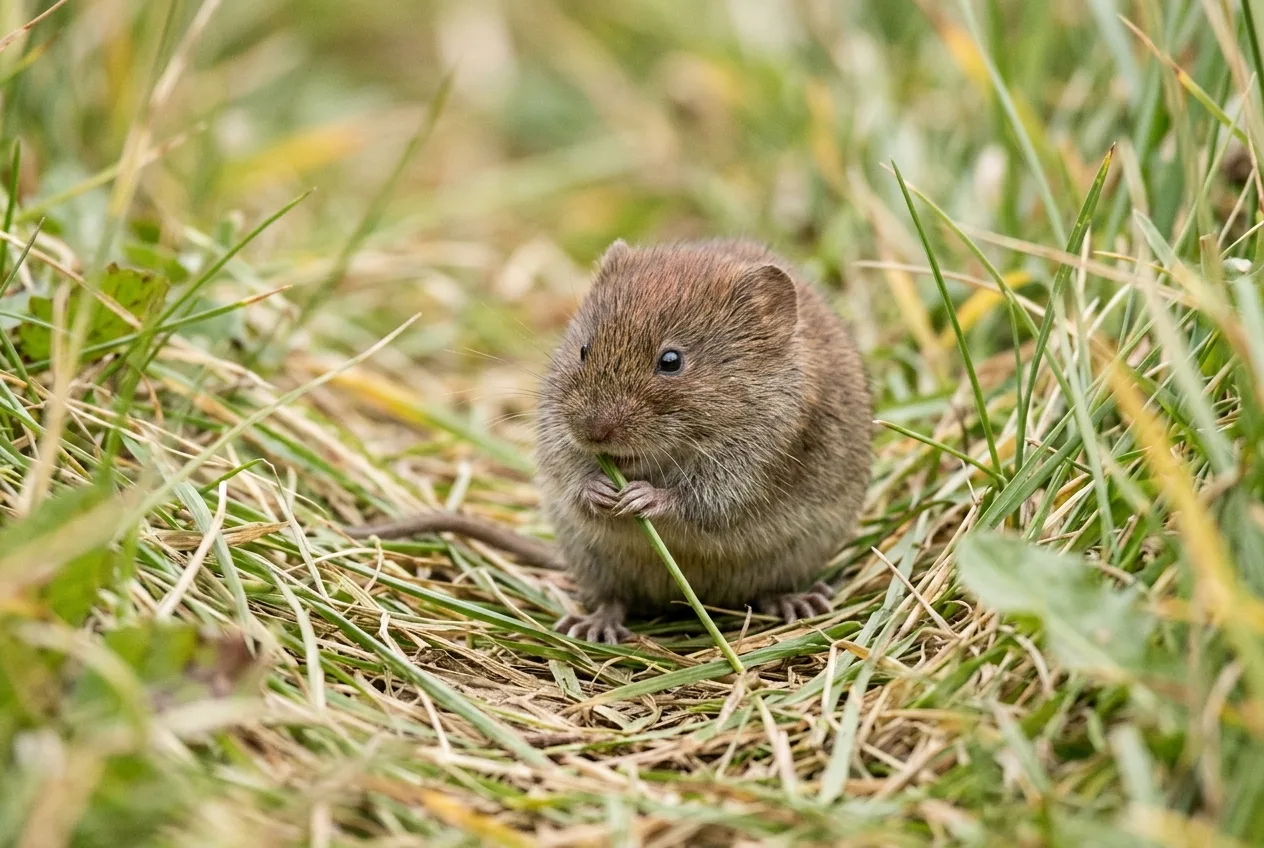
Voles are the animal people think moles are. They're small, stout, mouse-like rodents — often called "meadow mice" or "field mice" — with short legs, a short tail, small eyes, and ears nearly hidden in the fur. The quickest way to separate a vole from a mouse: a vole has a blunt, rounded face, while a mouse's head extends forward to a point, and a vole's tail is short where a mouse's is as long as its body. Among the voles themselves, tail length is the giveaway — a field vole's tail runs about 30 percent of its body length, a bank vole's closer to 50 percent. They're rodents through and through, which means they eat plants, and they breed at a pace that should worry any gardener.
Why voles get out of hand so fast
A female vole matures in about 35 to 40 days and can produce five to ten litters a year. Penn State figures a single meadow vole "could potentially produce over 70 young in a year". Populations swing on rough three-to-five-year cycles — quiet for a while, then an irruption, with densities that have been recorded as high as several thousand per acre at the peak. The pattern is global: in Europe, the common vole erupts on the same kind of cycle and "can reach densities of more than 2,000 individuals per hectare," doing enormous damage across millions of hectares of farmland. The field vole is reckoned to be the single most common mammal in Britain, with a population estimated around 75 million.
The practical upshot of all that breeding: as Sanchez notes, voles' "high rate of reproduction" makes them genuinely hard to knock down once they're established, which is why prevention beats reaction.
What vole damage looks like
Two signatures, depending on the season and the species.
Surface runways. In grass, voles maintain a network of "criss-crossing trails" they keep clipped clear of vegetation — one to two inches wide, with open holes and small piles of rice-grain-shaped droppings. You'll see them most dramatically the moment snow melts in spring, when a winter's worth of under-snow trails is suddenly exposed across the lawn. Fresh green clippings and greenish droppings in a runway mean it's active; vegetation growing back in it means the voles have moved on.
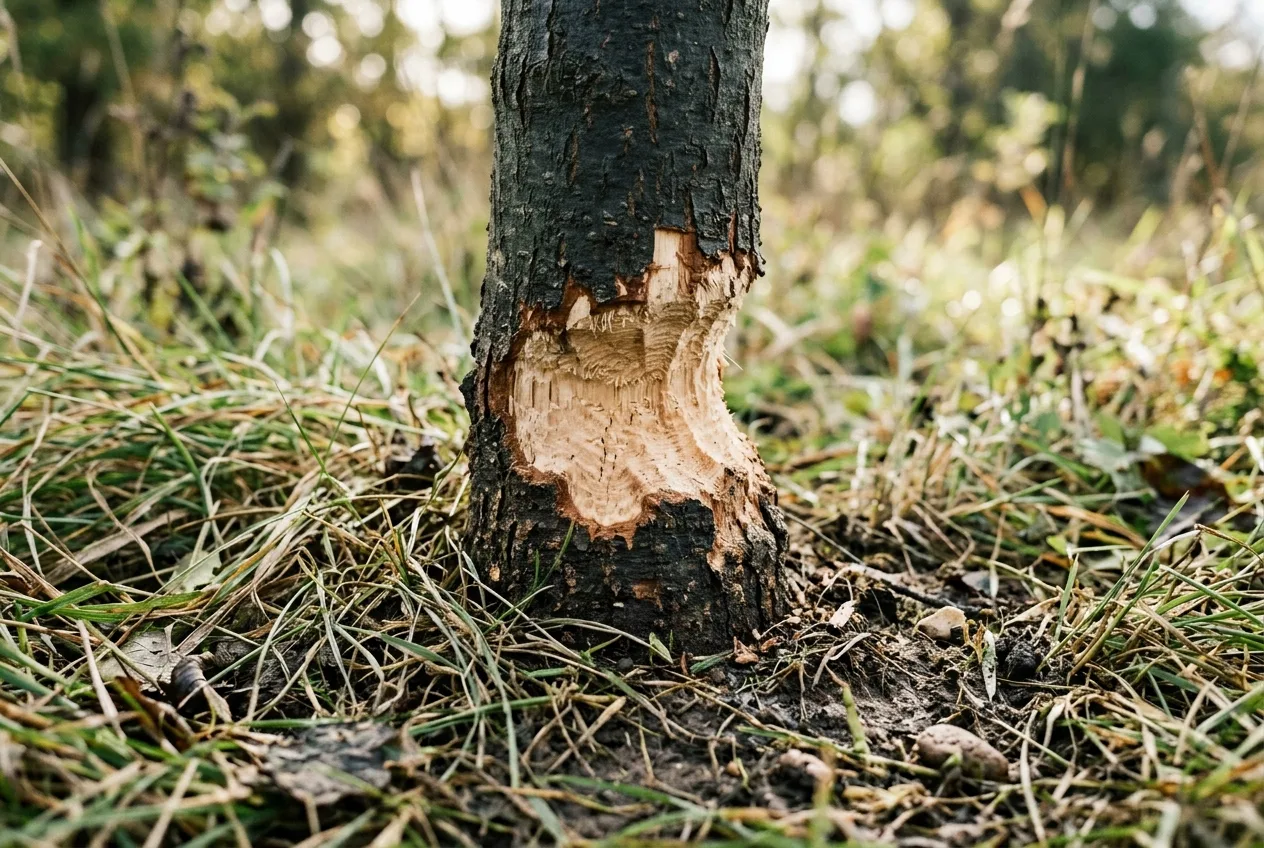
Girdling. This is the damage that actually kills things. In fall and winter, voles gnaw the bark off young trees and shrubs, often right at the soil line, leaving "side-by-side grooves" — paired marks from their incisors, roughly an eighth of an inch wide and a bit longer, in irregular patches. Strip the bark all the way around the trunk and you've girdled the tree: everything above that ring is cut off from its roots and dies. The cruel part is the timing — the gnawing happens under the snow, hidden, and the tree looks fine until spring, when it may leaf out briefly and then suddenly wilt and die. Where snow piles deep, the damage can run a foot or more up the trunk.
Voles do their worst work in the dark of winter, under the snow, and you don't find out until the tree dies in spring.
A useful piece of detective work for orchardists and anyone with fruit trees: there are really two kinds of vole, and they damage differently. The meadow vole lives and feeds mostly above ground — surface runways, bark girdling at the ground line. The woodland or pine vole lives mostly below ground and does its damage to roots and the root crown, so the only sign is a tree that quietly weakens and fails. To tell which (and where) you've got them, growers use the elegant apple-sign test: lay a slice of apple in a runway or burrow, come back in 24 hours, and check for tooth marks — that maps exactly where the voles are active so you can target control to those spots instead of treating the whole property.
It's worth ruling out a look-alike. Rabbits also gnaw bark, but rabbit damage starts several inches up the trunk (not at the soil line), shows much bigger tooth grooves, and often clips young branches clean off at a 45-degree angle. And a plastic tree wrap that stops rabbits "will not prevent meadow vole damage," so don't assume one guard covers both.
How to control voles
With voles, the order of operations is different from moles and gophers: you change the habitat first, protect your trees second, and trap or bait only if you still need to. Voles are a prey animal that survives by hiding in cover, so taking the cover away does most of the work.
Make the place inhospitable. Voles need dense ground cover for food and protection from predators; remove it and their numbers fall. Mow low — and make the last mowing of fall a short one — to expose runways and the voles in them to hawks and owls. Keep mulch, leaf litter, and prunings from piling up against trunks; pull bird feeders or keep the spilled seed cleaned up, since that's a vole magnet. Around young trees especially, clear a bare-soil ring at least three feet across — voles "prefer not to feed in the open," so a bare buffer keeps them off the bark. Where a lawn meets wild or weedy ground, a six-to-eight-foot bare or closely mown strip slows invasion from outside.
Guard the trunks. For the trees you care about, wrap the base in a cylinder of quarter-inch-mesh hardware cloth — buried a few inches into the soil so voles can't tunnel under, and tall enough to stand above the expected snow line. Leave room inside for years of trunk growth. Light-colored plastic tree guards work too, as long as they're loose enough not to constrict the tree and seated into the soil at the base.
Then, if you must, trap or bait. When numbers are low or confined to a small area, snap-trapping works: standard wooden mouse traps, set perpendicular to the runways with the trigger end in the path, often unbaited (the vole runs over it) or baited with peanut butter. Cover each trap to protect birds and pets. Use plenty — a small garden needs a dozen at minimum. For larger outbreaks, the only toxicant cleared for residential vole control in many areas is zinc phosphide, a restricted-use, single-feed bait that must go in covered bait stations to keep it away from non-target animals; read and follow the label, and understand there's no antidote. In orchards, growers often pair an acute bait like zinc phosphide to knock the population down with an anticoagulant for longer winter protection, timing applications for late fall before snow. Repellents (capsaicin, castor oil, thiram) are weak and shouldn't be your only line of defense.
What you can't lean on is predators alone. Hawks, owls, foxes, weasels, and cats all eat voles, and they help — but they "can't keep vole populations below damaging levels" near a garden, because a few survivors repopulate fast. Encourage them, don't rely on them.
The pocket gopher: the North American plant-puller
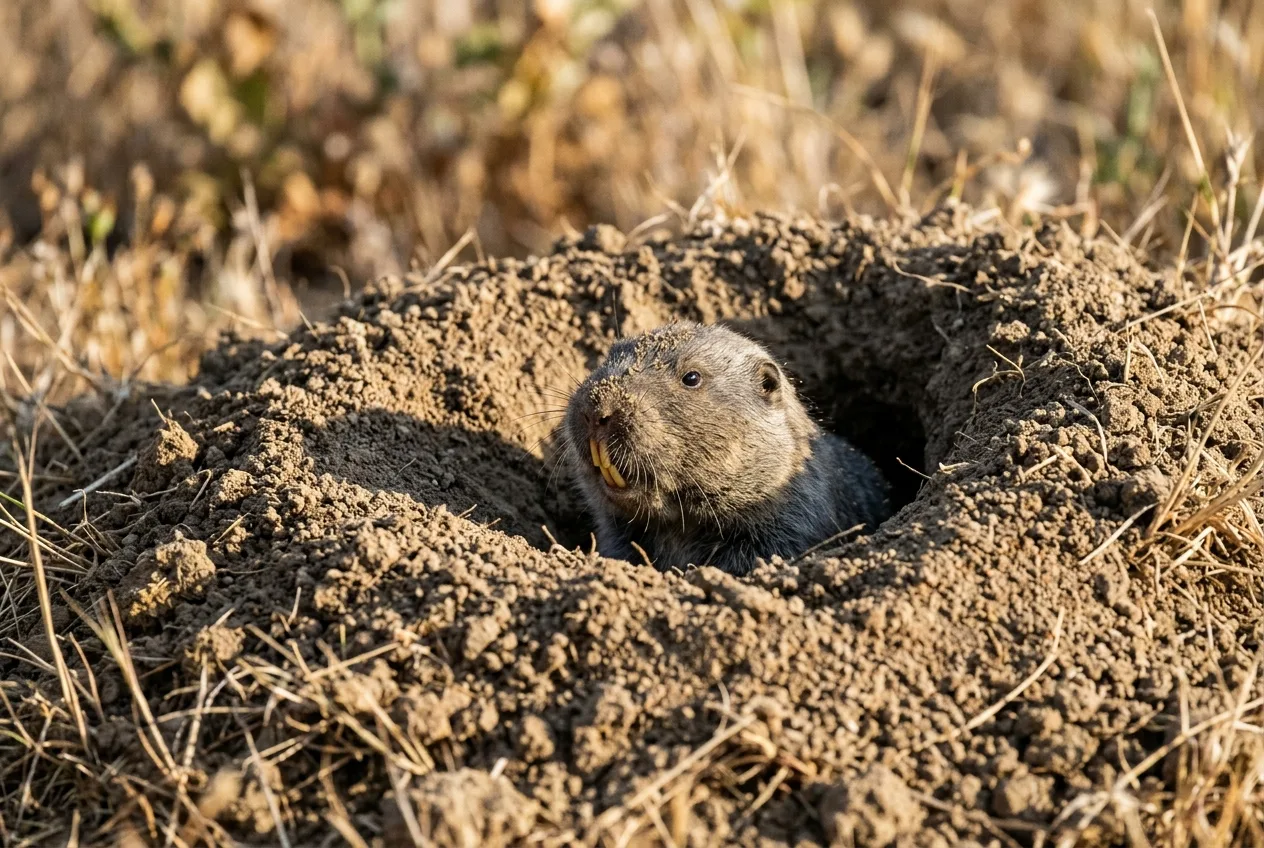
Now for the animal that doesn't exist outside the Americas — and that does the most dramatic damage of the three. A pocket gopher is a stout, powerful rodent, five to fourteen inches long, named for the fur-lined cheek pouches outside its mouth that it uses to haul food. It's a digging machine: big-clawed front paws, small eyes and ears, lips that close behind its incisors so it can dig with its teeth without eating dirt. Like the others, it's almost never seen above ground.
If you're outside North America, you can skip this section — gophers (the family Geomyidae) live only in the Western Hemisphere, from Central America up into the Canadian prairies, and nowhere else. They do reach Canada: the northern pocket gopher is a recognized pest in the interior of British Columbia, where, tellingly, it's "often mistakenly called a mole". But there is no European or Asian or African pocket gopher, which is why the UK and European sources in this field cover only moles and voles.
What gopher damage looks like
The mound is the signature, and we've covered it: fan- or crescent-shaped, with a plugged hole off to one side, usually clumped in groups. That's how you separate it from a mole's round, centered, in-a-line mound. Gophers also sometimes leave "eskers" — solid ropes of soil snaking across the lawn, revealed when snow melts, that mark where they backfilled tunnels under the snowpack.
The damage itself is to plants, and it's serious. Gophers are strict herbivores that eat roots, clip vegetation, and "pull things below ground" — which is the origin of the classic gardener's experience of watching a whole plant vanish into the earth. They clip the roots of fruit trees and crops, girdle stems below ground, and gnaw whatever they encounter. They'll also wreck infrastructure: gophers chew through buried irrigation lines, sprinkler systems, and even electrical and utility cables — Utah State documents solar farms shut down by gopher-severed wiring.
The scale of a single gopher's earthmoving is hard to believe. One animal may build "as many as 300 soil mounds a year while moving over 4 tons of soil," with a tunnel system running up to 200 yards. And it's almost always one animal per burrow system — gophers are solitary and fiercely territorial, so even an alarming run of fresh mounds is usually the work of a single resident, except during breeding or when a female has young.
One gopher, working alone, can move four tons of soil and string 200 yards of tunnel under your garden in a year.
How to control gophers
As with moles, trapping is the most reliable approach for a yard or small property, and it needs no bait. The difference is where you set the trap: not on a surface ridge, but down inside the gopher's main tunnel.
- Find the main tunnel. Locate a fresh mound, then probe the plug side of the fan with a metal rod or long screwdriver until it drops into the tunnel. (If you can't tell which mounds are fresh, flatten them all and come back the next day — the reopened ones are active.)
- Set paired traps. Dig down to expose the tunnel, and place a trap facing each direction so you catch the gopher coming either way. Pincer-type traps (Gophinator, Macabee, Victor) are the standard; box traps work too. Stake or wire each trap so a predator — or an improperly caught gopher — can't drag it off.
- Block the light and keep at it. Cover the opening so daylight doesn't reach the trap, check often, and keep trapping until no new mounds appear. If a trap hasn't produced in 48 hours, move it to a fresh mound.
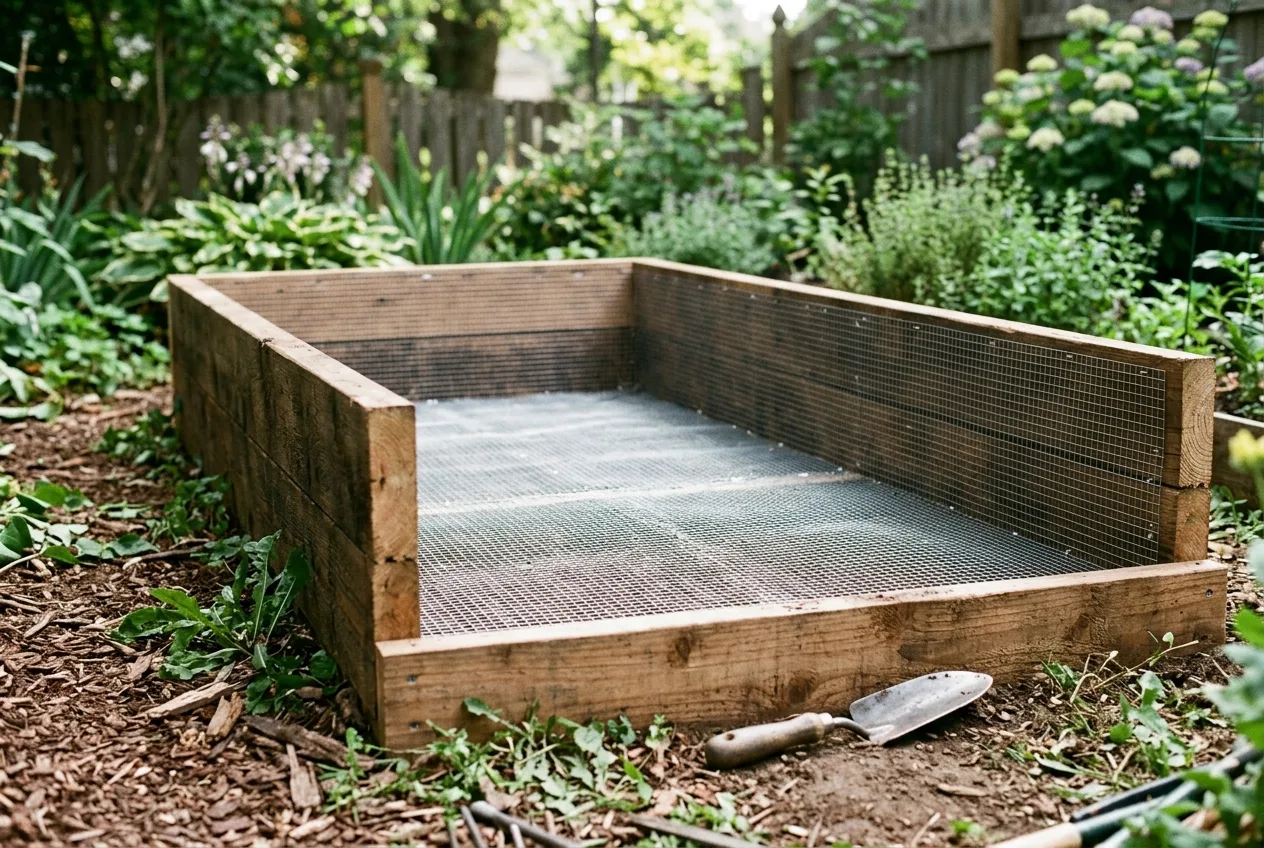
To protect specific high-value plants, underground exclusion works: line the bottom of raised beds with hardware cloth or three-quarter-inch poultry wire before planting, or set individual wire baskets around a tree or shrub's roots at planting time — leaving room for the roots to grow. For bigger jobs, a buried mesh fence (quarter- to half-inch mesh, down about 18 inches) can ring a garden.
Beyond trapping, the heavier tools are for larger acreage and generally for experienced hands: in-burrow baiting with strychnine (a single-feed bait, used strictly below ground), zinc phosphide, or lower-toxicity anticoagulants, all placed into the main tunnel and covered, never scattered on the surface; and fumigation with products like aluminum phosphide or carbon-monoxide systems. These are label-restricted, some are restricted-use pesticides requiring a licensed applicator, and the labels carry serious warnings — read them and follow them exactly.
And as with the other two, the gadgets don't deliver. University of California trials found that vibrating stakes, ultrasonic devices, and wind-powered pinwheels don't reduce gophers; no commercial repellent (gopher purge, castor bean, garlic included) protects plants; owl boxes won't bring numbers down enough to save your plantings; and the smoke and gas cartridges sold to homeowners fail because a gopher seals off its burrow before the gas does its job. Save your effort for traps and exclusion.
Side by side: a quick field guide
When you're standing on the lawn trying to decide, this is the comparison to run through.
| Mole | Vole | Pocket gopher | |
|---|---|---|---|
| What it is | Insectivore (not a rodent); eats worms, grubs, insects | Small rodent; eats grass, roots, bark, bulbs | Large rodent (N. America only); eats roots, clips whole plants |
| Mounds | Round/volcano-shaped, hole plugged in the middle, usually single, in a line | None | Fan/crescent-shaped, plugged hole off to one side, often clumped |
| Surface signs | Raised ridges that wander; molehills | Open holes (~1–2 in) + clipped runways through turf | Fan mounds; sometimes soil "eskers" after snow |
| Plant damage | Little/none — disturbs roots as it tunnels | Girdles bark at soil line; clips grass; eats bulbs/roots | Clips roots, girdles below ground, pulls plants under |
| Where in the world | Throughout N. America, UK, Europe, Asia | Throughout N. America, UK, Europe, Asia | North America only (Panama to Alberta) |
| Primary control | Trapping on active runways | Habitat + tree guards first, then traps/bait | Trapping in the main tunnel |
| Doesn't work | Grub killers, repellents, gas cartridges, gadgets | Predators alone; weak repellents | Repellents, ultrasonic/pinwheels, smoke bombs |
A few quick cross-checks if you're still unsure. A vole hole is "neat," with no soil mounded around it, roughly an inch to an inch and a half across — distinct from a mound-builder's plugged exit. A mole's tunneling makes the ground feel soft and the mounds appear strung along a line, whereas gopher mounds bunch up. And the look-alike to remember: a shrew resembles a small mole but doesn't make surface tunnels, while chipmunks and ground squirrels dig holes but leave them open and unplugged, with no mound — unlike the plugged, mounded work of a gopher.
When to do nothing at all
One honest closing note, because not every tunnel is a problem to solve. All three animals do genuine good underground — moles and gophers aerate and mix the soil, moles eat turf-damaging grubs, and a low background population of voles feeds the hawks and owls you want around. The right first question isn't "how do I kill it," it's the one Dana Sanchez poses: "Is having a few holes in the lawn enough of a problem that you need to take action?".
For a lot of yards — a few molehills you can rake off before mowing, a vole runway that grass will cover by midsummer — the answer is no. Save the traps and the labeled baits for when something's actually at stake: a young orchard going into winter, a vegetable bed being hollowed out, irrigation lines at risk. Identify the animal first, match the method to it, and act only where it counts. That's the whole game.
Frequently asked questions
How do I tell a mole hole from a vole hole from a gopher hole?
Look for a mound. A mole leaves a round, volcano-shaped mound with the hole plugged in the middle; a gopher leaves a fan-shaped mound with the plugged hole off to one side, usually in clusters; a vole leaves no mound at all — just neat open holes, about an inch wide, connected by worn runways through the grass.
Will grub killer get rid of my moles?
No, and this is the most common and most expensive mistake. Moles eat mostly earthworms, which grub products don't touch, so the mole keeps tunneling — and may even dig more in the short term while hunting for food. Trapping on active runways is what actually works.
Are pocket gophers a problem outside North America?
No. Pocket gophers live only in the Western Hemisphere, from Central America up into Canada, and nowhere else. If you're gardening in the UK, Europe, or Asia and something is tunneling, it's a mole or a vole — there is no European pocket gopher.
What's actually killing my young fruit trees over winter?
Almost certainly voles girdling the bark. They gnaw the trunk at or near the soil line — sometimes higher under deep snow, sometimes on the roots below ground if it's a pine vole — and the tree may look fine until it leafs out and suddenly wilts in spring. A buried quarter-inch hardware-cloth cylinder around the trunk, plus a bare-soil ring, prevents it.
Do ultrasonic stakes, pinwheels, or repellents work on any of them?
Not reliably on any of the three. Controlled trials and extension testing have found ultrasonic and vibrating devices, pinwheels, and the common plant-based repellents ineffective against moles and gophers, and vole repellents weak at best. Trapping and exclusion are where to spend your effort.
How many of these animals am I really dealing with?
Usually far fewer than the damage suggests. Moles rarely exceed about three per acre and are often a single animal, and a gopher is almost always one solitary, territorial individual per burrow system — even when the mounds look like an army. Voles are the exception: they breed fast and can reach high numbers in an outbreak year.