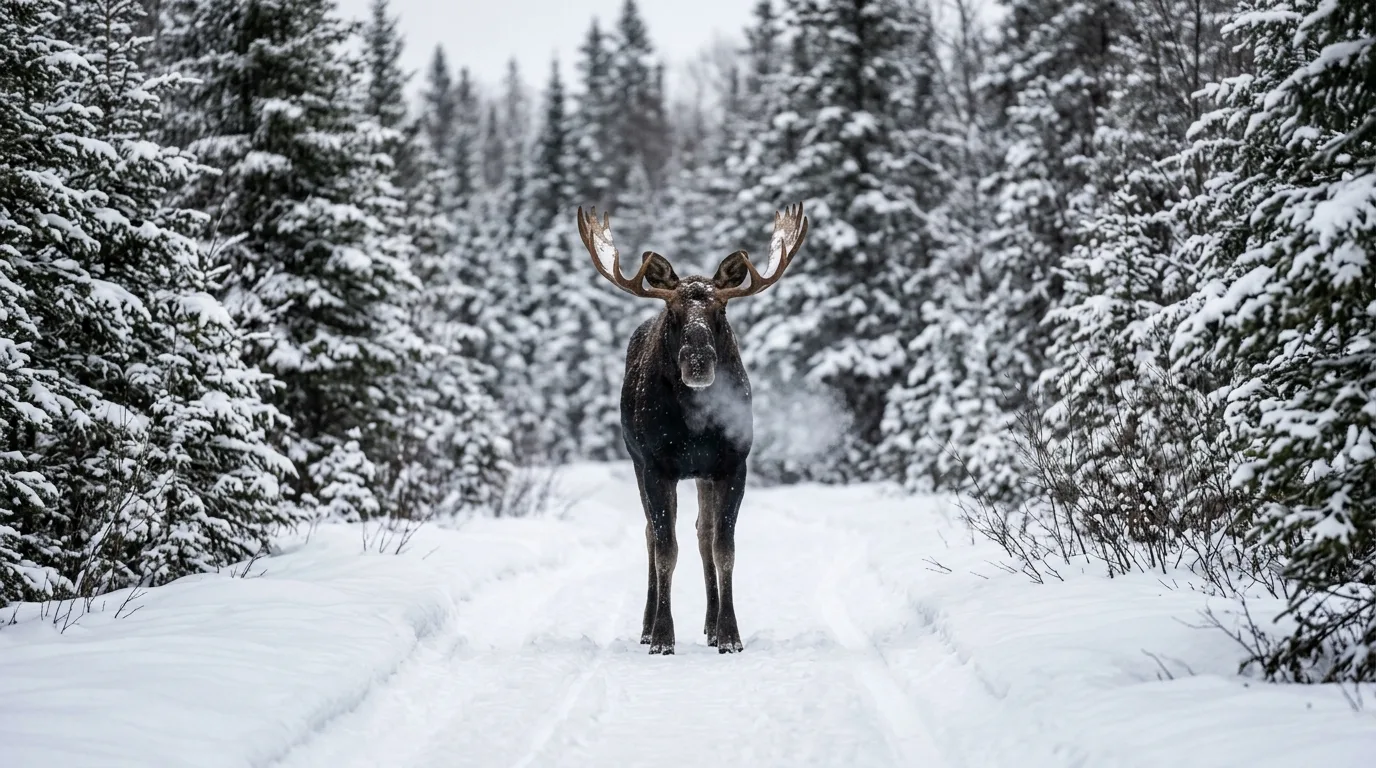
A wildlife biologist who runs New Hampshire's moose program once described the safe distance from a moose like this: you want to be "far enough away to get behind the nearest tree before a galloping horse could get there". Hold that image, because it tells you almost everything. A moose isn't a bear that you face down or play dead for. It's a half-ton animal that would rather ignore you — right up until the moment it decides to drive you off, and then it can close the gap in a second.
So, are moose dangerous? The honest answer is: usually not, but more than people think. Moose are not normally aggressive, and most of the time a moose that notices you will simply wander off. But "not normally aggressive" is not the same as harmless. In Alaska, more people are injured by moose every year than by bears. People have been stomped to death — two in Anchorage in the 1990s alone. The risk is real; it's just predictable. A moose almost always tells you it's about to charge, in body language that's easy to read once you know what you're looking at. This piece is about reading those signals early and knowing exactly what to do, whether you meet a moose on a trail, in a backyard, or coming over the hood of your car.
The real scale of the risk
Let's put the danger in proportion, because both fear-mongering and dismissiveness get people hurt.
Moose are the largest member of the deer family — an adult stands well over six feet at the shoulder and weighs close to 1,000 pounds, with the biggest bulls topping 1,400. Even a calf weighs 300 to 400 pounds by its first winter and can seriously injure you. That mass, on legs that kick hard in every direction, is the whole story of why a normally gentle herbivore lands people in the hospital.
But how often does it actually happen? In Anchorage — a city that genuinely lives among moose — the Department of Fish and Game fields around a thousand calls a year about nuisance or aggressive moose, and more than 100 people get charged annually. Most of those are bluff charges with no contact, but an estimated 5 to 10 result in real human injuries each year, and since 1993 two people have been killed. Colorado, where moose were reintroduced in 1978 and are now thriving, has logged 22 injuries from moose attacks since 2019. Direct attacks are uncommon, in other words, but they are not rare enough to ignore — and in some regions there has never been a recorded fatality from a moose attack at all.
Most moose charges are bluffs meant to warn you off — but you never get to find out which ones, so you treat every charge as real.
Here's the twist that surprises people: the deadliest thing about moose has nothing to do with their temper. It's traffic. We'll come back to collisions in detail, but keep the framing in mind — in British Columbia, wildlife managers flatly call vehicle collisions "the biggest threat to human safety" from moose, and the same holds across moose country.
When moose turn aggressive
A moose doesn't wake up looking for a fight. It gets pushed into one. Learn the four or five situations that flip a calm animal into a dangerous one, and you've done most of the work of staying safe.
Cows with calves (late spring and summer)
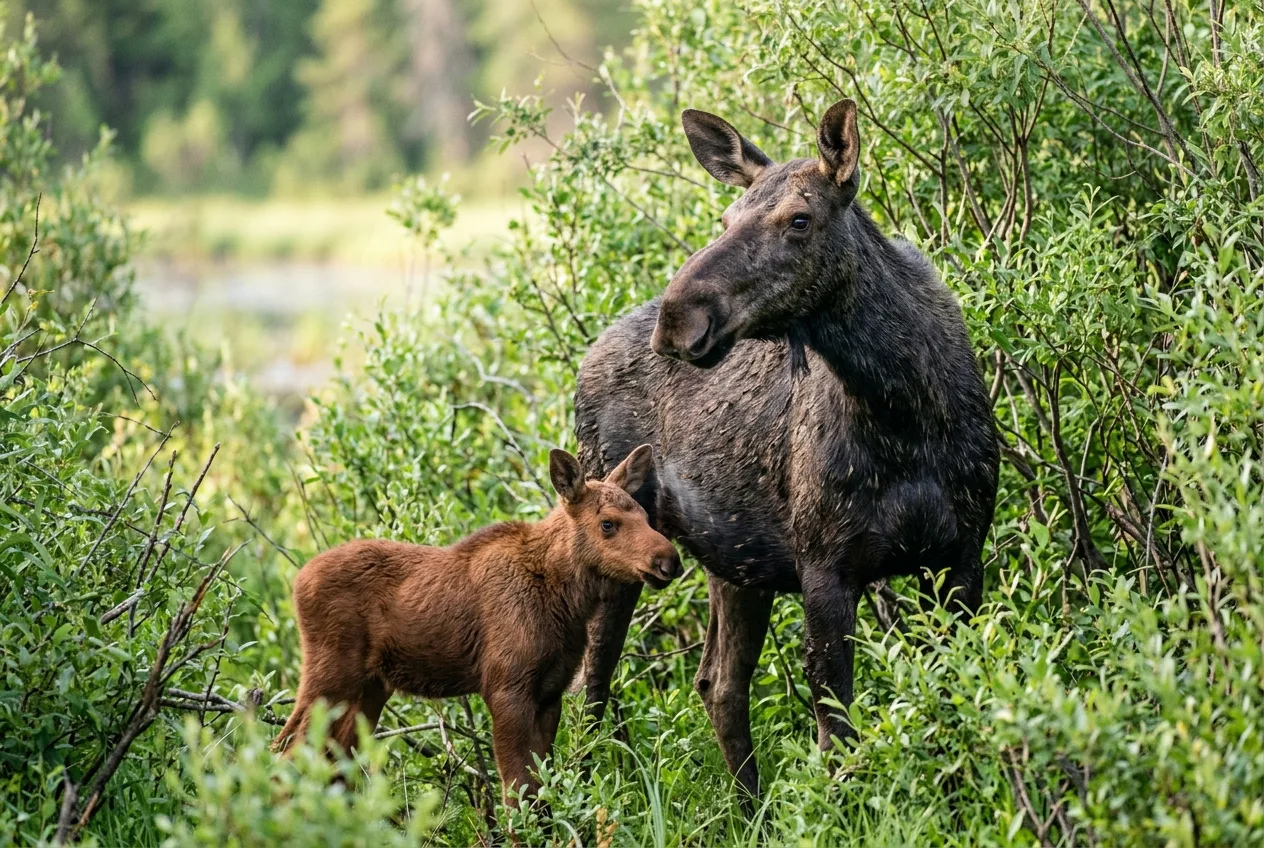
This is the big one for hikers. From the time calves are born in late spring through the whole summer, cow moose are fiercely protective, and they will attack a person who gets too close. In Parks Canada's reckoning, cows are at their most dangerous during calving season, roughly mid-May to the end of June. A cow will often stash her calf in cover and stand watch nearby, so the danger isn't always the animal you can see — it's the one you can't.
The trap people fall into is the calf that looks abandoned. It almost never is. As Alaska's biologists put it, if you see a calf on its own, be very careful, "because you may have walked between it and its mother — a very dangerous place to be". The rule writes itself: if you spot a calf, turn around and leave.
Rutting bulls (fall)
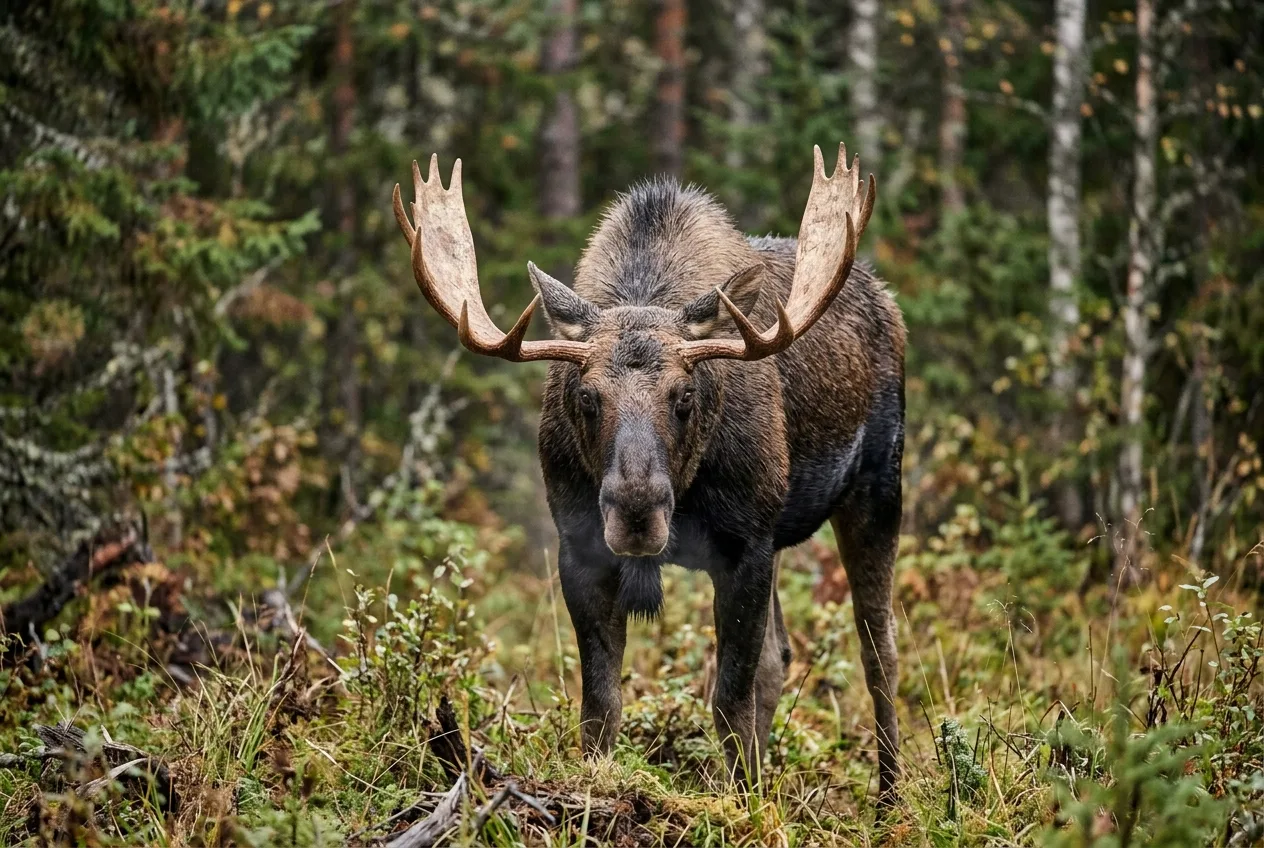
Come the fall mating season — the rut, roughly late September through October, stretching into November or beyond in some regions — bull moose can become extremely aggressive and territorial. This is when bulls are charged up on hormones, sparring with each other for breeding rights, and in no mood to share space. Bulls have occasionally taken over pastures and injured or killed livestock defending their turf. The standing advice from every park agency is the same: give bulls noticeably more room in September and October.
Winter-stressed moose in deep snow
Winter is the quietly dangerous season, and it catches people off guard. When deep snow and crust make travel exhausting and food hard to reach, moose move onto plowed roads, packed trails, and ski tracks to save energy — putting them right where we are. A moose in that state is "stressed from dealing with deep snow and... struggling to find enough easily accessible food," as one Alaska wildlife biologist described a brutal winter. Hungry, tired, and reluctant to wade back into the snow, it may simply refuse to yield the trail and defend its spot aggressively.
A moose blocking the trail in deep snow isn't being stubborn — it's conserving the energy it needs to survive the winter, and it may fight rather than move.
There's a counterintuitive warning buried here. Your instinct might be to shoo the moose off. Don't. Moose don't respond to hazing — yelling, banging pots, throwing things — the way a bear might. "A common reaction for a moose is to turn and attack the person or vehicle that is trying to get them to move," Alaska's department warns; moose have charged people, cars, and snowmobiles that tried to push them off a trail.
Dogs
If there's one factor that connects the most serious moose incidents, it's dogs. Colorado Parks and Wildlife put it bluntly after a string of attacks: "Most moose conflicts involve dogs". The reason is instinct. Moose react to dogs the way they react to wolves — one of their primary predators — and a moose "will sometimes go out of its way to kick at one, even if the dog is on a leash or in a fenced yard".
The danger to you is often indirect and worth understanding. An off-leash dog ranges ahead, surprises a hidden cow or calf, and then bolts back to its owner with an enraged moose right behind it — bringing the animal straight to you. In three Colorado attacks over three days in 2025, every single one involved dogs; in one, a woman was trampled multiple times, and in another she was hospitalized with serious injuries. Keep dogs leashed and close in moose country, and never let a dog chase or bark at a moose.
Habituation and feeding
A fed moose is a dangerous moose. When people feed them — by hand or just by leaving food out — moose lose their wariness and start expecting handouts. Then "a moose with a history of being fed may approach an unsuspecting person in hopes of receiving a hand-out... It may attack if it sees that the person has no food to offer". It's also illegal in many places, and it tends to get the animal killed once it becomes a public-safety problem. The kindest and safest thing you can do is never feed a moose, and ask your neighbors not to either.
The warning signs: how to tell a charge is coming
Here's the part that actually keeps you safe. A moose that's about to charge usually broadcasts it, and the cues are consistent across agencies from Alaska to New Brunswick. The catch, as a Maine state biologist warns, is that "these behavioral cues can happen very quickly" — and sometimes a moose shows almost nothing before it whirls and charges. So treat any of these as a hard signal to start backing away immediately.
| Warning sign | What you're seeing |
|---|---|
| Raised hackles | The long hairs on the hump, the back of the neck, and above the hips stand up. |
| Ears pinned back | Ears laid flat against the head, much like an angry dog or cat. |
| Lip-licking / mouth-smacking | Licking the lips or snout, smacking the mouth. |
| Lowered or swaying head | Head dropped and swung back and forth, often before a charge. |
| Whites of the eyes showing | Eyes rolling so the whites show. |
| Head tossing | Tossing the head upward like a horse. |
| Foot stomping | Stomping or pawing with a front hoof. |
| Urinating on its back legs | A rut-related display you may notice on bulls. |
| A moose walking slowly toward you | Not friendliness — it's looking for a handout or warning you off. Either way, a dangerous situation. |
| Short "bluff" charges | Brief lunges meant to scare you back. |
If you can clearly see a moose licking its lips, you are, in Alaska's dry phrasing, "way too close". And there's a simpler tell that doesn't require reading any of the above: if the moose reacts to your presence at all — if you've changed its behavior in any way — you're too close. Back off before it gets to the point of pinned ears and raised hackles.
What to do during an encounter
Most moose meetings never escalate, and a little patience defuses nearly all of them. The goal is simple: give the animal space and an easy way out, and keep something solid available to put between you.
If you come upon a moose unexpectedly, back away slowly. Get behind a tree or rock so you're not in its sightline. Avoid direct eye contact, move calmly, and as you retreat, scan for an escape route and for a large object you could put between you and the animal.
If a moose is blocking the trail, don't try to push past it. Wait — it may take half an hour, but a moose will usually move off on its own, and it's almost always worth the wait. If you must get by, take a wide detour and keep a tree, boulder, vehicle, or fence between you the whole way. Never approach a moose whose only escape route runs toward you, and always leave yourself an out.
Don't try to scare it off. As covered above, hazing tends to provoke a moose rather than move it. And what about bear spray? It's worth carrying for other reasons, but be honest about the evidence: while it may help, "there is little data to confirm this" against moose. Don't count on it as your plan.
The whole game is distance and barriers: keep something solid between you, never block the animal's escape, and never block your own.
A note on viewing distances, since "how close is too close?" is the question everyone asks. The guidance varies a little by jurisdiction — U.S. national parks set a baseline of 25 yards (23 m) for animals like moose, while Parks Canada recommends a wider 30 m (about 100 ft), or three bus lengths. Honestly, treat those as floors, not targets. Moose move faster than they look — up to 35 mph — and the only distance that really matters is one that lets you reach cover before the animal reaches you.
What to do if it charges
First, understand the charge. Most moose charges are bluffs — warnings to back off, not committed attacks. But you can't tell a bluff from the real thing in time to matter, so you react to every charge as if it's real.
This is where moose break the rules you've learned for other animals. With a bear, you usually stand your ground; with a moose, you run. A charging moose is trying to drive you away, and once you're far enough off, it'll lose interest — moose won't chase you far. So:
- Run, and get behind something solid — a tree, a boulder, a car, a building. You can dodge around a tree faster than a moose can, and a barrier is your best protection.
- Get inside if you can. A building or a vehicle ends the encounter — get in before the moose reaches you.
- If it knocks you down, curl up. Pull into a ball, cover your head and neck with your hands and arms, and hold still. A downed person who keeps moving invites more stomping; a still one is more likely to be left alone.
- Don't get up too soon. Stay down and motionless until the moose has moved a safe distance away. Getting up while it's still close can trigger a renewed attack.
When a moose does make contact, it typically strikes first with its front hooves, sometimes using the rear legs in a prolonged assault — but sustained attacks are rare, and the odds of a fatal one are very low. Your job is just to protect your head and outlast it.
The bigger danger: moose on the road
If you've read this far worried about being charged on a trail, here's the recalibration: you're statistically far more likely to be hurt by a moose through your windshield. Across moose country, vehicle collisions are the leading cause of human harm from moose, and they're the main reason moose are dangerous to people at all.
Why moose collisions hit so hard
It comes down to geometry. A moose's body sits high on long legs, so when a car hits one, it usually strikes the legs first — and the heavy body then "roll[s] onto the hood of the vehicle, often collapsing the windshield and roof". Sweden's research describes the same grim mechanism: the animal's full mass strikes directly against the windshield pillars and front roof, causing severe head and neck injuries to the people inside. That's why moose crashes injure people so badly relative to other animal strikes. In Maine, moose accounted for just 15% of animal collisions but half of all the injuries — and 82% of the deaths.
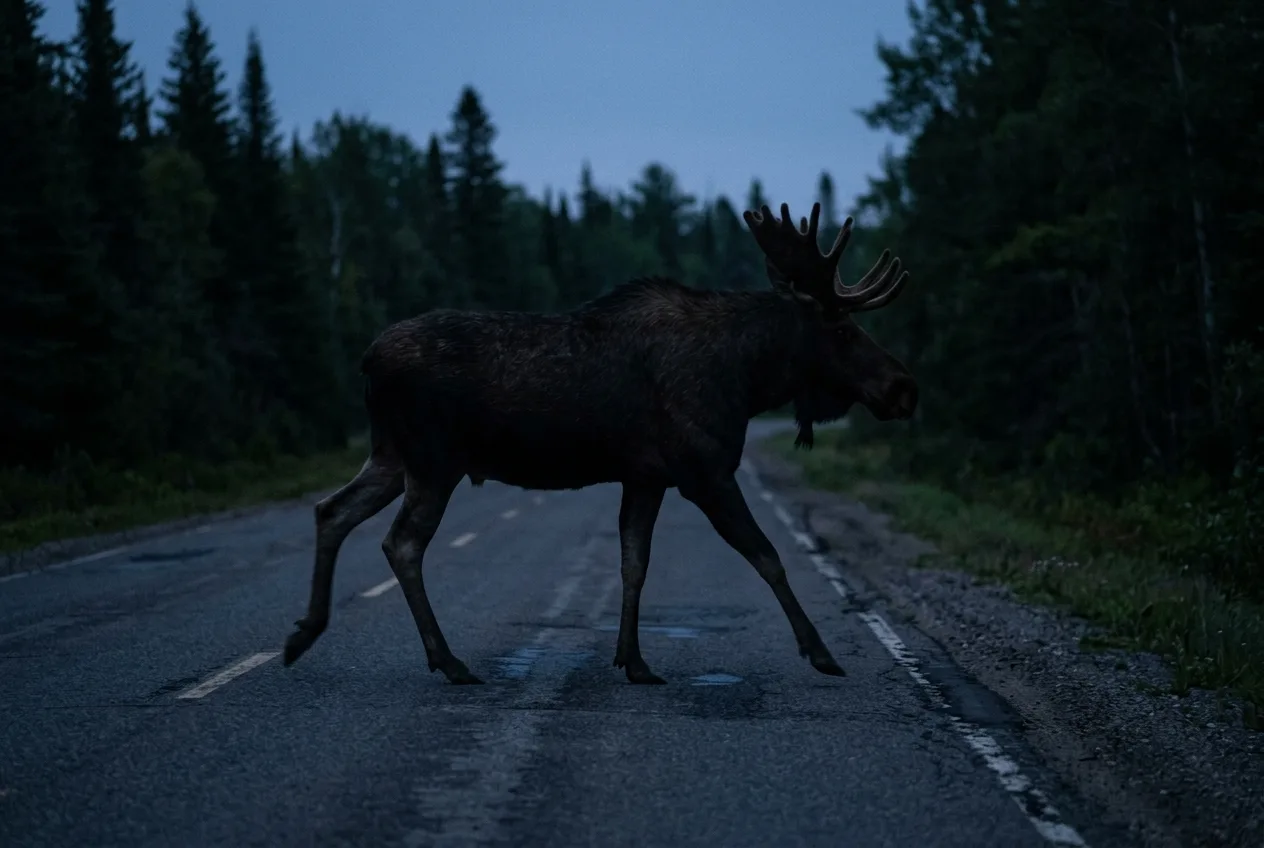
There's a visibility problem on top of the physics. Deer eyes throw headlight glare right back at you; a moose stands so tall that its eyes are above your headlight beams, and its dark body melts into the dark. As Maine's transportation department puts it, that makes a moose "even harder to see in time to avoid a collision".
In Maine, moose were just 15% of animal collisions but caused half the injuries and 82% of the deaths — the body comes through the windshield.
When and where it happens
Collision timing is genuinely regional, so know your area:
- Maine and the U.S. Northeast: May and June are the peak months. In Maine's five-year crash data (2020–2024), June and May top the moose-crash counts, and the majority of collisions fall between dusk and dawn.
- British Columbia: most vehicle collisions with moose happen in January and February, and at night.
- Sweden: the south peaks in early summer (calving) and autumn (rutting); the north peaks in December–January, once snow drives moose down to the lowland roads.
The through-line everywhere: moose are most active at dawn and dusk, and most collisions happen in the dark. The scale is sobering. Sweden alone has averaged on the order of 4,500 reported moose collisions a year, and ungulate–vehicle collisions overall — moose, roe deer, and other species combined — once made up over 60% of all police-reported road accidents there. Around 1980, when the problem peaked, roughly 6,000 collisions a year left an estimated 5 to 20 people dead and about 500 injured annually. Norway logs over 1,300 moose killed by cars and trains in a single year. It's the same picture in the U.S. Northeast: in Vermont, vehicles have been the leading cause of non-hunting moose deaths, responsible for 67% of them since 1980. And for the animal, these crashes are almost always fatal — about 92% of moose hit on Swedish roads die.
How to drive in moose country
The good news is that collision risk is largely in your hands:
- Slow down at dawn, dusk, and after dark, and especially where you see wildlife-crossing signs — they're placed where collisions actually happen.
- Don't outrun your headlights. If you can't stop within the distance you can see, you can't react to a moose stepping into the road.
- Use your high beams when you can, and scan the roadside, not just the road. Watch for the silhouette of a moose rather than the reflective eyes you'd catch on a deer.
- Assume there's more than one. If one moose crosses, others may follow — and a cow may have a calf with her.
- If a crash is unavoidable, brake hard and steer straight rather than swerving into oncoming traffic or off the road; let off the brake just before impact so the front of the car rises, and aim for the tail end of the animal.
- Never get out to shoo a moose off the road. You put yourself and other drivers at risk, and the moose may charge the car.
Trail cameras quietly help here, too. If you keep cameras on the trails, field edges, or the wood line near a property in moose country, the timestamps on those photos build a real picture of when moose are moving — which is exactly the dawn-and-dusk window when you most need to slow down on the road home.
Frequently asked questions
Are moose more dangerous than bears?
In terms of how often they hurt people, yes, in some places. In Alaska, more people are injured by moose each year than by bears. Moose are less predatory but far more numerous in many areas, and they injure people through stomping and kicking — and, above all, through vehicle collisions.
What should you do if a moose charges you?
Run — this is the opposite of bear advice — and get behind something solid like a tree, boulder, car, or building, because you can dodge around a tree faster than a moose can. If it knocks you down, curl into a ball, protect your head and neck, and stay still until it leaves the area.
What are the warning signs that a moose is about to attack?
Raised hairs on the hump and neck, ears pinned back, lip-licking, a lowered or swaying head, the whites of the eyes showing, head-tossing, and foot-stomping. A short bluff charge or a moose walking slowly toward you are also danger signs. Simplest rule: if the moose reacts to you at all, you're too close.
When are moose most aggressive?
Cows with calves are dangerous in late spring and summer; bulls are aggressive during the fall rut (roughly late September into November); and winter-stressed moose in deep snow may defend the trail rather than yield it. Dogs and harassment can provoke a moose in any season.
Why are dogs such a problem around moose?
Moose see dogs as wolves — a natural predator — and may go out of their way to attack one, even a leashed dog. An off-leash dog can also startle a hidden moose and then lead the charging animal straight back to you, which is how many serious encounters unfold. Most moose conflicts involve dogs.
How close is too close to a moose?
U.S. national parks recommend staying at least 25 yards (23 m) away; Parks Canada advises 30 m (about 100 ft). Treat those as minimums — moose can move at up to 35 mph, so you want enough distance to reach cover before the animal reaches you.