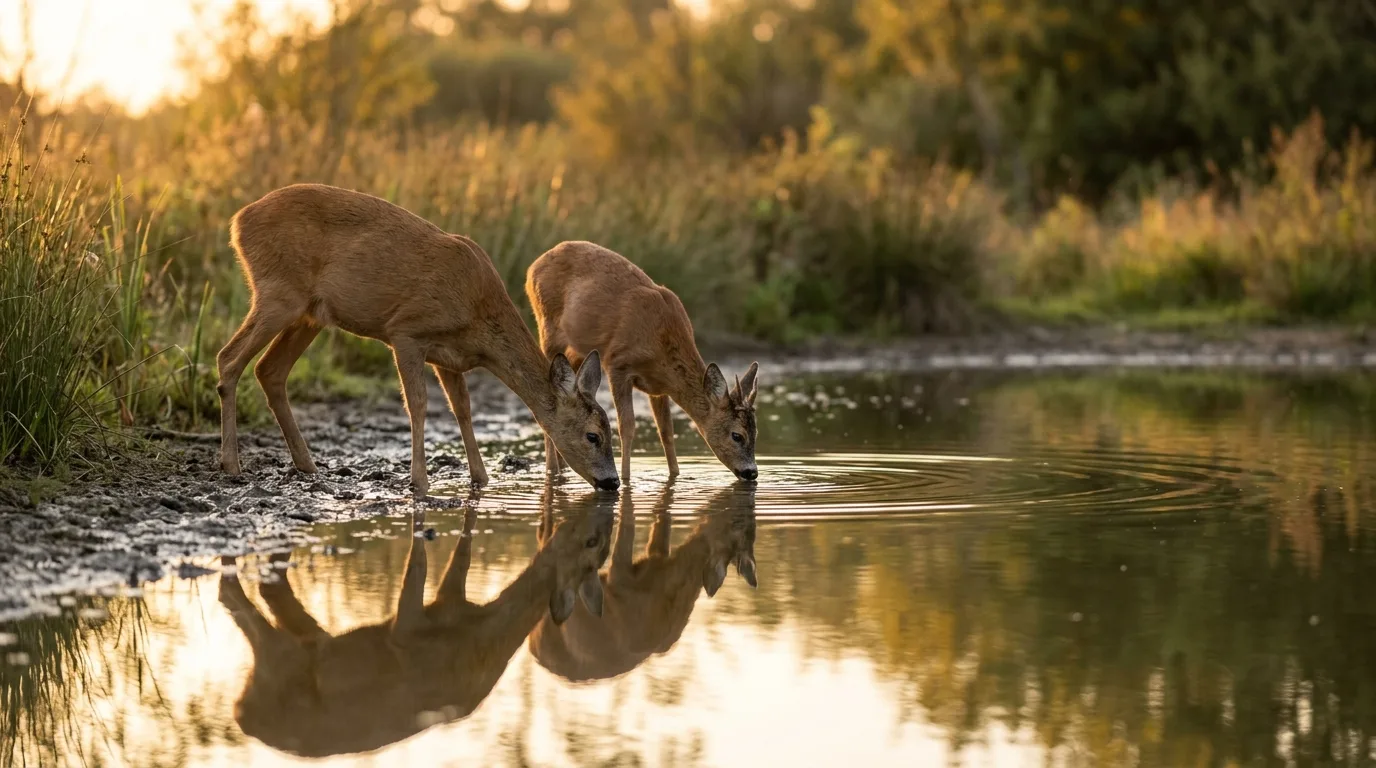
Everything that breathes has to drink. That single fact is the most reliable thing a wildlife photographer can build a day around. You can chase an animal across a landscape for a week and never close the distance — or you can find the place it has no choice but to come to, get there first, make yourself small, and let it walk into your frame. Water is that place. A drinking animal is brief, predictable, and exposed, which is exactly the combination a photographer wants and exactly the vulnerability that obliges you to behave well.
So here's the short version, before the detail. Pick a water source animals actually use, not just the prettiest one. Read the approach — the trails, the wind, the cover — and put yourself or your hide where the animal will arrive without smelling or seeing you. Sit at the edges of the day, when the light is low and side-on and the water is still. Get your lens down near the surface for eye-level intimacy and clean reflections. And treat the water itself as off-limits: in dry country it may be the only drink for miles, and a flushed animal that can't return has paid for your photo with something that matters. The rest of this is the why and the how.
Why water pulls everything in
Start with the biology, because it explains the whole strategy. Animals get water three ways: free water they drink from ponds, creeks, and troughs; metabolic water their bodies make from breaking down food; and preformed water already bound inside what they eat. A prickly-pear pad is about 85 percent water, which is why a desert peccary can largely skip the waterhole, and why some songbirds drink mostly from the bodies of the insects and plants they eat rather than from any pool. The animals you can count on finding at water are the ones whose food can't keep up with their needs — the grazers, the big-bodied mammals, the species built to lose moisture and replace it by drinking.
And replace it they do, in quantities that make the draw obvious. A savanna elephant needs on the order of 150 to 200 liters of water a day; an adult white rhino around 72 liters, a giraffe about 40, a buffalo 31. Drinking takes only a few percent of an animal's daily time budget, but it is non-negotiable, and where water is scarce it pulls animals from across the landscape into the same few points. In one Zimbabwean study, observers recorded up to 300 elephants crowding a single waterhole at once, and 1,500 individuals passing through over 24 hours. You will rarely witness anything on that scale, but the principle scales down to a farm pond: the drink is the bottleneck, and the bottleneck is where you wait.
Water is the one appointment on a wild animal's calendar it cannot reschedule, and that is exactly why it rewards the photographer who shows up first.
It is not only the megafauna, and it is not only Africa. A long-term study of a single stock dam in semi-arid South Australia — the only standing water for miles in a drought year — found that sleepy lizards with access to it ranged more widely, stayed active on far more days, and held their body condition, while lizards cut off from it lost condition as the season dried out. The dam quietly reorganized where those animals were and how much they moved. In the deserts of the American Southwest, the pattern is the same and the stakes are starker: water is "one of the most limiting and precious resources," and man-made guzzlers documented more than a dozen species, with bighorn sheep crowding them hardest in the hottest part of the day and the hottest part of the year — then easing off after rain put surface water and moisture-rich plants back on the landscape. When Nevada's guzzlers ran critically low in a record-dry year, wildlife managers hauled roughly 236,000 gallons to 44 of them by helicopter and truck, because without it a large share of the bighorn would likely have died of dehydration.
The smaller waters matter most of all, and they're the ones near you. Ponds punch absurdly above their weight: two-thirds of all freshwater species can be found in them, and at a landscape scale they support more biodiversity than rivers or lakes. In New Zealand, wetlands hold "the greatest concentration of wildlife out of any other habitat". That density is the photographer's gift — and, as we'll come back to, the reason these places deserve a careful guest. A startling amount of the world's freshwater life is concentrated into puddles we tend to overlook; roughly half of the ponds in the UK were lost over the last century, and most of what remains is in poor condition.
Read the water before you commit
Not every pool is worth a morning. The skill that separates a productive sit from a wasted one is reading a water source the way the animals read it — and the cheapest way to learn one is to watch it before you ever set up a camera.
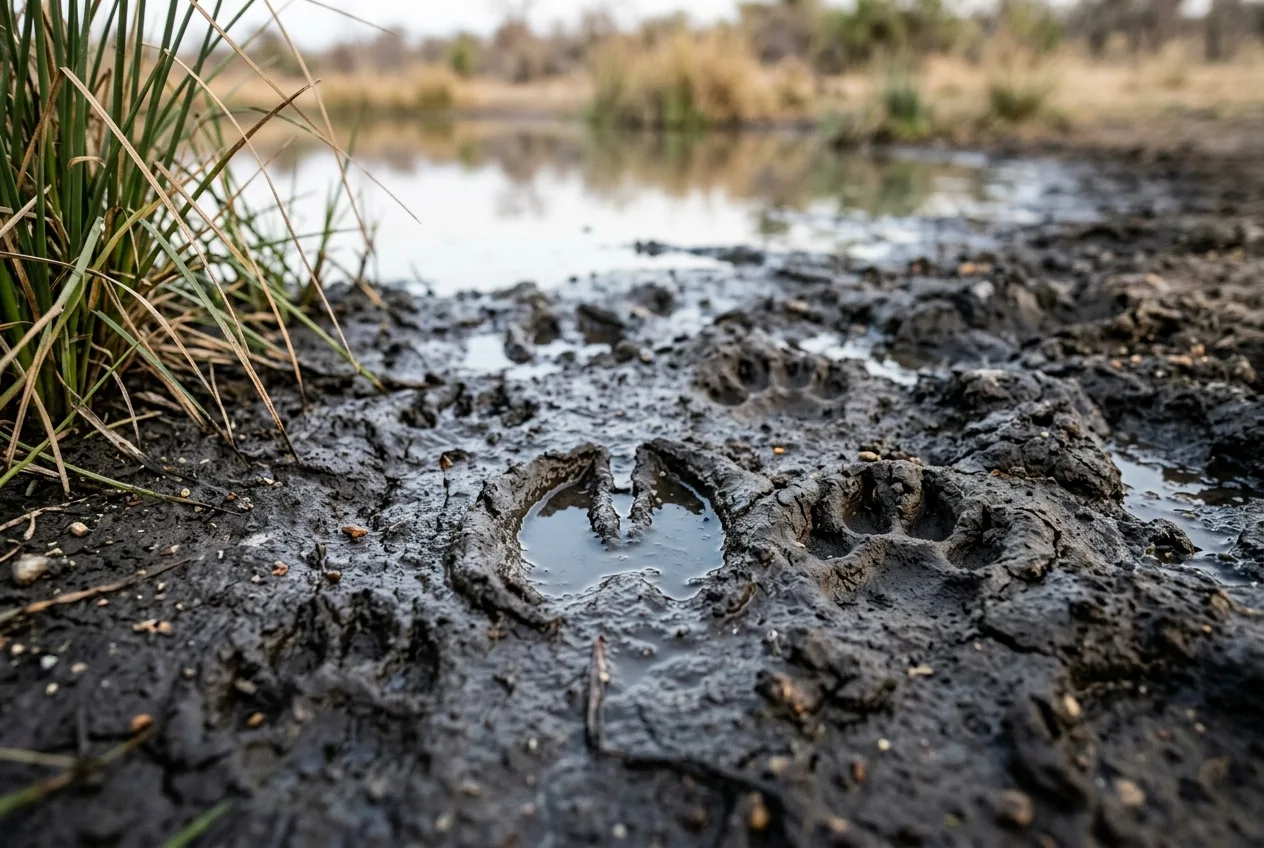
Walk it first, ideally at a distance with binoculars, and look for where the activity actually concentrates. A big sheet of open water often has one muddy, churned-up corner where everything comes and goes; that corner is your spot, not the scenic far bank. Look for the approach trails — the worn paths converging on the edge, the badger or deer runs in the grass that become highways used by one species after another. Animals come to water along habitual routes and they come cautiously, testing the air, because they know as well as the predators do that the drink is the dangerous part. The trail tells you which way they'll face and where they'll pause, and that determines everything about where you sit.
Different water types draw different residents, too, which is worth knowing if you have a target in mind. In one South African reserve, camera traps showed elephants favoring deep-sided reservoirs of clean borehole water, black rhinos preferring earth dams, and white rhinos using troughs and dams — partly because high-sided structures keep the water clean and exclude smaller animals, and partly down to social dynamics among the visitors. The lesson isn't the specific preferences, which are local; it's that the kind of water — open pan versus shaded creek, natural seep versus concrete trough — filters who shows up. Match the water to the animal you actually want.
Scout the water like an animal would: find the worn corner, the cautious approach, the cover — then build everything else around what it tells you.
This is one place a trail camera earns its keep before you ever commit hide time. A scouting camera left on a promising pool for a week tells you who is using it, when they arrive, and which edge they favor — so you invest your patience where the animals already are instead of guessing.
Where to put the hide — and why concealment beats your lens
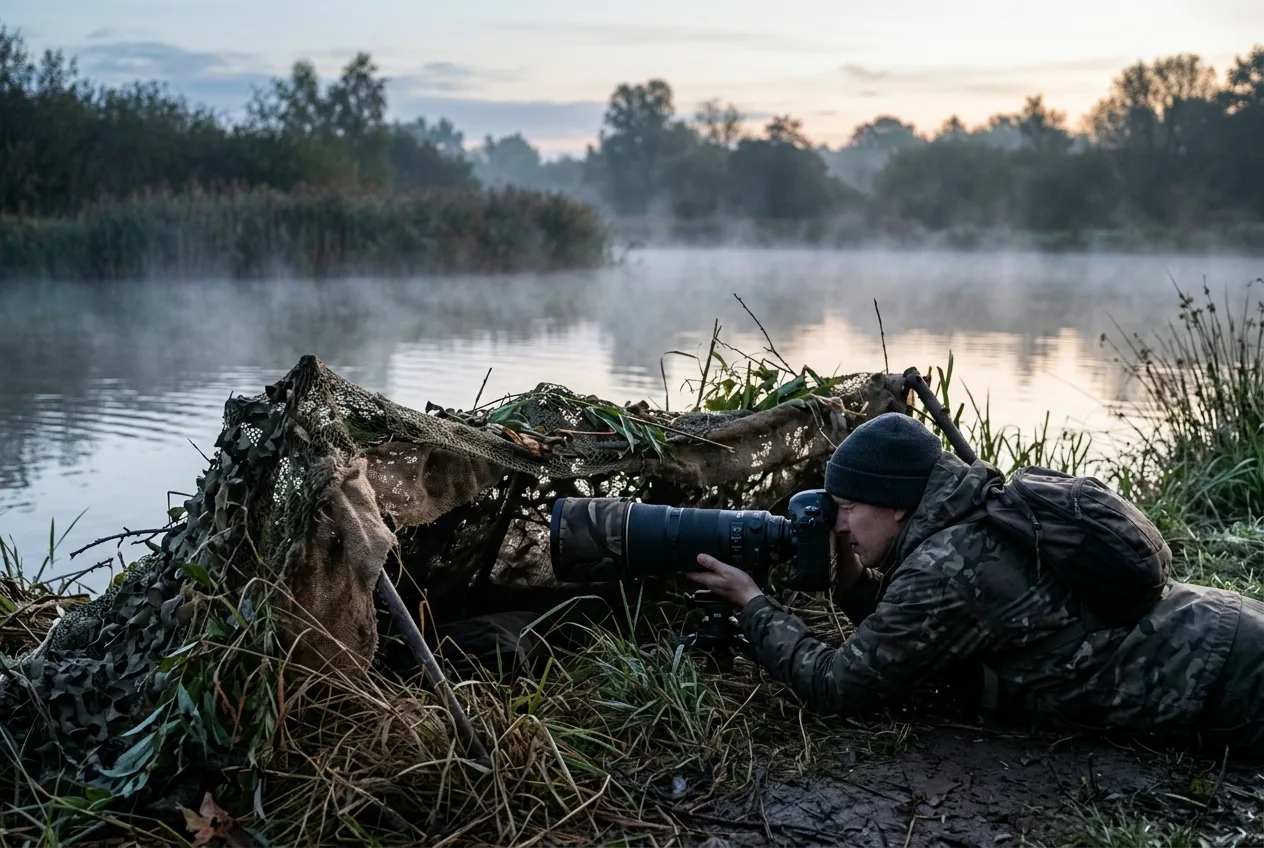
Once you know where the animals come, the job is to be there without being noticed. Animals at water are hypersensitive; the smallest wrong sound or shape sends them away, and the entire purpose of a hide or blind is to remove you from the threat picture so they relax and behave naturally. A concealed photographer at twenty feet will out-shoot an exposed one at two hundred, every time.
Placement starts with the approach, not the view. You want to be downwind, because scent is the one thing no camouflage defeats. As one professional puts it bluntly: if a badger can smell you, "it's game over!". Feel the wind before you settle, know that it can swing, and have a fallback position picked out in advance so you can move rather than tough it out with your scent blowing toward the trail. Set up with cover behind you — reeds, a hedge, a tree line — so you don't read as a human silhouette against open sky or water; animals are far less suspicious of a shape that's broken up by background.
Then think about light. A hide that fights the sun all morning is a hide you'll regret. The principle is universal even though the exact bearing isn't: orient your shooting window so the low sun stays off the lens axis and roughly behind or beside you, giving consistent, even side-light through the golden hours rather than glare or harsh backlight. Experienced hide operators pick the orientation that lets the sun travel across the view rather than straight into the lens, so the morning and evening light rakes the subject from the side instead of blinding the frame — but the compass bearing that achieves this flips between hemispheres and shifts with your latitude, so don't copy a number from someone shooting on another continent. What you're really after is simply "sun off the lens, even light on the subject"; work out which way that points at your own site. Purpose-built waterhole hides take this to its logical end: a low or partially sunken hide oriented for the sun can deliver many hours of usable, consistent light across a single day.
Get the camera low. This is the quiet superpower of water photography. A hide or blind built at or near the waterline — including a floating blind, which puts you down at the animal's own level — gives you an eye-to-eye perspective that a standing shot can never match, and it's the foundation of every great reflection. Ground-level and floating blinds are standard tools for water work the world over precisely because they let you into the world of shy, water-bound species at their level.
A floating blind deserves its own note because it's such a specialized, effective tool. It's essentially a camouflaged float you stand inside, in waders or a drysuit, so the rig drifts around you while your feet stay on the bottom. Move slowly and the birds simply file you under "big stone sticking out of the water" — one photographer has had a kingfisher land on his blind and use it as a fishing perch. Two field notes from someone who does this for a living: pick calm days (he won't deploy above about five meters per second of wind) so the surface stays mirror-flat and your outline stays soft, and never, ever work water you can't stand up in. As he says, "Don't risk anything just because of a photo".
A hide the animals have stopped noticing is worth more than any lens you can buy — concealment, wind, and patience are the real telephoto.
One more thing the hide buys you: closeness, which changes your kit. When animals come in to drink a few meters away, the need for an exotic super-telephoto drops away, and a versatile zoom in the 300–600mm range often serves better than a fixed monster because you can frame to the animal and the scene. Whatever the glass, build in acclimatization time. Leave a pop-up hide in place for several days before you use it, then slip in quietly and let the animals get on with their lives. The camera-trap studies make the same point from the other side: when researchers left cameras at waterholes for a two-week settling-in period, the animals showed no avoidance at all. Familiarity is the cheapest concealment there is.
When to sit: timing without a universal clock
Ask when to be at the water and the honest answer is "earlier and later than you think, but it depends." Two forces set your watch: light and animal behavior, and they mostly agree.
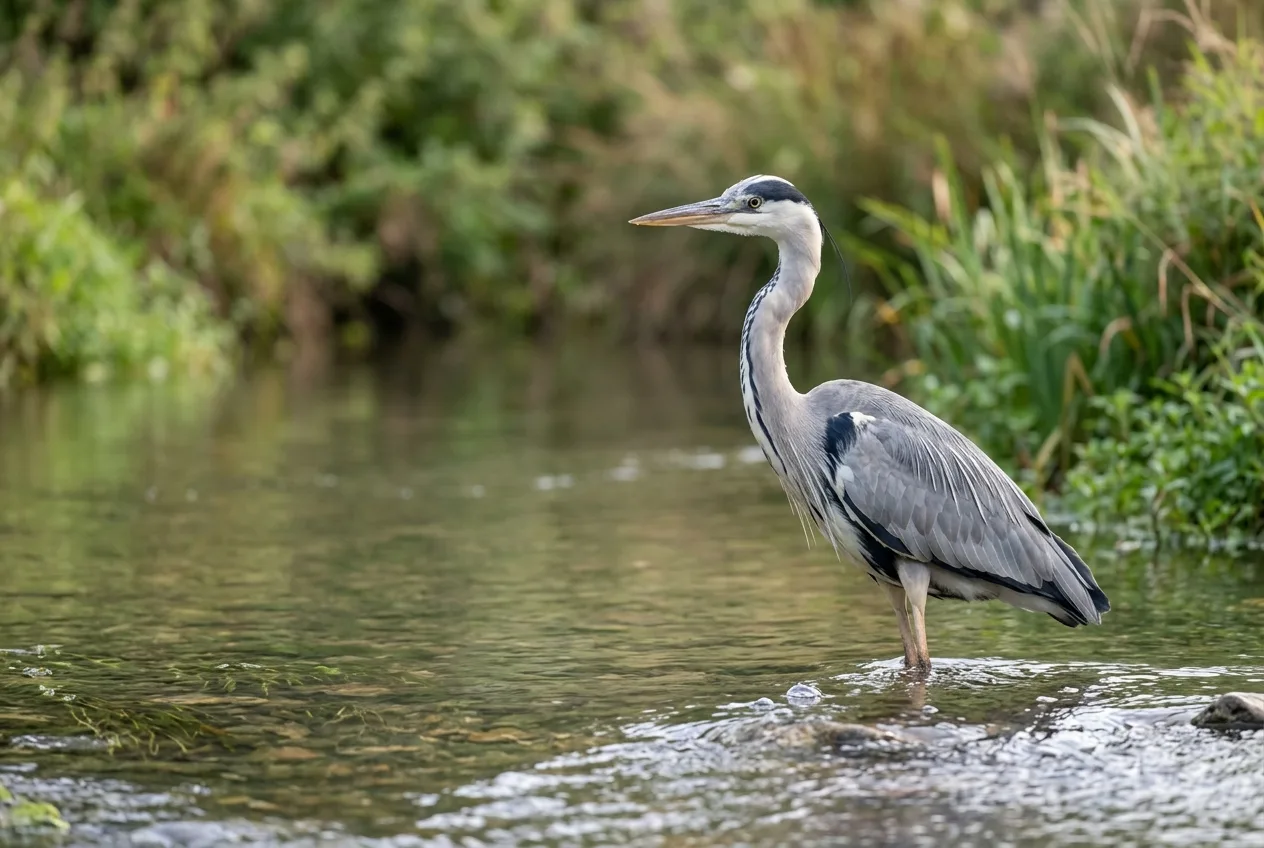
The light part is simple and hemisphere-proof. The low, warm, side-on light of the hours after sunrise and before sunset flatters everything — it softens shadow, enriches color, and, crucially for water, it's the light that makes reflections glow. The water is also typically calmest at the start of the day, before wind picks up, which is when you'll get glassy, mirror reflections. So the edges of the day are your default, for reasons that have nothing to do with what month it is or which way is north.
The behavior part is where you have to stay humble, because animals refuse to follow one schedule. The broad default is crepuscular — active around dawn and dusk — and that's a sound starting assumption for a lot of mammals: in Japan, brown bears and sika deer both came out as crepuscular animals, peaking around sunrise and sunset, with the pattern shifting by age and sex. But layer in heat and the picture changes. In the Mediterranean, Cyprus mouflon drank more during the late morning and midday on warmer days, not at dawn — temperature drove them to water when it was hot. African elephants in one reserve visited waterholes most heavily around 11:00 to 12:00, the midday heat, when their large bodies most needed to cool. Meanwhile black and white rhinos in the same study showed several scattered peaks across day and night that shifted between the wet and dry seasons.
Then there's the predator's clock, which overrides the prey's. Drinking is "a highly risky activity," and animals time it to dodge whatever is hunting them. In Namibia's Waterberg, ungulates sorted themselves by risk: the big, hard-to-kill animals — white rhino, black rhino, buffalo — drank freely in the evening and night, while smaller, more vulnerable species shifted to daylight to avoid the leopard, with a strong overall peak between 18:00 and 19:00 and most night activity packed into the first half of the night. The predators, for their part, are mostly creatures of the dark: across South African carnivore communities the majority of species are predominantly nocturnal, and that night-activity overlap tightens further in the dry season when resources are scarce. At artificial waterholes specifically, a guild of leopard, spotted hyena, brown hyena, and wild dog converged on the water with little of the time-separation they showed elsewhere — everyone needs the drink.
The practical upshot for your sit: treat dawn and dusk as the anchor, but read your water and your target. Hot, dry conditions can pull animals to midday. Heavy predator pressure pushes prey into the night. Big-bodied animals tolerate the heat that drives smaller ones to cover. If you can, watch the place across a few days — or let a camera watch it for you — and let the actual arrivals, not a rule of thumb, set your alarm.
Anchor on dawn and dusk, but never trust a single clock: heat pulls animals to midday, predators push them into the dark, and the water in front of you keeps its own schedule.
The water-level technique: reflections, stillness, and clean backgrounds
This is where water photography stops being "wildlife that happens to be near a pond" and becomes its own craft. The signature image is the clean reflection, and it comes down to a few controllable things.
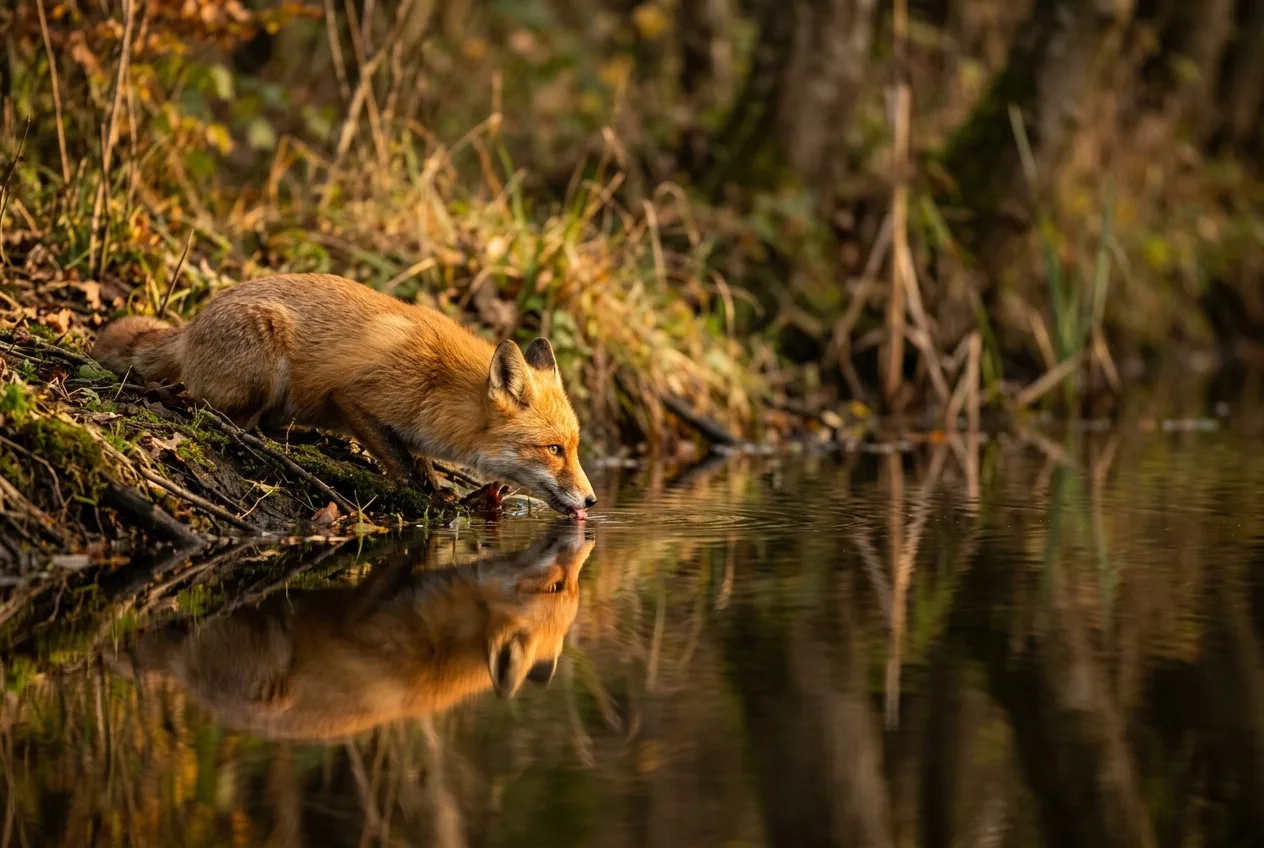
Get low — lower than feels natural. The single biggest lever on a reflection is camera height: the closer the lens sits to the water, the stronger and more complete the mirror becomes. Kneel, sit, or shoot right off the shoreline; a floating blind does this for you by putting you at surface level. Dropping down also simplifies the background, throwing distant clutter out of the way and keeping the eye on the bird and its mirrored shape.
Find still water. Ripples destroy a reflection faster than anything, so the most important condition is a calm surface — seek sheltered ponds, quiet coves, slow backwaters, and the early-morning calm before the wind gets up. This is the same reason the floating-blind photographer waits for low-wind days: calm water doubles as a mirror.
Mind the whole reflection, not just the subject. A reflection includes everything above the waterline, so a cluttered background shows up twice. Hunt for clean shorelines, darker banks, or distant vegetation that won't fight the subject; a simple background reads as a stronger reflection. Then let the light do the rest — soft, low, warm light with gentle contrast is what makes a reflection lift off the water, which is one more reason the edges of the day pay off here.
A note on flash: leave it off around birds at the water. Natural light keeps behavior natural and avoids disturbing the scene, and ethical codes specifically warn against flash on nocturnal birds, whose night vision and hunting it can disrupt. If you're working into low light, a stable platform — tripod or beanbag — and a fast lens will do more for you than artificial light ever could.
Predators and the drama at the edge
Water doesn't just gather prey; it gathers everything that eats the prey, which is what makes a waterhole one of the most dramatic stages in nature — and one of the most ethically loaded. Surface water acts, in the ecologists' phrase, as a "passive trap": in Hwange, lion kills were strongly clustered within about two kilometers of waterholes for nearly every prey type, in every season, because that's where the prey is funneled. The researchers describe artificial waterholes as "powerful hubs of predation activity throughout the year". Recent GPS-collar work in Etosha found lions lingering near waterholes — to drink and to hunt — while hyenas, wanting to avoid competition with the lions, kept to heavier cover and used the waterholes less.
For a photographer that means a waterhole sit can hand you predator-and-prey tension you'd struggle to find anywhere else — but it also means you may be sitting at the exact spot where a kill happens, which raises the bar on staying unobtrusive. It also reinforces the timing reality: if your target is a big cat or a hyena, you're mostly talking about low light and the dark, so plan for high ISOs, fast glass, and the kind of hide that lets you work at the very edges of the day.
There's a subtler point hiding in the predator data that matters for ethics. Water that draws everything in can tip a delicate balance: at contested waterholes, that forced crowding "may facilitate conflict rather than coexistence," squeezing subordinate species like wild dogs. The same crowding logic shows up at a desert guzzler, where dominant aoudad loitering at a trough measurably pushed bighorn sheep off the water. Animals jostle hard enough over a drink without a photographer adding to the pressure — which brings us to the part of this that isn't optional.
The ethics aren't a footnote — they're the technique
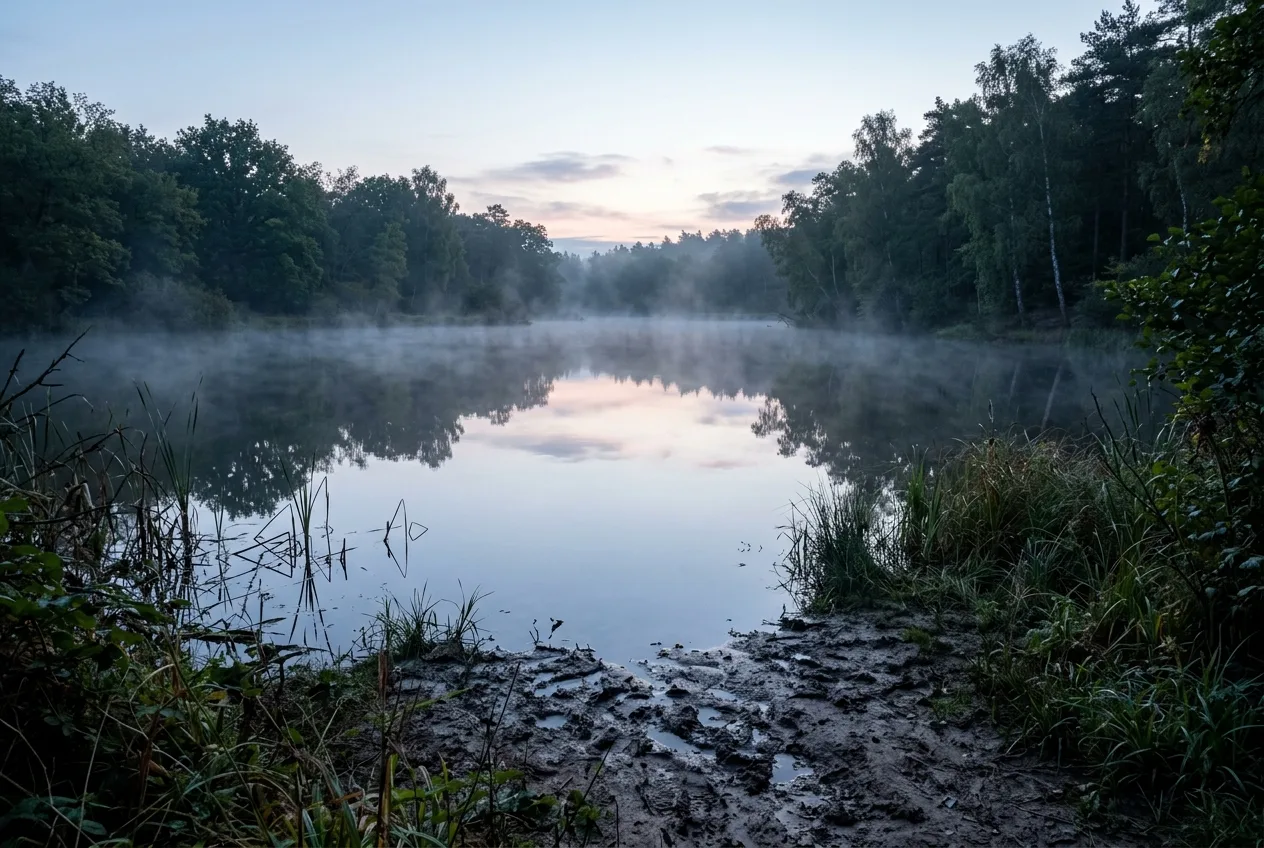
You cannot separate "how to photograph at water" from "how to behave at water," because the very thing that makes the spot productive — animals concentrated at a resource they can't do without — is the thing that makes your presence costly if you get it wrong. The governing principle, stated plainly by every serious code, is that the animal comes first. In Audubon's words, "in any conflict of interest, the well-being of the birds and their habitats must come before the ambitions of the photographer". Or, as wildlife photographer Melissa Groo frames the asymmetry: "These are just about photos to us; but to a wild animal, every single moment is about survival".
That isn't abstract at a waterhole. A flushed animal pays a real metabolic price. Disturb feeding shorebirds and you force them to "move using precious energy to find a new spot to feed," energy that "could be the difference between surviving the winter, or successfully migrating". Push an animal off a scarce desert drink and the cost can be its body condition, or worse. So the rules below aren't etiquette; they're part of doing the job well.
Keep your distance, and read the animal for the line. The honest truth is there's no single magic number — distances "can vary greatly depending on species and the habitats in which birds live," which is why a good code declines to prescribe one and tells you instead to maximize distance and minimize time up close. Where a concrete buffer helps, shorebird guidance suggests a minimum of about 25 yards — roughly two school buses — and more for sensitive species. The real instrument is the animal itself: "If your approach causes a bird to flush or change its behavior, you're too close". Watch for the tells — a raised head, a frozen posture, a bird circling and calling (often a sign you're near a nest) — and the moment you see them, back off. A long lens is what lets you keep that distance and still fill the frame.
Never block the route to the water. This one is specific to our subject and easy to get wrong. Don't position yourself on the direct line between where animals are and the water they're trying to reach — for nesting shorebirds it can stop chicks from getting down to the waterline to feed, which they must do to survive. Sit off to the side of the approach, never astride it.
Let them flush naturally, if at all. "Never intentionally force birds to fly. If you are patient and wait long enough, you will likely see them naturally flush". And resist the temptation to chase the dramatic blast-off shot, because rewarding flushing photos online quietly encourages the behavior.
Don't bait, and don't alter the water. Live bait is out across the board — "whilst animals kill other animals naturally, it is not our place to sacrifice one for an image" — and so is reshaping habitat for a cleaner composition: "do not destroy or alter habitat for a better view". At a water source that extends to the water itself: don't muddy it, don't move it, don't make it your private set.
Don't monopolize a scarce drink. In arid country a single pool may be the only water for a long way, and the animals are queuing for it on a schedule set by heat and thirst. Take your shots and clear out; a hide that keeps a steady stream of nervous animals from drinking for hours is doing harm even if it never flushes a single one. Managers studying these waterholes recommend timing necessary disturbance away from the busy evening drinking window for exactly this reason.
Two field practices fold these principles into how you actually work. Use a hide or natural cover and stay in consistent, predictable positions — birds are stressed less by people who stick to established spots than by someone wandering the shoreline. And skip the gimmicks that exist only to bend an animal to your camera: call playback, which can disrupt feeding and breeding and which bodies like BirdLife Australia simply don't support for photography, and drones, which most wildlife codes warn cause serious disturbance near water, nests, and roosts.
The waterhole is productive precisely because the animals are exposed and can't leave — which is exactly why the photographer who behaves well there is the one who gets to keep shooting it.
If you run a trail camera at a water source — to scout, or as a remote camera-trap setup — the same ethic applies to the gear. The Birds New Zealand code is explicit that a trail camera should only be deployed where it's "unlikely to cause stress to birds or lead to nest abandonment," and that you should monitor and pull it if behavior changes. Used thoughtfully, a camera trap is one of the least intrusive ways to document water visitors at all — National Geographic notes that camera traps "have minimal impact on the habitat and are one way of ensuring wild animals do not become accustomed to humans". The point isn't the gadget; it's that the least-disturbing tool is often the one that also gets the most natural behavior.
Frequently asked questions
What's the best time of day to photograph animals at a waterhole?
The low light of early morning and late evening is the reliable default — soft, warm, side-on light, plus the calmest water for reflections. But the actual animal peak shifts with species, heat, and predators: hot, dry conditions can drive drinking to midday, while heavy predator pressure pushes prey into the night, so read your specific water rather than trusting one universal time.
How close can I get to animals at water?
Close enough to fill the frame with a long lens, no closer — and let the animal define the line. There's no universal distance because it varies by species and setting, so the working rule is "maximize distance, minimize time," with something like 25 yards a sensible floor for skittish water birds. If your presence makes an animal flush or change behavior, you're already too close.
Do I really need a hide, or can I just stay still?
For shy, water-bound species a hide or blind is a genuine difference-maker, because it removes you from the animal's threat picture so it behaves naturally and comes in close. Natural cover and a motionless, low profile can work, but concealment plus the right wind direction matters far more than your lens — and a hide the animals have grown used to is best of all.
How do I get those mirror reflections of birds on the water?
Get your lens as low to the surface as you can — kneeling, sitting, or shooting off the shoreline strengthens the reflection — and shoot on still water, which usually means a sheltered spot early in the morning before the wind picks up. Watch the background, since a cluttered one shows up twice, and shoot in soft, low light.
Is it ethical to photograph animals at a water source at all?
Yes, if you keep their welfare first — water is exactly where animals are most exposed and most dependent, so the disturbance you cause is more costly there. Keep your distance, don't block the path to the water, don't bait or alter the pool, and don't monopolize a scarce drink; take your shots and leave.
What gear do I need for waterhole photography?
Less exotic than you'd think, because a hide brings subjects close — a versatile telephoto zoom around 300–600mm often beats a fixed super-telephoto, on a stable support like a tripod or beanbag for low light. For water-level work, a ground-level or floating blind is the key piece, and you skip the flash to avoid disturbing wildlife.