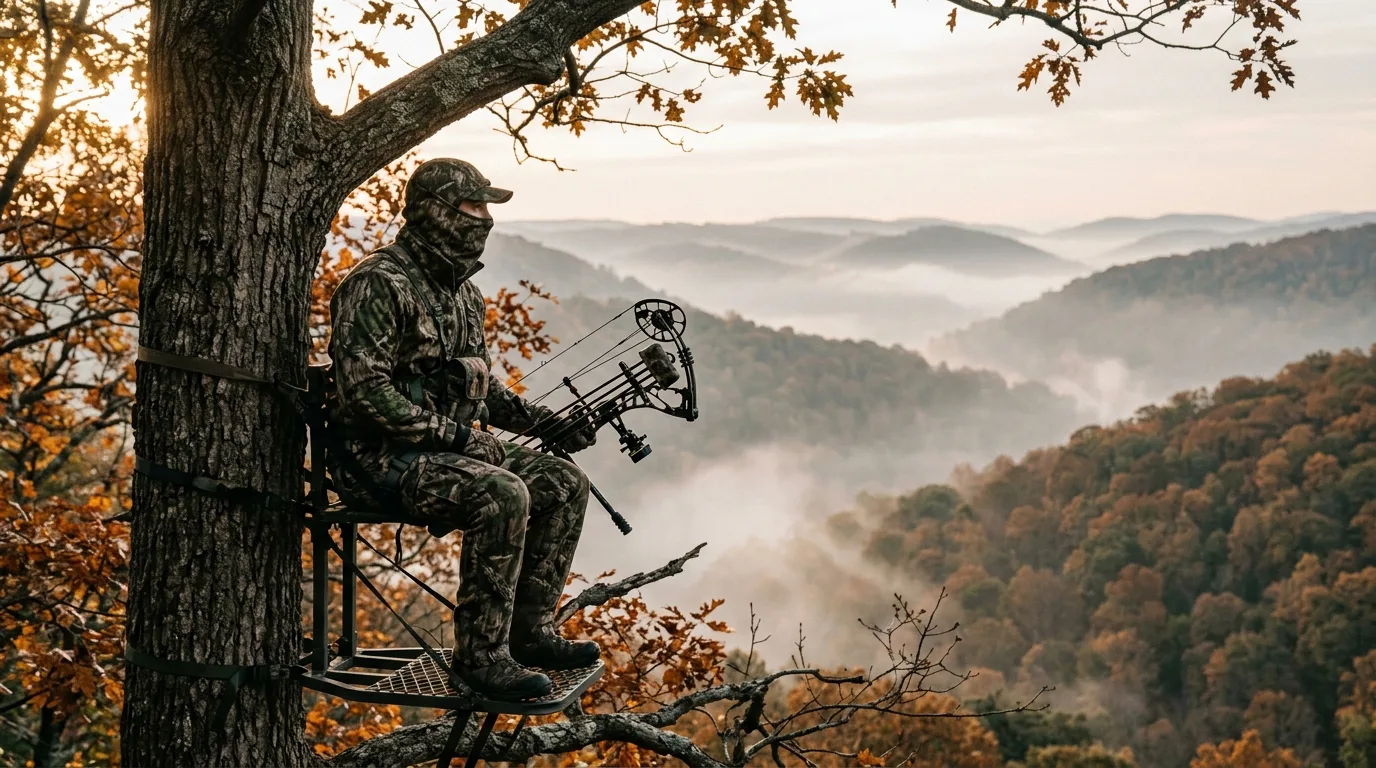
The most expensive mistake in deer hunting doesn't cost a dime. You find the rub line, the pinch point, the trail beaten to dirt — a textbook spot — and you hang a stand right on top of it. Then a doe steps out at forty yards, freezes, swaps ends, and is gone before you've even reached for your bow. You never moved. You never made a sound. She smelled you, and the sign that drew you in is exactly what put her nose where your scent was drifting.
Here's the thing most of us learn too slowly: you don't hunt the sign. You hunt the air. Wind direction for deer hunting is the first question to answer at any stand, before bedding, before food, before the rut calendar — because a deer trusts its nose over every other sense it owns, and that nose is among the best in the woods. Put plainly: if a deer is downwind of you, the game is usually over.
So this is a piece about moving air. Not just which way the breeze is blowing across the field — that's the easy half — but the quieter, sneakier current that rises off warming ground in the morning and sinks back into the low spots every evening. Thermals. Get those two things right and you can sit in a deer's living room for hours. Get them wrong and the best sign in the county won't save you.
Just how good is that nose, really?
Let's anchor the fear in something real, because the hunting world throws around a number you've probably seen: a whitetail has around 297 million olfactory receptors, compared to about 220 million in a dog and a measly 5 million in us. It's a great line. It's also worth being honest about — even the people who repeat it hedge. The National Deer Association introduced the figure with "a little research suggested". Treat 297 million as a widely-cited estimate, not gospel.
The rigorous science is actually more convincing than the catchy number. A whitetail's nose is classed as macrosmatic — a smelling specialist — alongside dogs and rats, in a different league from primates like us. Inside, two sets of scrolled bones do different jobs: the maxilloturbinate handles breathing, while the ethmoturbinate, deep in the back of the nose, carries the olfactory epithelium where odor is actually detected. Of the species one anatomy team compared — squirrel, bobcat, coyote, deer — "the deer's ethmoturbinate exhibits the most intricate arrangement," a branching structure that packs enormous smelling surface into a compact space. The deer also had the largest total nasal surface area of the four, roughly 46,739 mm².
A whitetail's nose isn't a metaphor for danger. It is the danger.
Now, a fair counterpoint worth knowing: in that same deer nose, the pure smelling tissue is concentrated in the back rather than spread everywhere — olfactory epithelium covered about 20% of the deer's total nasal lining, versus nearly 48% in the gray squirrel. That's not a knock on the deer; it's a reminder that "biggest nose in the woods" and "every square inch is a scent sensor" aren't the same claim. The deer's advantage is a large, deeply folded, efficient apparatus — not magic.
Genetics tells the same story from another angle. No one has fully sequenced the deer's olfactory-receptor gene set, but deer are ruminants, and the closest rigorous proxy — cattle — carries 1,071 olfactory-receptor sequences, 881 of them functional genes. In that same cross-species comparison, humans come in at just 388 functional OR genes — fewer than half of them intact, the rest degraded into pseudogenes. Whatever the exact deer count, a hoofed ruminant is working with a vastly richer chemical vocabulary than the hunter trying to hide from it.
There's an older, European data point I like because it sidesteps the receptor argument entirely. In 1975, anatomist Albert Kolb measured the olfactory epithelium of roe deer at about 90 square centimeters, against roughly 10 in an adult human — implying a deer's sense of smell could be on the order of nine times more sensitive than ours. And the sensitivity these mammalian noses can reach is genuinely hard to picture. In controlled trials, mice detected some of the short-chain carboxylic acids — the very chemistry of sour human sweat — at concentrations "as low as 3 ppt," parts per trillion, and reliably told dilutions of acetic acid as faint as one part in 650,000 from plain solvent. No lab has published deer thresholds, so don't quote those exact mouse numbers as deer numbers. But they tell you the order of magnitude you're up against: vanishingly small traces are enough.
One last detail that explains a lot of frustrating mornings. A deer's nose is wet for a reason — "volatile scent particles stick more easily to wet noses" — and the side of the rhinarium cooled by the breeze actually helps the animal work out the direction a scent came from. A whitetail isn't just smelling you. It's triangulating you. And the main nose isn't even the whole system: deer carry a second scent organ, the vomeronasal organ (also called Jacobson's organ), tucked in the soft tissue of the nose and deployed with that head-up, lip-curling flehmen response you've watched rutting bucks make — a dedicated channel for reading pheromones on top of everything the nose is already doing.
Why scent doesn't travel the way you think
Picture the diagram in every beginner's article: a hunter in a tree, a neat cone of scent fanning out downwind, deer safely outside the cone. It's a useful cartoon and it's mostly wrong, and the reason is physics, not folklore.
Air moving over real ground is turbulent, and an odor carried in turbulent air doesn't spread as a smooth, predictable plume. It shreds. Studies of how animals track scent describe odor breaking "into discrete odor filaments, interspersed with long periods of undetectable concentrations," with the gusts of smell arriving intermittently, their timing and strength "spanning many orders of magnitude". Roughness in the landscape — brush, deadfall, broken terrain — makes the fragmentation worse; near smooth boundaries and in lighter, steadier wind the plume holds together better. Crucially, in that churn, "instantaneous odor gradients often do not point toward the source". That's the scientific way of saying a deer can be dead downwind of you and catch nothing for several minutes — and then a single eddy hands it a lungful.
The National Deer Association put the same idea in language you can feel. Think of your scent stream as "a river of air," they wrote — behaving like water flowing downhill, "speeding up, slowing, swirling, and forming eddies" as it meets trees, logs, rocks, ravines, and hillsides, sometimes circling back upwind. To prove it to himself, one of their writers burned colored smoke bombs from his stand. The smoke traveled fifty yards downwind, hit a big rock, split into two streams, caught a hillside, eddied, and drifted back the way it came — and that swirling, unpredictable behavior showed up most on the days you'd think were calmest, with a slight, variable breeze under about 8 to 10 mph. Crank the wind up and your scent gets forced along more consistently into that tidy cone — but, inconveniently, deer tend to move less when it's really blowing.
Your scent moves like water in a stream — and water doesn't run in a straight line.
That last point deserves a myth-bust, because hunters routinely sit out windy days assuming deer have hunkered down. Penn State surveyed more than 1,600 readers, and nearly 90% predicted deer move less on windy days. The GPS-collar data said the opposite for daylight: deer moved more during windy days, and less during windy nights — both bucks and does, the same pattern, and the effect kicked in with even light air movement, not just a gale. So a breezy afternoon isn't a reason to stay home. It's a reason to be very sure where that breeze is taking your scent.
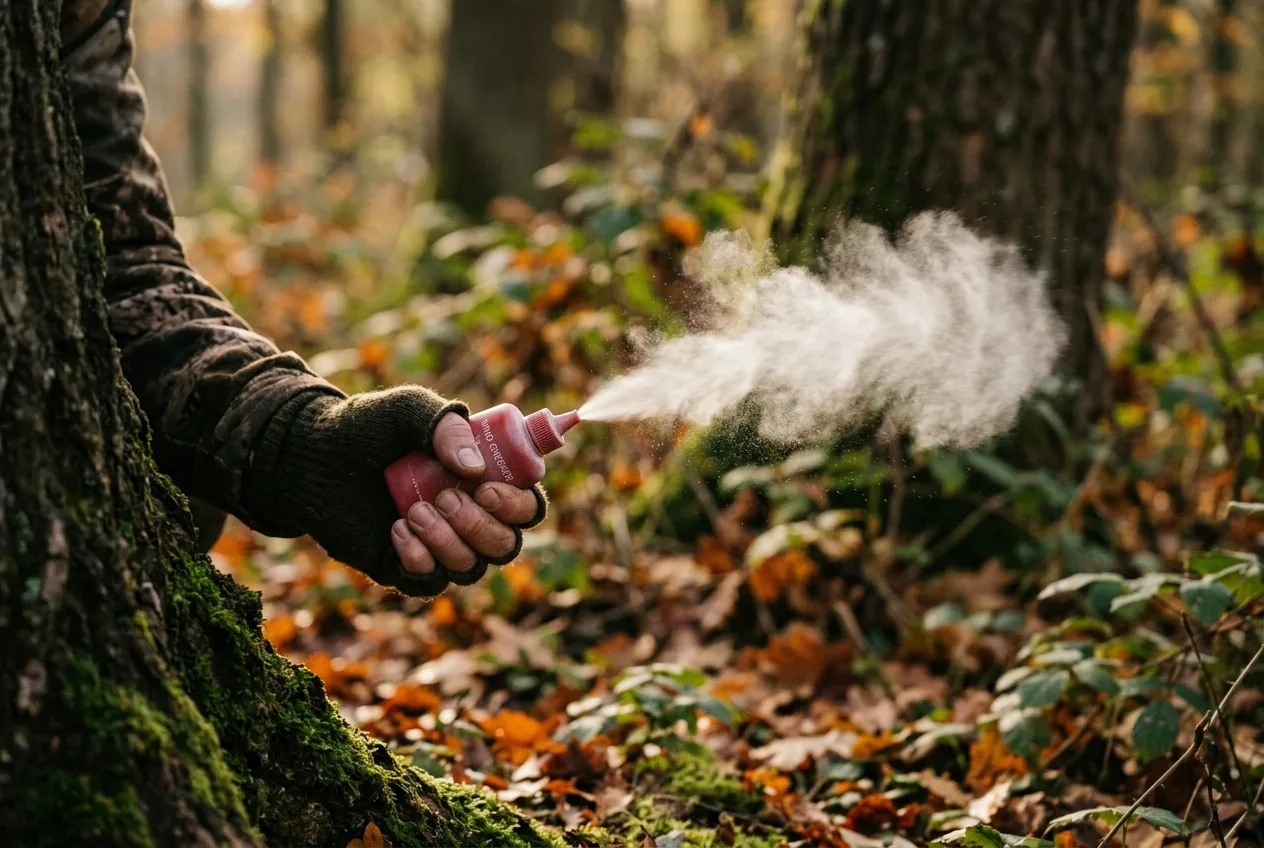
Thermals: the current you can't feel but a deer can
Here's where most hunters who've mastered "check the wind app" still get beaten. Wind is the horizontal story. Thermals are the vertical one, and at the two times of day you most want to be in the woods — first light and last light — thermals can completely overrule whatever the forecast told you the wind would do.
The mechanism is simple enough that a middle-schooler can run the experiment: warm air is less dense and rises; cool air is denser and sinks. The sun heats the ground, the ground heats the air just above it, that warm air lifts, and cooler air slides down to take its place — that's convection, "the transfer of heat by the movement of a heated material". The reason it matters for hunting is that the ground heats and cools fast. The sun's energy only penetrates "the top few inches of soil," so a slope warms quickly after sunrise and chills quickly after sunset — far faster than a body of water nearby, which is exactly the differential heating that drives coastal sea and land breezes. Your hillside is doing the same thing, on a smaller scale, every single day.
What that means on the ground:
- Morning, as the sun warms the slope: air climbs uphill, carrying your scent up with it. Meteorologists call this warm upslope flow an anabatic wind — typically gentle, on the order of 1–2 m/s on open slopes, though it can run stronger, a few meters per second, in steeper mountain terrain.
- Evening, as the ground cools: the air chills, gets dense, and drains downhill, pulling your scent down into the low ground with it. This cool downslope flow is a katabatic wind, a nighttime phenomenon in most of the world, usually no more than 3–4 m/s.
A state wildlife agency states the cycle about as cleanly as it can be put: "After the sun goes down in the evening, air begins to cool and starts to sink. When the sun rises, it begins to warm the air, and the air begins to flow back up the valleys". Zoom out to whole valleys and the same daily reversal scales up — cold air pools and drains down-valley as a "mountain wind" at night, then the flow runs back up-valley by day. In steep country the practical upshot is the same pattern writ large: scent rides down the drainages in the cool early morning, climbs back uphill as the day warms, and plunges into the low ground again toward nightfall.
From all of that falls the single most useful field rule in this article, and it's worth memorizing:
Hunt high in the mornings and low in the evenings.
That's the National Deer Association's "rule of thumb to avoid trouble with thermals," and the logic is airtight. In the morning you want to be above the deer, so rising air lifts your scent over their heads. In the evening you want to be below them — or at least positioned so the sinking air drains your scent away from them — because that cooling current will pull your odor into the lowest ground around you, pooling there "similar to how fog and frost settle in the lowest ground". If a bedding thicket sits in that bottom, an evening sit directly above it on a dying breeze can dump your scent right onto the deer you're waiting for.
The exception that proves you have to think
The rule is a starting point, not a law, and the thing that breaks it most often is slope aspect — which way the hill faces. A slope angled away from the sun — north-facing in the northern hemisphere, south-facing in the southern — catches the sun late and stays cool through the cold months. So the ridgetop can be bathed in sunlight and lifting air while the spot a quarter of the way down, still in shade, behaves like it's evening — cool air sliding downhill toward the deer when you'd swear thermals should be rising.
One NDA hunter learned this the hard way and then turned it into a system. On a cold, clear, high-pressure morning he found his scent inexplicably drifting north and downhill toward bedded does — the opposite of textbook morning behavior — because the shaded hillside he sat on hadn't warmed yet. Once the sun climbed high enough to heat that slope, the air started rising and everything normalized; he went on to see 11 bucks that morning, 10 of them inside 18 yards. His adaptation is the lesson: on a north wind and a high-pressure day, he now slips into a low stand below the bedding at first light to play the still-sinking air, then loops around once the sun warms the hillside, comes in from a different direction, and climbs the upper stand for the rising thermals — working both currents within a few hours. That's what reading air, instead of obeying a slogan, looks like.
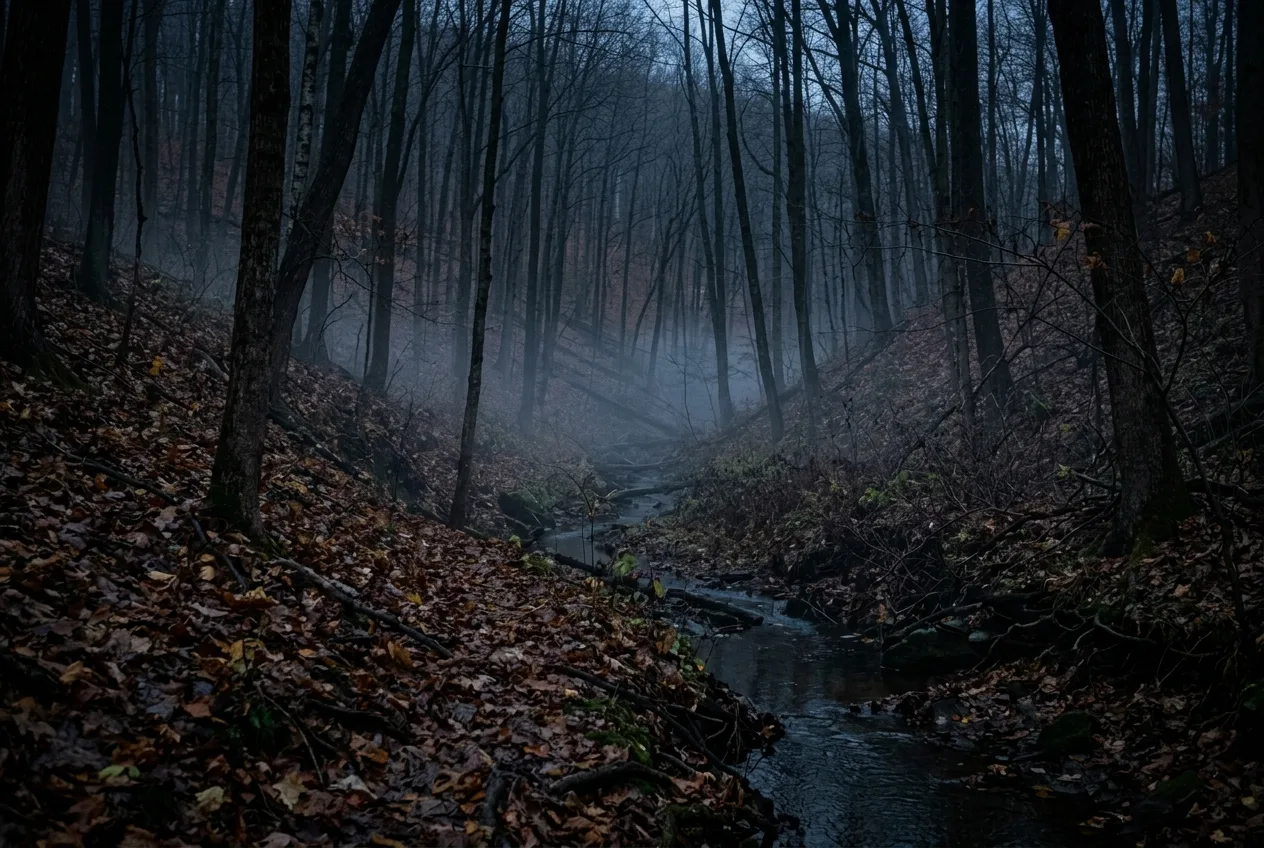
Reading the terrain: where air goes to misbehave
If scent flows like water, then terrain is the streambed, and some features are far more trustworthy than others.
Ridgetops are your friend. They "typically have the most consistent winds with fewer obstructions causing swirl". Up there the wind is closer to what the forecast promised, and morning thermals reliably lift off the high ground. A stand on or just below a ridge, played with the prevailing wind, is about as predictable as deer hunting gets.
Valleys, draws, and creek bottoms are where it gets squirrelly. These low channels "can cause prevailing winds to swirl and interact with thermals," and that swirl gets "particularly pronounced on sunny days," when strong thermals collide with the surface breeze. A draw doesn't just carry scent — it channels and concentrates it, and on a cool evening it's exactly where your odor will settle and pool. The same low ground that funnels deer movement funnels your scent, which is precisely the conflict that makes bottoms such tempting and such dangerous places to sit.
There's a comfort here for the bigger picture, though. In one large textbook treatment, that nightly drainage of cold air down the slopes leaves a mild "thermal belt" along the mid-to-upper valley walls, where cold air doesn't fully settle. It's the reason orchards get planted on hillsides rather than valley floors — fewer frost nights — and it's a quiet hint about why a mid-slope bench can hunt better than the very bottom.
None of this is something you should have to guess at on opening morning. The agencies and the practitioners agree on the homework: spend time on your ground in the off-season watching how the air actually moves — "to see how the wind changes throughout the day," because topography, cloud cover, and wind speed all bend the thermals differently. Burn a small, smoky fire on a few different days, high-pressure and low, morning and evening, and take notes. The map in your head is worth more than any forecast.
Hanging the stand — and getting to it clean
Now put it together into a placement you can actually hunt. The governing principle, straight from a wildlife agency, is almost aggressively simple: "Set your stand so the prevailing winds blow your scent away from any deer that may pass underneath," and aim that scent toward ground deer avoid — "a large pond, roadway, or a steep drop". A Canadian whitetail hunter frames the same idea as wanting your wind "blowing to a dead area," never toward where deer are coming from or going to.
A few hard-won refinements on top of that:
- Keep more than one stand. Wind shifts and forecasts lie. Having stands set for different wind directions means you can actually hunt a spot when its wind is right — and walk past it when it isn't. As one host put it, "don't be afraid to set up on the ground, where the wind is good" rather than forcing a treestand on a bad wind.
- Elevation helps your scent, a little. A treestand gives "increased scent control due to an elevated position," along with better visibility and quieter access. It's not a force field — your scent still comes down — but getting it up off the ground buys you something.
- A ground blind demands more wind discipline. At ground level "your scent will stay closer to the ground," which "makes hunting the right wind direction especially important," and a blind hides you so well from deer that one can sneak in close before you ever see it. Blinds have real virtues — they hide movement, they're easy on new or young hunters, they're quick to set — but they remove the small scent cushion a tree gives you, so the wind has to be genuinely right, not just acceptable.
Then there's the half of stand placement that doesn't involve the stand at all: how you get in and out. "The key to entering and exiting a stand is to do so undetected". You can play the wind perfectly for the sit and still blow the spot if your walk in pushes your scent across the bedding, or your walk out at dark drifts down a draw into the food source you're hoping deer feed in tonight. Plan the route like you plan the wind: enter and leave without "blowing scent toward expected game locations," because the more often deer know you're sharing their woods, the harder they get to hunt. This is where buck behavior bites back — GPS-collar work shows mature bucks shift to more nocturnal movement and lean harder on their security cover under hunting pressure, with the most-used bedding areas carrying about twice the screening cover of unused ground. Bump them off that cover with a careless approach and you may not get a second chance.
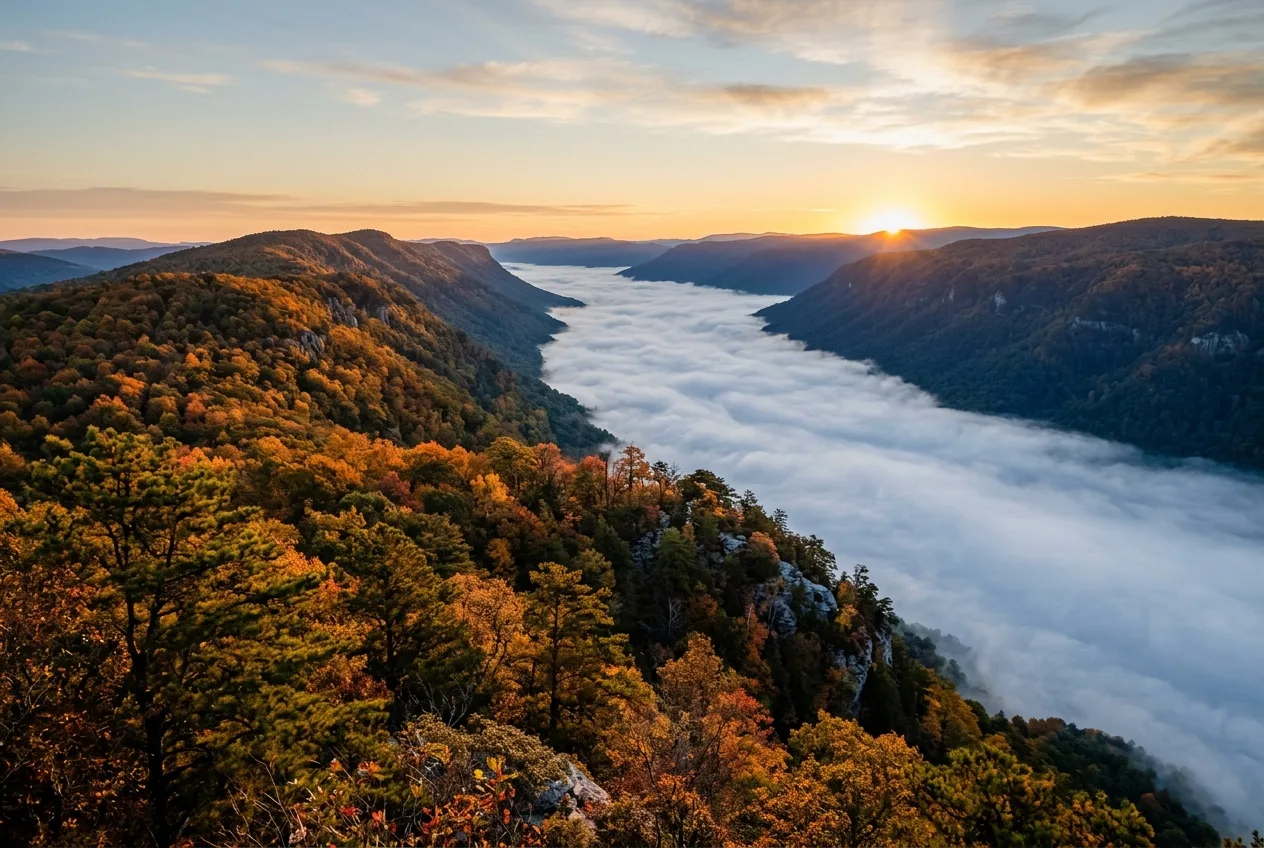
Does scent-control gear let you cheat the wind?
Short version: no, but it's not useless either, and the honest answer is more interesting than either the marketing or the cynicism.
Start with the skeptic's evidence, because it's the strongest. The only peer-reviewed-style test a Penn State wildlife scientist could find on scent-adsorbing clothing ran 42 trials — a person hid under one of ten boxes, 21 times in a scent-adsorbing suit and 21 times in regular clothes — and found "no evidence that the scent-adsorbing suits reduced the ability of dogs to find the human," or even slowed them down. His verdict, after a lifetime watching bird dogs work miracles: "Save your dollars (and cents) — because no amount of them will cover your scent from a deer". He's the same man whose golden retriever once tracked him over half a mile, on a bone-dry October afternoon, straight to where he sat. If a dog can do that to a person trying to be found, a deer can do it to one trying to hide.
Ozone — the most high-tech and most argued-over approach — tells a subtler story. A Field & Stream writer ran a repeatable test with Chance, a trained police dog. Street clothes, no scent control: Chance pegged the hidden person in 14 seconds. Ozone-treated clothing pushed that to 42 seconds; an active ozone unit in the box, 50 seconds. The dog "ran the entire course twice before marking," and his first response came "tentative — like a guess" — but he still found the target every time. The conclusion is the most quotable line in this whole debate: "Nothing — not even ozone — will completely cover human odor. But if you can muddy the olfactory water for 50 seconds, that's plenty of time for you to get a shot at a monster buck".
Real-world field results land in the same place. Outdoor Life handed ozone units to five unsponsored, blue-collar diehards for a full season — more than 435 total deer encounters, many of them downwind — and the deer clearly busted them only 24 times, about 5.5%, with some hunters going the whole year clean. Every one of the five said it helped and would keep using it; not one called it a silver bullet. Their own descriptions are telling: deer would get downwind, lift their noses, look unsure of what they were smelling, and drift off without blowing — confused, not panicked. And here's the part that brings us right back to where we started. The president of the company that makes the units describes scent moving through wind exactly like dye poured into a stream of water — pooling, splitting, never flowing evenly — and admits the bottom line: "more wind and more unstable wind means you need more ozone to neutralize your scent". Even the people selling the technology will tell you the wind is in charge.
Scent control buys you seconds. The wind decides whether you ever needed them.
So spend on it if you like — it can clearly turn a few would-be busts into chances. Just don't let it talk you into a stand the wind says no to. There's a reason these animals trust their noses above every other sense when something feels wrong, and why, in dense cover, scent is the cue that spikes their vigilance and sends them off their feed. The gear narrows the odds at the margin. Playing the wind is what actually keeps you hidden.
Frequently asked questions
Should I hunt high in the morning and low in the evening?
As a default, yes — it's the standard thermal rule, and the reasoning is sound: warming ground lifts your scent in the morning, so being above the deer keeps your odor over their heads, while cooling air drains downhill in the evening, so being low keeps it away from them. The big exception is slope aspect: a shaded, north-facing hillside warms late and can keep sinking air running downhill well into a winter morning, so read the actual conditions rather than the clock.
What wind direction is best for deer hunting?
There's no universal "best" direction — the right wind is the one that carries your scent away from where deer bed, feed, and travel, ideally toward dead ground like a pond, road, or steep drop. Because that depends entirely on your specific stand and the deer's routes, the practical move is to keep multiple stands set for different winds and only hunt the one whose wind is right that day.
Can deer really smell me from far away?
Far enough that you should assume yes if you're upwind. A deer's nose is among the most sophisticated in the animal world, sensitive to vanishingly small traces of human scent. Exactly how far depends on wind and terrain — scent breaks into intermittent filaments and can skip a downwind deer for minutes, then suddenly reach it — but distance is not your friend.
Do scent-control clothing and ozone actually work?
They can reduce how often deer detect you, but they don't make you invisible. Scent-adsorbing clothing shows little measurable advantage in testing, while ozone can buy you a short delay before a deer pins your scent. The consensus, including from the ozone maker itself, is that gear "muddies" your scent for a short window — useful, but the wind still rules.
Do deer move less on windy days, so should I stay home?
No — that's a common assumption the data contradict. Nearly 90% of surveyed hunters expected deer to move less in wind, but GPS-collar tracking found deer actually moved more during windy days (and less on windy nights), an effect that showed up even with light air movement. A breezy day is a fine day to hunt; just be certain where the wind is sending your scent.
Tree stand or ground blind for beating a deer's nose?
A tree stand gives you a modest scent advantage because elevation gets your odor up off the ground, plus better visibility and quieter access. A ground blind keeps your scent at deer-nose level, so it demands a genuinely good wind, but it hides your movement well and is easier to set up — a real plus for new or young hunters. Neither beats the nose on its own; both depend on you playing the wind.