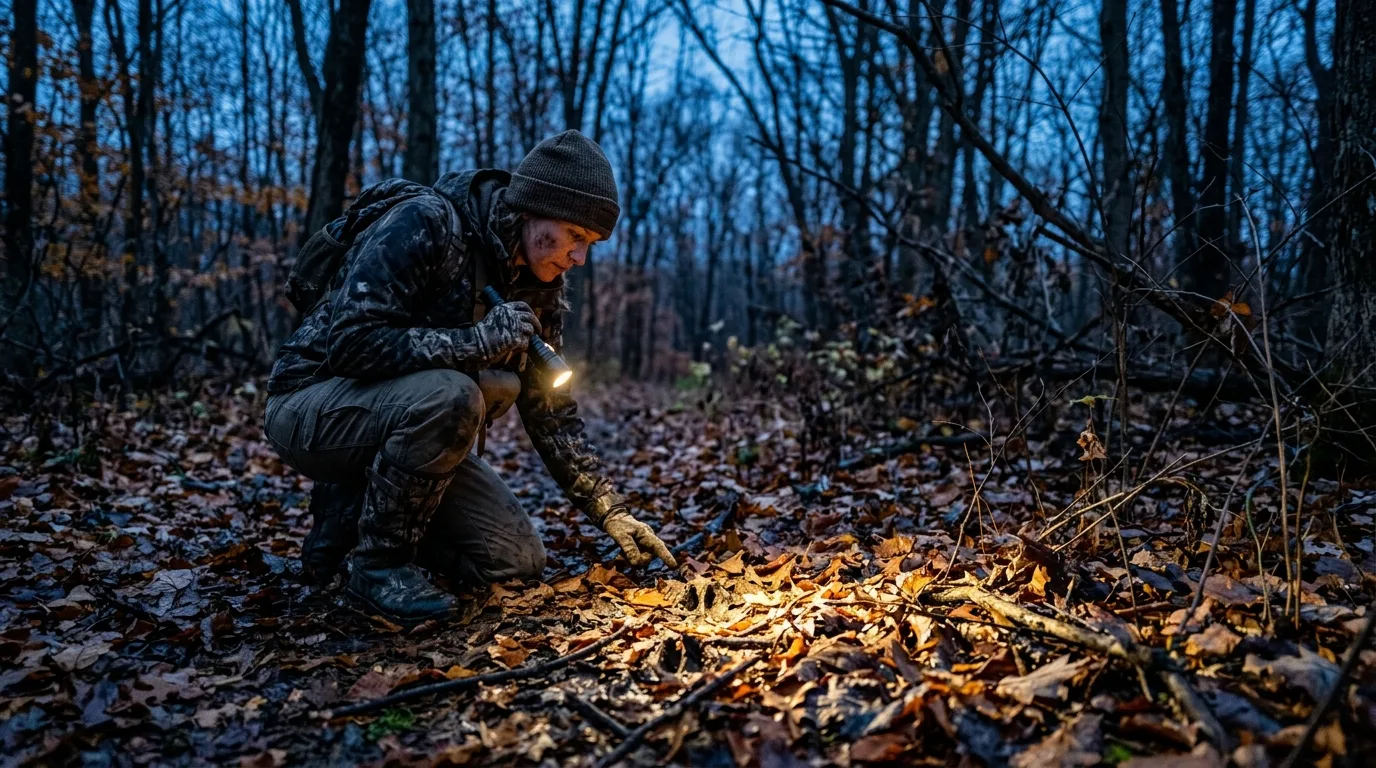
The shot felt good. The deer kicked, crashed off through the brush, and then the woods went quiet. You climb down, walk to the spot — and there's nothing. No deer, no blood, just a few cut hairs and a scuff in the dirt. That sinking feeling in your gut is the moment this whole article is about, because what you do in the next hour decides whether that animal ends up in your truck or rots in a thicket two ridges over.
Here's the thing most hunters get backwards: tracking a wounded deer isn't mainly about being a great woodsman. It's about reading three or four pieces of evidence correctly, then having the discipline to do the boring thing — wait, look closely, move slowly — instead of charging off on adrenaline. A New Zealand hunter named Simon Gibson describes watching a mate write off a stag as a clean miss and head back to the hut; Gibson questioned him, recognized the kicked-out back legs and downhill crash as a classic gut shot, insisted they go back, and found the dead stag fifteen minutes up the terrace. The deer was always recoverable. The hunter just didn't read the sign.
This is a hemisphere-neutral, fieldcraft-first guide. The physiology of a lung versus a gut hit is the same whether you're after whitetails in Oklahoma, red deer in the Scottish Highlands, or sambar in Victoria, and the agencies and best-practice bodies on three continents describe it in almost identical terms. What changes by place is the law — especially around tracking dogs — and we'll flag that clearly when we get there. The fieldcraft applies wherever deer are hunted.
Recovery isn't mainly woodsmanship. It's reading a few pieces of evidence correctly, then having the discipline to wait.
The real reason this matters
Strip away the technique for a second. The reason you learn to blood-trail at all is an ethic almost every hunting culture states in nearly the same words: if you take the shot, you owe the animal every effort to recover it. New Zealand's Department of Conservation puts it as a flat legal duty — "if any animal may have been wounded but not quickly killed by a shooting attempt the hunter must promptly make a thorough effort to locate and humanely kill it". Texas Parks & Wildlife frames the whole point of good shot placement as "a quick, clean kill, which minimizes the suffering of the animal and maximizes the chance of retrieving the downed animal". North Carolina's wildlife agency calls following up "in order to avoid wanton waste" the mark of "an ethical law-abiding hunter," one who will "make every effort to thoroughly check the area before assuming a clean miss". Pennsylvania's hunter-education curriculum is blunter still: "It is a hunter's ethical responsibility to stop the hunt and search for any wounded animal".
It helps to know what the science actually says about wounded deer, because the picture is more reassuring — and more demanding — than the campfire version. The good news first: a deer hit well in the vitals usually doesn't go far. A tracker's primer from the U.S. notes that "a deer that is well hit in the vitals with arrow or bullet rarely travels more than 50-100 yards before expiring and usually leaves a trail easy to follow". A large UK study of rifle stalkers — 102 of them, logging 2,281 shots — found 95.5% of shots hit and 93% of those killed outright; only about 1.2% of deer were hit and lost. When people do their job, recovery is the norm.
The demanding part is the tail of that distribution. The same UK study found wounding rates climbing to 11.6% for red deer, the largest of the four species. And archery, with its narrower margin, runs much higher wounding rates: a radio-collar study of bowhunted bucks recorded a 50% wounding rate (deer hit but not recovered by the hunter), though — and this matters — the majority of those deer survived flesh wounds, with only about 14% actually dying unrecovered. An older necropsy survey of more than a thousand deer reached a related, sobering conclusion: animals that take a fatal gunshot "usually are fatal and result in very little chronic debilitation in the few deer that survive" — in other words, a mortally hit deer you fail to find almost always dies rather than living on crippled. That's exactly why the recovery effort isn't optional. The animal you can't find is, more often than not, dead within a day or two; your job is to make sure it doesn't go to waste.
If you take the shot, you owe the animal every effort to recover it. Every hunting culture says it in nearly the same words.
Watch and listen: the reaction is your first clue
Recovery starts the instant you fire, not when you climb down. The single most useful thing you can do is watch how the deer reacts and listen to it leave, because the reaction is a surprisingly reliable read on where the bullet or arrow landed.
The old shorthand — watch, listen, wait — is worth keeping in your head. Watch the body language. Listen for the strike (a solid "whack" or, with an arrow through the chest, a hollow "pumpkin" thump) and for the deer crashing off. And pin down two locations precisely: where the deer was standing when you shot, and the last spot you saw it. Everything afterward references those two points, and they're maddeningly hard to relocate once you're down on the ground where "things look different than from the stand".
A heads-up if you hunt with a partner: have them watch through binoculars while you shoot. Recoil throws your sight picture, and "you will often miss the animal's reaction due to recoil" — a second set of eyes catches the kick or the hunch you didn't see.
Here's how the reactions map to hits, drawn from agency and best-practice guidance across several countries that all describe the same patterns:
| What the deer does | Likely hit | What it means for you |
|---|---|---|
| Mule-kicks (back legs kick out), drops its head, bolts in a hard low gallop, often piles up within ~50 m | Heart / lungs | The shot you want. Usually a short, strong blood trail |
| Hunches its back, then trots or walks off stiff-legged, often beds down nearby — sometimes within sight | Gut / paunch or liver | Back out. This deer needs hours, not minutes |
| Drops on the spot, whole body hits the ground at once | Spine / neck / head (high CNS) | Often dead where it lies — but approach ready for a finisher |
| Drops at the shot, then gets up and runs off | Possible near-miss (e.g. clipped jaw or spine) | Treat as wounded; a "drop then run" can be a grazing CNS hit |
| Runs hard but with an obvious limp or a swinging leg, awkward through brush | Leg / muscle | Can travel a long way; among the hardest to recover |
The gut-shot reaction is the one to burn into memory, because it's the one hunters most often misread as a miss. Across sources the description is consistent: the deer "hunches or may jump," then "stands hunched or walks off slowly with a stilted gait," and usually "couches nearby, head up or turned against flank". New Zealand's Gibson adds the acoustic tell — a gut hit produces "little in the way of a 'whack' noise" and "not much in the way of blood if any," which is exactly why it gets written off. If the reaction says gut, believe it, even when the strike site is clean.
One honest caveat the sources insist on, and so will I: reaction is a clue, not a verdict. A best-practice guide notes that how a deer reacts "varies according to their physical condition, state of mind, where the bullet struck, and angle of the shot," plus the load and range. Use the reaction to form a hypothesis. Confirm it at the strike site.
Reading the strike site: hair, blood, bone
After the appropriate wait (more on timing next), you go to the exact spot the deer was standing — the "strike site" — and you read it like a page. Even a clean-looking patch of ground usually has something to say.
Hair is the first thing, and it tells you roughly where on the body you connected. Different parts of the deer carry different hair, so a tuft of dark back hair versus pale belly hair versus reddish flank hair narrows the location. The texture matters too: hair from the entrance wound "is often cut by the bullet," while exit hair "often has intact roots or is attached to fragments of skin," and "a grazing shot tends to produce a lot of hair" — a big pile of cut hair with no follow-up blood often means you grazed the deer rather than punched through it. Pennsylvania's curriculum lists exactly what to scan for at the site: blood on the ground or vegetation, broken twigs, scattered leaves, a disturbed "dew line" early in the morning, tracks, and "hair, meat, or bone fragments".
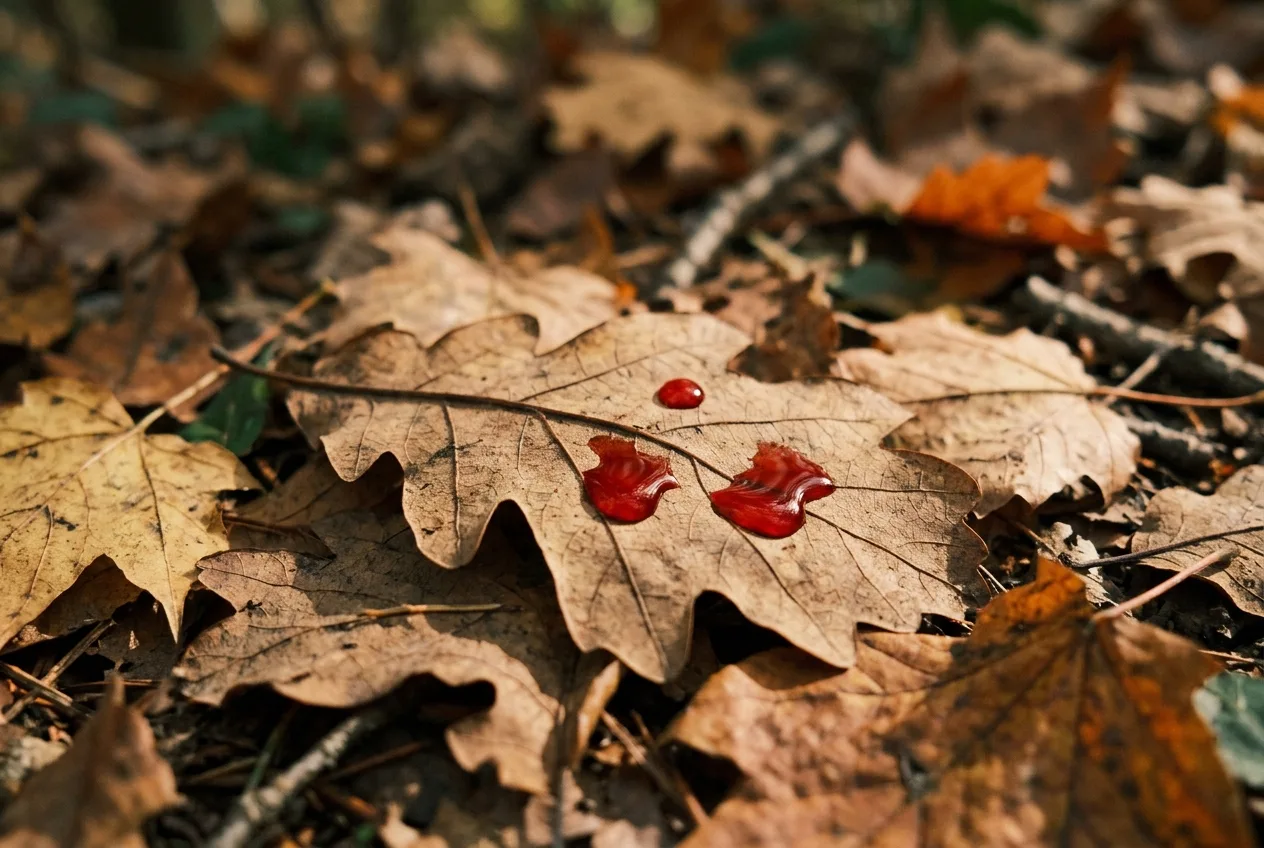
Blood is the headline, and its color and character are your best single read on the wound. This is where independent sources from the U.S., the U.K., Ireland, and New Zealand line up almost word for word, which is why you can trust it anywhere:
| Blood appearance | Most likely hit |
|---|---|
| Light red / pink and frothy, often sprayed (it's full of air from the lungs) | Lung |
| Bright red, can spray in lines | Arterial — heart, or a major vessel in a leg/muscle hit |
| Dark, thick red | Liver (or muscle) |
| Thin, watery, tinged green or brown, foul-smelling, often with food matter | Stomach / intestine — a gut shot |
A few field notes that make the chart usable. Frothy lung blood is unmistakable once you've seen it: Gibson describes it as "bright frothy blood... often sprayed over the ground and bush as it comes out of the animal's mouth," and when you see that much of it, "the animal will be close by". Bright red is the ambiguous one — it can mean a heart hit or "a possible leg wound," so let the rest of the evidence and the deer's reaction break the tie. Gut sign is the most distinctive to the nose: "watery green/yellow droplets that smell strongly of deer indicate a gut shot," and the smell often arrives before you spot the blood.
One genuinely important trap, straight from a best-practice guide: green or brown gut content at the strike does not automatically mean a paunch hit. "Be aware that the oesophagus (foodpipe) may be broken in a normal, lethal, heart/lung shot, also producing gut content". So a little gut matter alongside frothy pink lung blood is still a dead-quick lung deer — read all the sign together, not one smear in isolation.
Pay attention to how much blood there is and how high it sits. Look not just at the ground but "higher off the ground on plants," where an exit wound paints the brush. Heavy, obvious blood with frothy bubbles generally means a fast death and a short track; sparse, dark spotting means a longer wait and a longer follow. And the deer often doesn't start dropping blood right at the strike — "it may take 5-10 yards or more for a deer to begin expelling blood from the wound," so don't quit the spot just because the first few feet are clean.
Bone fragments round out the picture. Long-bone (leg) splinters tend to be long with a tight curve; rib bone is flatter and more spongy. And a warning worth heeding when you're guessing how far the deer went: "bone is dense and may travel much further than other tissue," so a chip of bone at the site isn't proof the wound is right there.
Frothy pink blood and a body crash mean go slow and go find it. Thin green blood that smells means back out and wait it out.
How long to wait — and why this is where deer get lost
If there's one decision that separates recovered deer from lost ones, it's the wait. Move in too fast on a wounded deer and you flush it; that flush dumps adrenaline, the animal jumps up and runs hundreds more yards, and a recoverable deer becomes a heartbreak. As Texas's guidance explains, "after incurring a mortal wound, an animal, after a short run, will usually lie down, go into shock and die. If you move in too quickly, the animal's flight instinct will kick in". North Carolina describes the physiology underneath it: letting the deer lie down "promotes the movement of blood to concentrate at the wound site," whereas pushing it "transfers blood to the extremities and used for movement," slowing the bleed-out you're counting on.
So how long? Here's where I have to be straight with you: the sources don't all give the same number, and you shouldn't trust anyone who pretends there's one magic figure. What they do agree on is the shape of it — short for lungs, longer for liver, longest for gut — and the principle that you tune the wait to the wound. Treat the ranges below as a consensus band, not a stopwatch:
| Hit type (from your sign) | Typical wait before trailing | Notes |
|---|---|---|
| Clearly dead in sight | None | Approach with care, ready for a finishing shot |
| Good lung / heart sign, deer out of view | ~30 min to 1 hour as a general minimum | UK best practice is shorter (≥5 min) when you know the exact spot the deer fell, longer if you don't |
| Liver | A few hours (often cited around 2–4) | A liver hit is reliably fatal; an undisturbed liver-hit deer usually doesn't go far |
| Gut / paunch | Several hours, or overnight if it's cool | The single biggest "don't rush it" — pushing a gut-shot deer is the classic way to lose it |
The widely used general minimum is "at least 30 minutes to an hour before beginning to trail" for a deer that's run off, echoed by Pennsylvania's "at least a half-hour to an hour... unless the downed deer is in sight". North Carolina ties the wait directly to the sign: "if large amounts of bright frothy-blood are found quickly, the pre-tracking waiting period may be short (15 minutes or less)," whereas "minimal dark blood and stomach contents" calls for "one to several hours or more".
UK practice is interesting because it splits on a single variable — do you know exactly where the deer is? The British Association for Shooting and Conservation says "in most circumstances you should wait at least five minutes," then approach and read the strike. But the Deer Initiative's guide adds the crucial condition: "if the precise location of the deer is not known, wait for at least 30 minutes from the time of the shot". The short UK wait assumes a rifle-killed deer you watched drop; the longer wait kicks in the moment there's doubt.
For the liver and especially the gut, the longer numbers are close to unanimous. One widely-read consensus guide recommends a minimum of two hours for liver, "sometimes 3 or 4," and for a gut shot "4 to 6 hours before picking up the trail" — or, "if cool enough at night, let a gut-shot deer rest overnight and search the next morning". New Zealand's field advice is shorter on the clock but identical in spirit: even a well-hit deer benefits from 10–15 minutes because "the wounds will make the animal stiffen up," and "if you suspect a gut shot, then waiting half an hour or longer is a good idea," giving the animal "plenty of time to lie down and stiffen up". The exact hours vary; the ranking never does. Wait longest for the gut.
There's one situation that overrides the wait: weather eating your sign. If it's pouring or snowing hard enough to wash out blood, or darkness is closing in, you may have to move sooner and accept the trade-off, because "blood, hair, and other sign might be washed away". Light snow can actually help you track; heavy snow or a rain-snow mix erases everything fast. Read the conditions, not just the clock.
Working the trail: mark every sign, search the grid
Once you commit to the trail, the method is simple and the discipline is everything. Move slowly in the direction the deer went, scanning the ground and the brush, and treat each speck of blood as a breadcrumb you may need to find again.
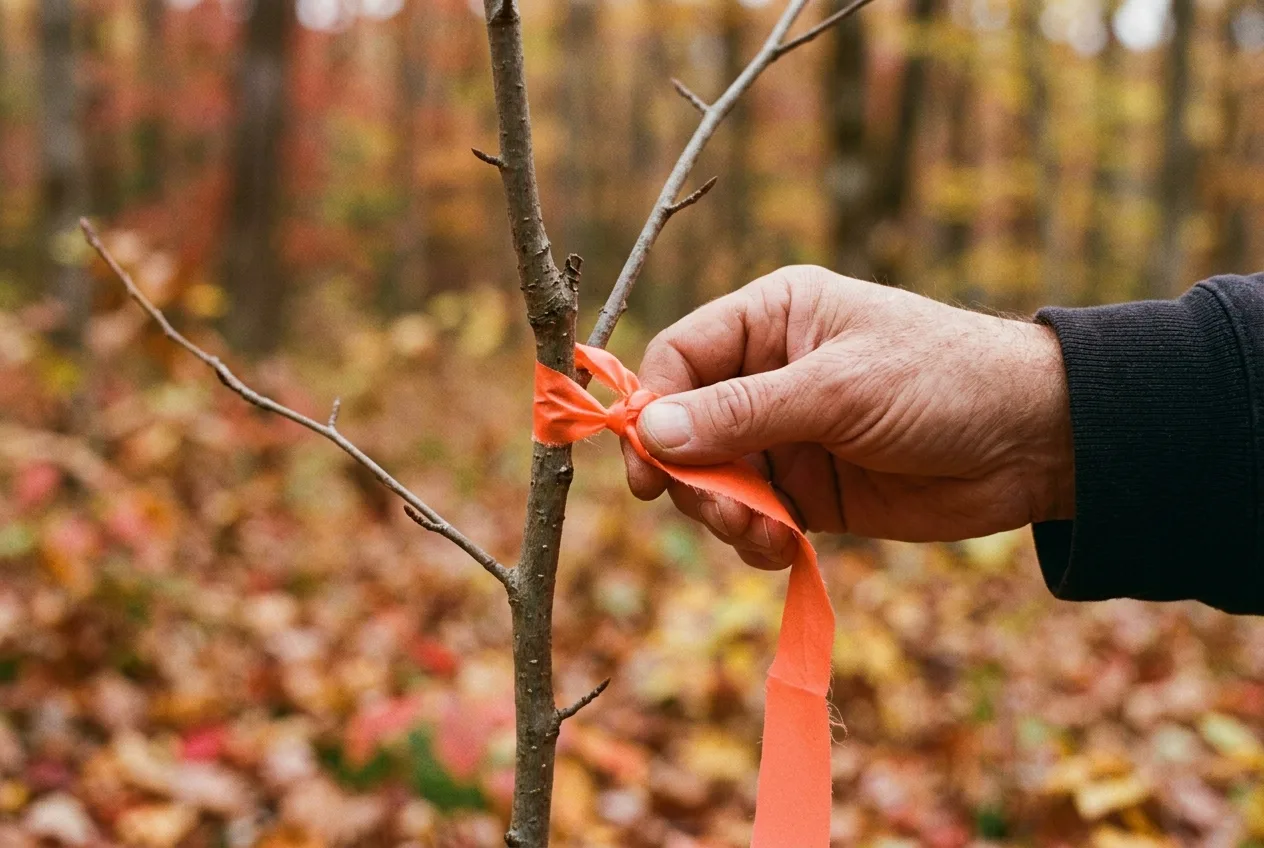
Mark every sign. The most-cited trick costs nothing: drop a piece of toilet paper (or biodegradable flagging) at or just above each spot of blood. After a few markers, the line of flags shows you the direction of travel at a glance, and — critically — if you lose the trail you can return to the last marker and start fresh from a known point. Texas's guidance: tie paper "above or very near where you find blood sign," and "after marking several spots the toilet paper 'flags' will give you a good idea of the direction of flight". Use biodegradable material so a forgotten flag isn't litter, and pick it up afterward.
Don't walk on the trail. Stay to one side of the blood, not on top of it, so you don't smear or erase the sign you might have to re-read. A best-practice guide says it plainly: "keep to one side so as not to spoil the scent trail and place markers just off the trail". This also keeps the scent line clean if a dog ends up working it later.
When the blood runs out, switch from following to searching. This is the moment to not wander off hoping to bump the deer. Mark your last confirmed blood, then "search in a circular or grid pattern" radiating from it. Or as the consensus how-to puts it: when the trail dies, "begin a grid search of the area," bring help, and "keep everyone within sight" so a thick patch doesn't get skipped. The Deer Initiative is emphatic about the failure mode to avoid: "if there is no obvious trail or if the trail runs out, do not begin searching at random".
Two strong tendencies stack the odds in your favor when you've lost the line. First, wounded deer "prefer to run downhill rather than up" — it's the path of least resistance, and a New Zealand hunter notes a wounded animal "will travel around the side of a hill, or will go downhill – and often not far... rarely will a badly-wounded animal go uphill". Second, a hard-hit deer often heads for water; North Carolina explains it bleeds, gets thirsty, and "will seek water sources," so when all else fails, "head to the nearest water source — countless deer are found near or in creeks or shallow ponds".
A couple of small tools earn their place in a trailing kit. In poor light, "a white tissue wiped over the blood trail may make blood easier to identify" against dark ground. A spray bottle of hydrogen peroxide helps confirm a questionable spot — "blood will fizz when sprayed". And a good light, a compass or GPS to relocate your start, and a photo or map of the area round it out.
When the blood runs out, stop following and start searching — a marked grid from your last sign, not a hopeful wander.
When to back out (and not blow it)
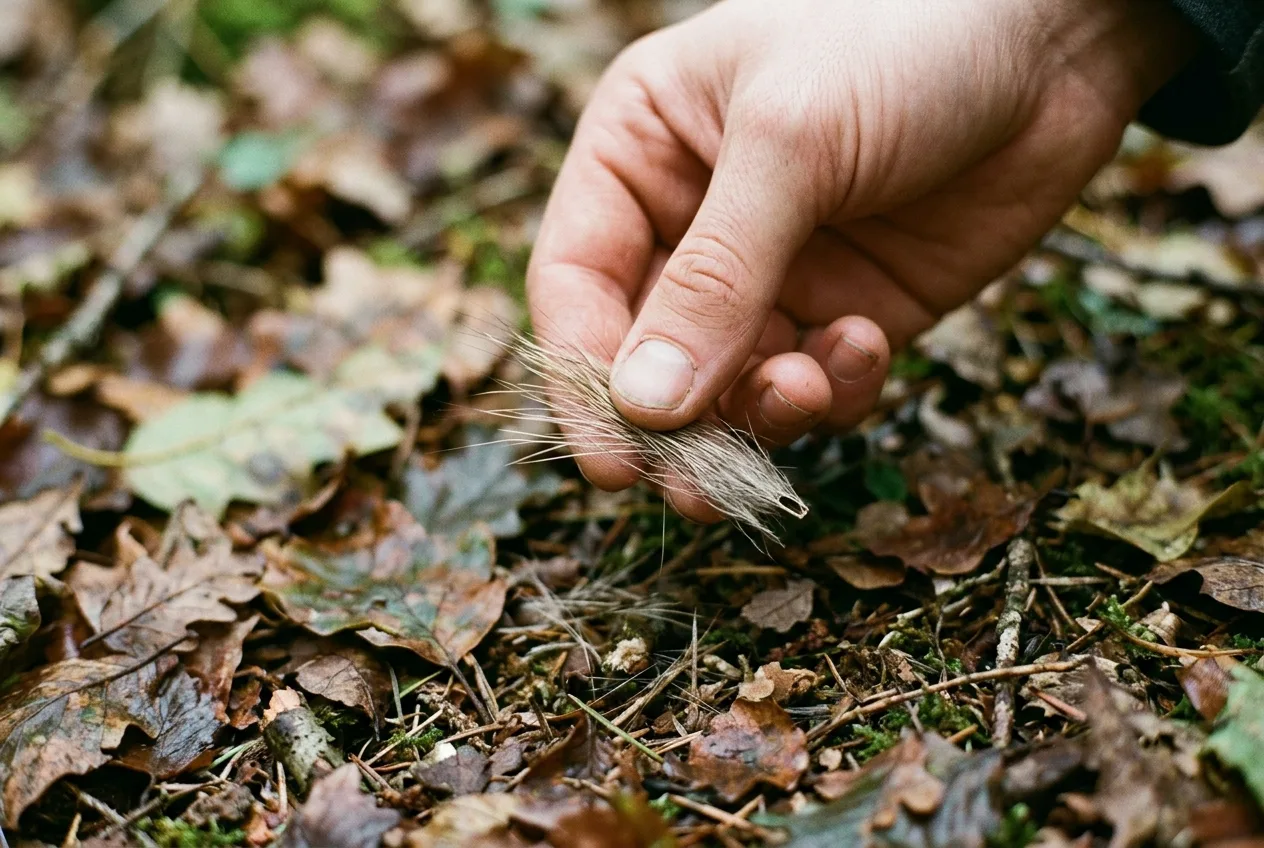
Sometimes the right move is to stop. Knowing when to back off a wounded deer is as much a skill as the tracking itself, and the consequences of getting it wrong are exactly the ones you're trying to avoid.
Back out the moment you jump the deer from its bed. If you push a deer out of its bed and don't get a clear, safe follow-up shot, do not chase it. As one recovery guide advises, "if you jump the deer from a bed, then it's probably a good time to back out and call in a tracking dog". North Carolina agrees: if a deer flushes and you can't take the shot, "it would be wise not to push any further". Each time you bump a wounded deer, it travels farther and beds harder to find.
Back out when the trail dies on a clearly mobile deer. Best-practice guidance is firm that you should not pursue "a mobile wounded deer that is aware it is being chased," because "it is not in the interests of the deer to risk alarming it into running further away, making it harder to find". BASC's version: "if at any stage you see signs of or feel that the deer is lost and possibly mobile, it is best to mark the last sign found, leave the area rather than disturb it further, then return with a trained dog".
When you do back out, do it cleanly so you can pick the trail back up — and so a dog can. Mark the initial point of impact and the last spot of blood, then "exit the area away from the blood trail" rather than tramping back down it. One tracker's rule of thumb: don't go "more than 20 yards beyond that last sign of blood" before you decide to stop, because spreading your own scent past that point "causes problems for the dog" — you can always grid-search that ground later if it comes to it. Snap a few phone photos with the locations marked while it's all fresh in your mind.
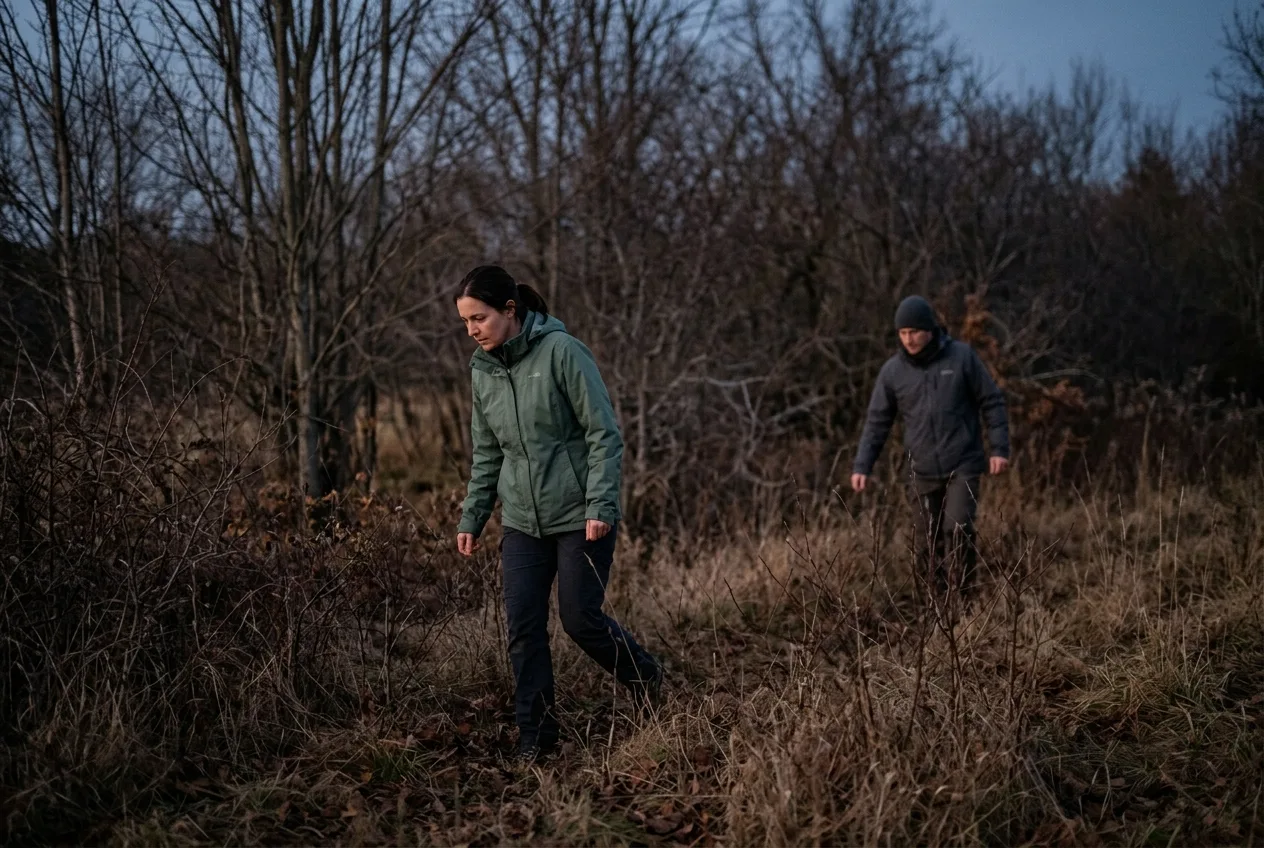
Tracking dogs: the most effective tool, where it's legal
If you take one practical upgrade from this article, it might be this: a trained tracking dog is, without much argument, the most effective recovery tool there is — and it's far more available than most hunters realize. But its legality varies by jurisdiction, so before we talk about how good dogs are, understand that whether you can use one depends entirely on where you hunt.
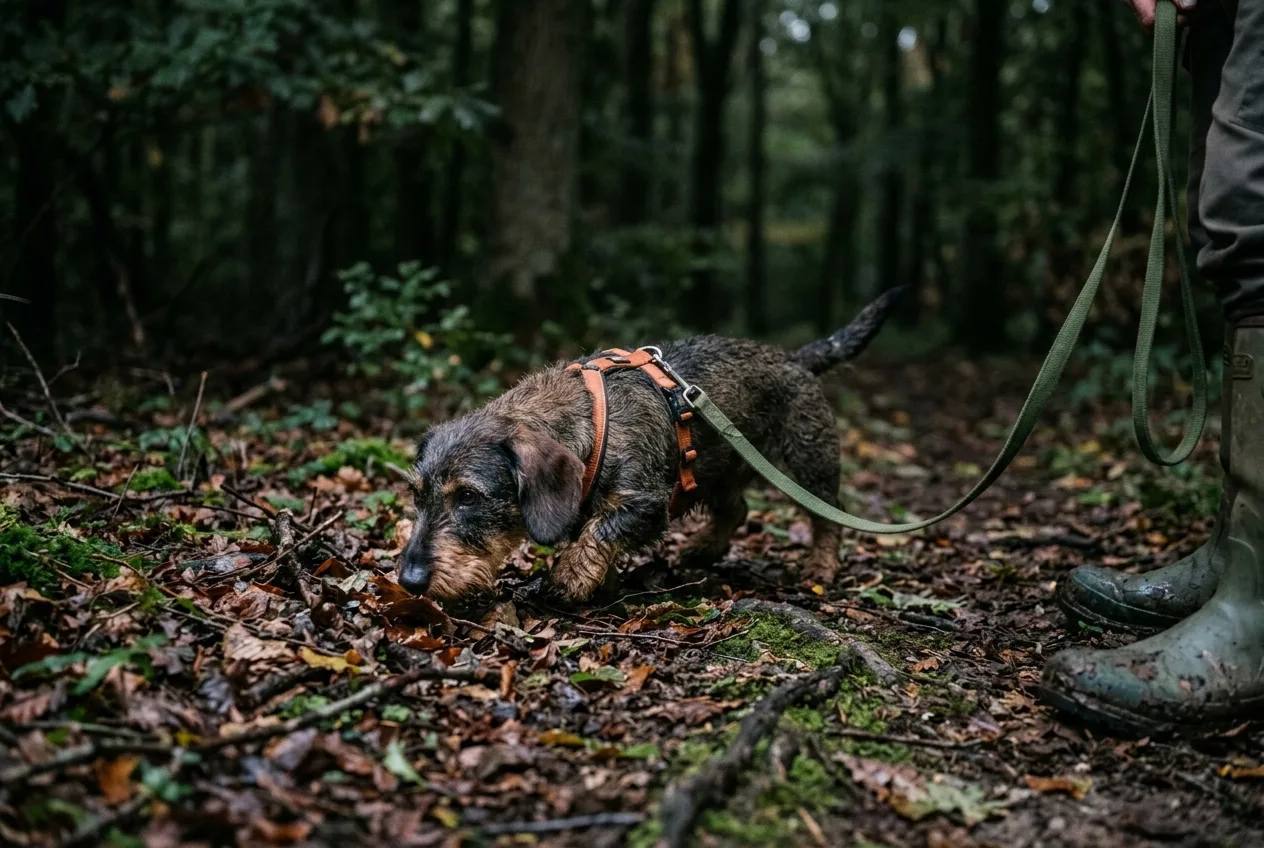
First, why they work so well. The name "blood tracking dog" is misleading: these dogs "are employed when there is very little blood to track and instead find harvested game following its scent". A trained dog learns to lock onto the individual scent of one wounded animal and follow it even "when there is little or no blood". The mechanics are specific and clever: the dog is started "at the very beginning of the track, at the initial hit location, not where the hunter lost the track," so by retracing the trail the hunter already followed, "the dog quickly comes to recognize the specific, individual scent of the wounded deer," then carries straight on past the point where the visible blood quit. They're worked on a leash, which both keeps them honest on the wounded animal's trail and means "there is absolutely no chance for these dogs to 'run healthy deer'" — the most common objection to the practice.
How effective is "effective"? The numbers are striking. A South Carolina study where a trained dog was used on every shot found the dog "increased the harvest approximately 20 percent at this site because it almost totally eliminated unrecovered dead deer and crippling loss". That same study makes the case for dogs vividly: the deer judged unrecoverable without one had run an average of about 150 yards (~140 m) into thick cover, often leaving no sign the hunter could find — the dog located them. And dogs routinely work trails that would be hopeless for a person: a primer recounts a dachshund recovering a gut-shot buck on a trail "28 hours old," where the deer had gone only 300 yards with almost no visible blood, and notes it's "not unusual... to successfully find dead deer that were shot 24 to 36 hours earlier and still be fit for consumption". They shine exactly "when there is no blood or other signs to follow, or when conditions such as darkness; rain or snow; rough/dense terrain; or water/wetlands enter the picture".
Worth understanding so you read recovery rates correctly: a dedicated tracking nonprofit reports a recovery rate of "approximately one-third of all tracking attempts," which sounds low next to the South Carolina figure — but it's lower precisely because such dogs are typically called only "after a hunter performs a thorough search and has basically given up because of no visible sign". They get the hardest cases. A one-in-three recovery on deer everyone else had written off is a lot of animals saved.
Now the part that genuinely depends on where you are. There is no single global rule, and you must check your own jurisdiction:
- United States — a patchwork, mostly permissive and trending more so. Sources put the count at roughly 43–44 states allowing tracking dogs, with a small minority prohibiting or restricting them (the named hold-outs vary slightly between sources — for example one lists seven states still prohibiting, another lists a shorter set plus California "under certain circumstances"). The clear direction is expansion: many Northern states that once banned the practice have legalized it over the past couple of decades, and West Virginia, for instance, authorized leashed dogs for deer and bear in 2020 and extended it to elk, turkey, and wild boar in 2023. Because the list changes year to year, confirm the current rule with your own wildlife agency.
- Norway — a dog isn't optional, it's required. For moose, red deer, and roe deer, hunters "are required to have a trained dog available to locate animals that have been shot, but not found," and if one isn't on hand, a written agreement must secure a dog "within a reasonable time". This is a duty to have a dog available, not merely permission to use one.
- UK, Ireland, New Zealand, Australia — a trained dog is treated as standard best practice. British and Irish best-practice bodies expect a stalker to "own or have access to a dog trained to locate dead or wounded deer," with tracking services available where you don't have your own. New Zealand and Australian hunting guidance similarly fold dog use into ethical recovery.
A few practical norms travel everywhere, regardless of the legal details. Line up a tracker before the season — find handlers through a national tracking organization's directory rather than scrambling the night of. Cost "ranges widely from free, to covering travel expenses, up to a few hundred dollars". And recovery often crosses a property line, so know your neighbors: in many places you "require landowner permission to track a dead/wounded deer onto someone else's property," and a reputable tracker won't cross a boundary without it.
One thing the dog handlers themselves are adamant about: the dog doesn't replace your own skill. As the recovery guide's author puts it, "knowing how to find and follow a blood trail is an important skill that every hunter should know and hone" — the dog is an additional tool to fulfill the obligation to recover every deer, not a substitute for reading sign.
A trained tracking dog is the most effective recovery tool there is — but whether you can use one depends entirely on where you hunt.
The best tracking job is the one you prevent
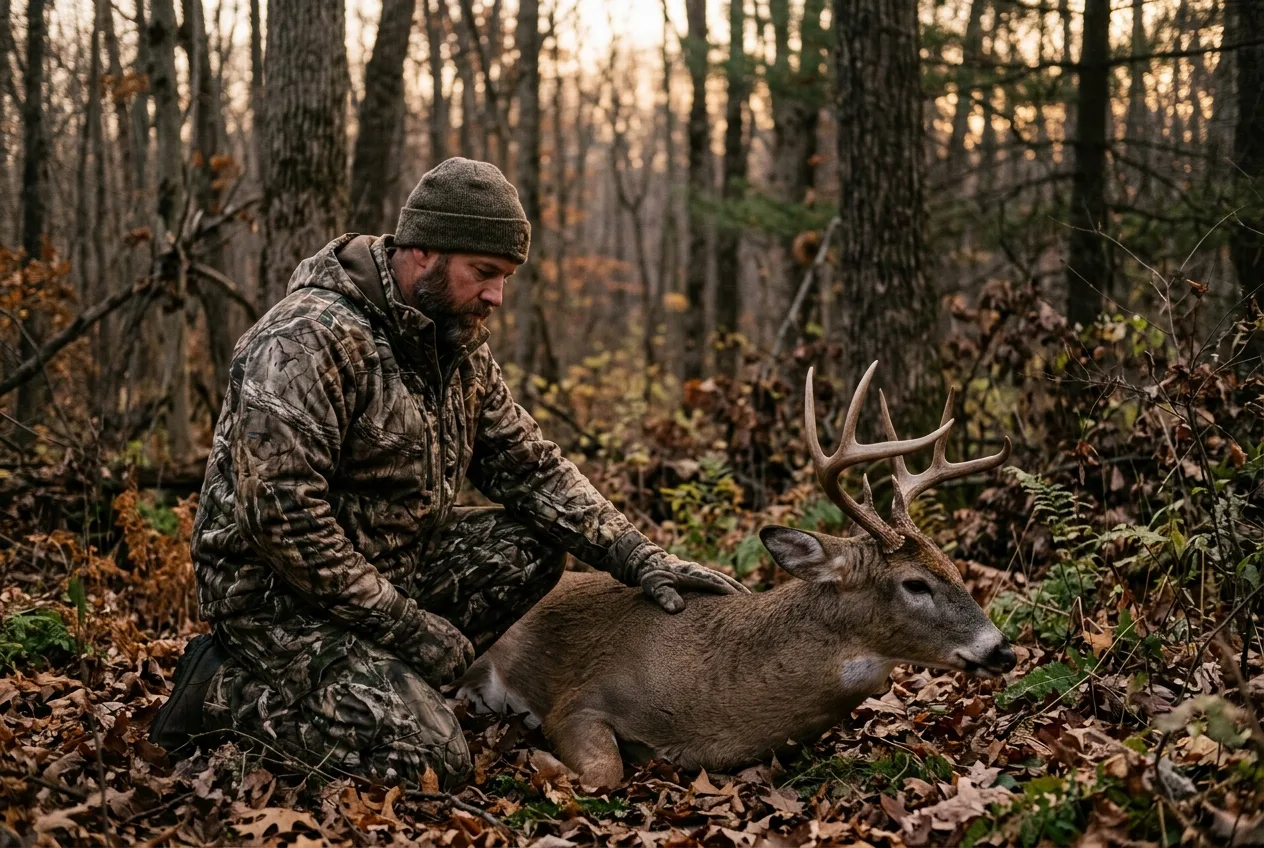
Everything above is what you do after a marginal hit. The honest truth running underneath all of it is that the surest way to recover a deer is to not wound it in the first place — and the sources are unanimous on how.
Pick the shot with the biggest margin for error. Across U.S. agencies, UK and Irish best-practice bodies, and Australian and New Zealand guidance, the recommendation is the same: the broadside chest (heart-lung) shot, behind the shoulder, roughly one-third of the way up the body from the brisket. The reasoning is just geometry and biology: an Australian analysis notes a deer's brain is about 80 mm and encased in bone, while a fallow deer's heart-lung zone is around 250 mm and damages "the CNS, respiratory, locomotive and circulatory systems" at once — "over double the room for error". New Zealand hunters call that zone the "hilar" area, "about the size of a dinner plate on a mature red deer," and note any deer hit there "will not go far". The big UK study quantifies the payoff: chest shots had the highest hit rate, and bullets under 75 grains — too light — wounded deer four times more often than heavier bullets.
The flip side is the gut shot, the wound that triggers the longest, hardest recovery. It usually comes from a bad angle — a quartering-away shot that drifts back, which "can result in a 'gut-shot'... not only does the animal suffer when gut-shot but it can still travel a great distance and there is a good chance you may lose it". Avoid the marginal angles, wait for broadside, practice enough that your "ethical range" is honest, and most of the tracking in this article becomes academic. The Irish best-practice benchmark is worth aiming for: a well-placed shot with the right bullet "will result in death in less than five minutes in most cases".
A modern note on the sorting work that comes after, if you run cameras on the same ground: knowing a deer's pattern — when and where it actually moves — is half of getting a clean, broadside, unhurried shot in the first place. What Time of Day Are Deer Most Active? What the Movement Data Actually Shows
The surest way to recover a deer is to not wound it: broadside chest, honest range, and the patience to pass a bad angle.
Frequently asked questions
How long should I wait before tracking a wounded deer?
It depends on the hit. For a deer that ran off with good lung or heart sign, a common minimum is 30 minutes to an hour (UK practice can be as short as five minutes when you saw exactly where it fell). For a liver hit, give it a few hours; for a gut shot, several hours or overnight if it's cool. The ranges vary between sources, but the order never does — wait longest for the gut.
What does the color of the blood tell me about where I hit the deer?
Light red or pink and frothy means a lung hit (it's aerated). Bright red can mean a heart shot or a major-vessel/leg wound. Dark, thick blood points to the liver. Thin, watery blood tinged green or brown, smelling foul and mixed with food matter, means a gut shot — back out and wait. Read it alongside the deer's reaction, not on its own.
The blood trail ran out. Now what?
Stop following and start searching. Mark your last confirmed blood, then work a tight circular or grid pattern out from it rather than wandering at random. Bring help and keep everyone in sight. Check downhill and toward the nearest water — wounded deer favor both. If the deer is clearly still mobile, consider backing out and calling a tracking dog where one is legal.
Are tracking dogs legal for recovering deer?
It varies by jurisdiction — there's no universal rule. In the U.S., roughly 43–44 states allow leashed tracking dogs, with a small minority prohibiting them, and the trend is toward more states legalizing. Norway legally requires a trained dog be available for big-game hunting. The UK, Ireland, New Zealand, and Australia treat a trained dog as standard best practice. Always confirm the current rule where you hunt, and get landowner permission before tracking onto a neighbor's property.
How far does a wounded deer usually travel?
A well-hit deer often doesn't go far — frequently 50–100 yards (about 45–90 m) before expiring with a good vital hit. In one rifle study, deer ran an average of 62 yards (~57 m), but that varied enormously by hit: shoulder-shot deer averaged just a few feet, while gut/abdomen-hit deer went roughly 70 yards (~63 m) and into the thickest cover.
Should I cut the throat of a downed deer to make sure it's dead?
Be careful — several experienced hunters warn against it as a way to dispatch. When you reach a downed deer, touch its eye with the tip of your barrel or a stick; if it blinks, it's alive and needs a finishing shot. Grabbing a still-living deer to cut its throat risks it lurching to its feet and running off — hunters report losing big animals exactly this way.