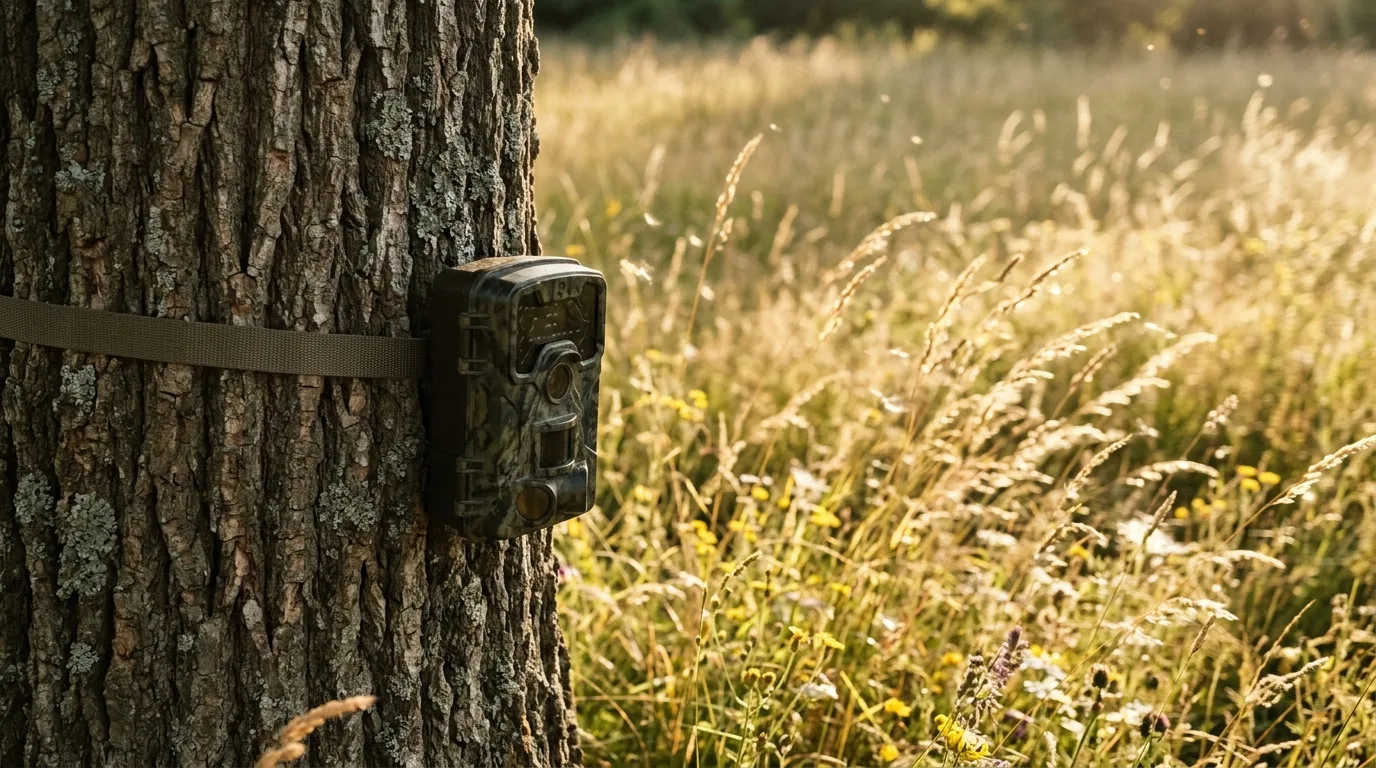
You pull the SD card, drop it into your laptop expecting deer, and start scrolling. Photo 1: grass. Photo 2: grass. Photo 200: the same patch of grass, swaying a little differently. By the time you hit photo 2,000 you realize the card filled up in May and the camera sat dead for the rest of the season. Not one animal.
If that's you, take a breath: your camera is almost certainly fine. This is the single most common frustration trail-camera owners run into, and it has a name — a false trigger. The camera detected something, woke up, and saved a perfectly normal, well-exposed photo. There just wasn't an animal in it.
That last part matters, because it's easy to land here looking for the wrong fix. A false trigger is not a blank, black, or washed-out photo where the image itself failed — that's a different problem (overexposed night shots, a dying battery, a sensor fault) with different causes. (If your photos are black or blown-out white with nothing recognizable, you want our guide on Why Is My Trail Camera Taking Blank Photos? 8 Fixes instead.) Here we're talking about the opposite: the picture looks great, the woods look lovely, and that's exactly the problem. The camera is working as designed — it's just not being selective enough about when to shoot.
The short version of why, and what to do, is this: trail cameras don't see animals. They sense a moving difference in surface temperature, and the world is full of moving temperature differences that aren't animals — sun-warmed leaves blowing in the wind, shadows sliding across hot ground, a camera wobbling on a loose mount. The fixes are mostly about where and how you hang the camera, with settings as a secondary lever. Let's get into it.
What your camera is actually "seeing"
Here's the mental model that fixes 90% of the confusion. Inside almost every trail camera is a passive infrared (PIR) sensor — "passive" because it emits nothing; it just listens for infrared (heat) radiation coming off the surfaces of things in front of it. A ridged plastic Fresnel lens splits the view into a fan of invisible zones, and the sensor fires when the heat pattern across those zones changes fast enough to cross a threshold.
The crucial, widely-misunderstood bit: a PIR needs both movement and a temperature difference, and it triggers on a difference, not on "warmth." A stationary warm fox won't fire the camera — heat, but no movement across the zones. A cool object can fire it too. As the foundational reference on these sensors puts it, PIR cameras trigger on a change in surface temperature, "that is an increase or a decrease in temperature," and — this is the part people get wrong — "air temperature does not directly affect the PIR sensor". The sensor doesn't feel the air get warmer; it sees the surfaces of objects and reacts when one moving surface is hot or cold relative to its background.
You'll see plenty of beginner guides claim a swaying branch "won't trigger your camera because a branch isn't warmer than the air". That's the popular simplification, and it's reassuring, but the field data says otherwise — and understanding why is the whole game.
A trail camera doesn't detect life. It detects a moving difference in surface temperature — and on a sunny, breezy day, the woods are full of those.
Why it fires at nothing: the real culprits
Sun-warmed vegetation in the wind (the number-one cause)
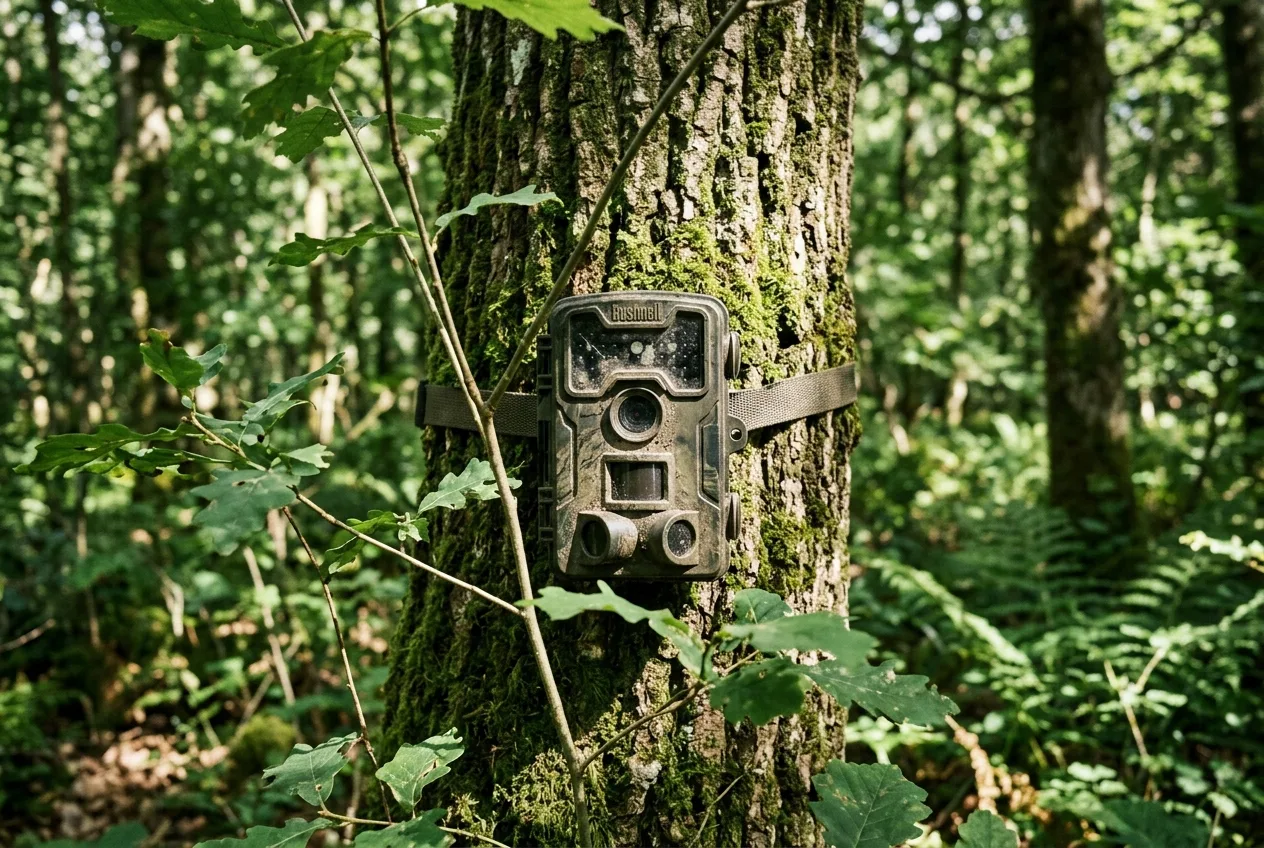
This is the big one. Leaves and tall grass are, in the words of one long-time trail-camera testing outfit, "the #1 culprits for producing false triggers and empty photos". The mechanism is simple once you stop thinking "is the leaf warm?" and start thinking "is the leaf a different temperature than what's behind it, and is it moving?" Sunlight dapples through a canopy, heating some patches and leaving others shaded; when wind blows a sun-warmed leaf across a cooler background, the sensor sees a moving thermal edge and fires. The authoritative WWF best-practices guide says it plainly: PIR sensors are "easily fooled by inanimate objects, such as the sun, dappled shade (which is moving), or vegetation that has been warmed in the sun and then blown by the wind".
How bad does it get? In one study of forest-canopy cameras, 98% or more of the pictures consisted only of moving vegetation. A peer-reviewed field study in a Spanish national park flatly noted that camera trapping "may generate a high amount of data without information... because of vegetation, the sun or dappled shade activating the cameras". And a smart-camera research team found 75% of their captured footage contained no animals, mostly "wind caused moving shadows, leaves, or grass within the frame". This isn't a fringe problem; it's the default outcome of a badly placed camera.
It's also why open, grassy habitat is so much worse than woodland. Beginner guides are blunt about it — aim the camera "at a clear area, free of waving vegetation, which will trigger it constantly". Researchers comparing sites found the same: in open grassland, "images triggered by heat or vegetation capture animals in the background of the frame at distances that would not otherwise trigger the camera," which both inflates empties and scatters the rare real animal off in the distance.
Moving shadows, clouds, and sun-baked surfaces
Even after you clear every branch, you can still get empties from shadows. When a cloud slides across the sun, the ground temperature can drop several degrees in seconds, and the PIR reads that rapid change as motion. The same logic explains why bare, heat-hungry backgrounds are trouble: dark soil, asphalt, sand, deep rock faces, and patches of dead grass soak up a lot of heat, so when branches cast shifting shadows across them, the sensor sees scorching ground alternating with cool shade — "temperature juggling" that looks exactly like a passing animal.
There's a counterintuitive flip side worth knowing. On a hot afternoon a rock can hit 100°F (38°C), which is very close to a deer's body temperature — so close that the contrast between animal and background nearly vanishes, and the same hot day that floods your card with vegetation triggers can also cause the camera to miss a real deer. Heat both over-triggers and under-detects, depending on what's moving.
A camera that won't hold still
Here's one beginners almost never suspect. If the camera itself moves, the whole background appears to move relative to the sensor — and that counts as "moving heat". The foundational sensor paper confirms it: "if a camera trap is mounted to something that moves, for example a pole that wobbles due to wind, false triggers can also occur". A practitioner who logs his empties to the file timestamp traced one ruined set to exactly this: a camera in a security box with a couple of millimeters of play, pivoting just enough in the wind to fire over and over until the card was full. The cover shot for that write-up was a beautiful beaver pond that should have caught a lynx — instead a flimsy mount filled a 64 GB card by May.
Water, rain, snow, and the occasional spider
Water is sneaky. Wind-blown ripples on a pond act like a rippling mirror for infrared, bouncing the sun's IR into the sensor and creating apparent moving heat — especially with the camera facing the sun across water. Rain and snow throw their own triggers: a USGS field trial logged blanks from "mud splashes during several heavy rain events," and in freezing, snowy conditions manufacturers specifically recommend dropping sensitivity to keep the card from filling.
And then there's the classic 3 a.m. mystery: hundreds of night photos of nothing. Check for cobwebs. A tiny spider spinning a web right across the lens is invisible by day, but at night its movement and body heat — magnified by being millimeters from the sensor — "can look like a massive heat source" and send the camera into a runaway state.
Vehicles and other oddities
If you're aiming at a driveway or gate hoping to catch traffic, you may be surprised to get nothing — the reverse problem. A closed engine compartment may not radiate much heat, and "often vehicles are simply too cold as a target for the trail camera to react," sometimes only firing when the vehicle is right on top of the camera. Same physics, opposite symptom: not enough thermal contrast to trip the sensor.
The animal that triggered — and left before the shutter fired
This last one isn't really a false trigger at all, but it lands in the same pile of empty photos, so it's worth separating out. Sometimes an animal genuinely did set off the sensor, but the camera was too slow and the photo caught only an empty trail.
The reason is a chain of steps that all have to succeed. Researchers break detection into a sequence: the animal has to pass through the zone, trigger the sensor, and then be registered — actually visible in the image. That third step depends on trigger speed, "the interval of time between PIR trigger and initiation of the camera," and "a slow trigger speed coupled with fast moving animals means that not all triggers lead to registration as the animal has passed through the field-of-view before the camera has been activated". The detection zone the sensor watches is often wider than the frame the lens captures, so an animal can trip the sensor at the edge and be gone by the time the shutter opens.
One useful nuance from a study that watched real animals with a control camera: the closer an animal entered the frame, the faster the camera fired. And there's a subtle point that complicates "just lower the sensitivity" advice — an Idaho study that physically checked which empties came from late triggers versus outright misses found that 82% of missed detections were failed triggers, not late ones. The camera never fired at all for animals it should have caught. Detection inside the zone is simply imperfect, even for big animals.
Heat both over-triggers and under-detects, depending on what's moving.
How to actually stop them
Here's where I'll be opinionated, because the sources back it up: placement beats settings. You can fiddle with menus all day, but if the camera is bolted to a sapling aimed west into a field of tall grass, no sensitivity setting will save you. Work down this list roughly in order.
| Fix | What to do | Why it works |
|---|---|---|
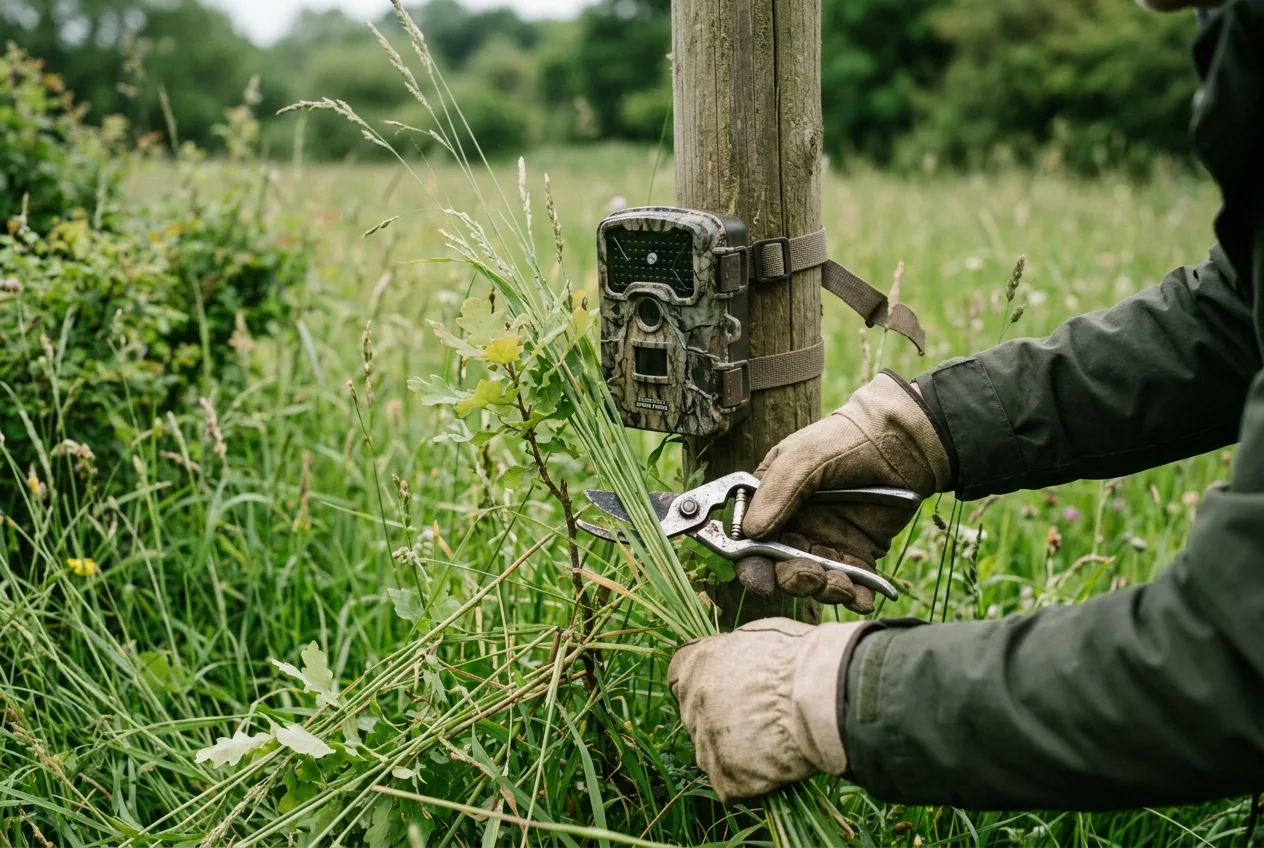
| Clear the detection zone | Cut tall grass and trim branches within the fan in front of the lens; keeping grass under about 30 cm is a good target. | Removes the moving sun-warmed vegetation that causes most empties. |
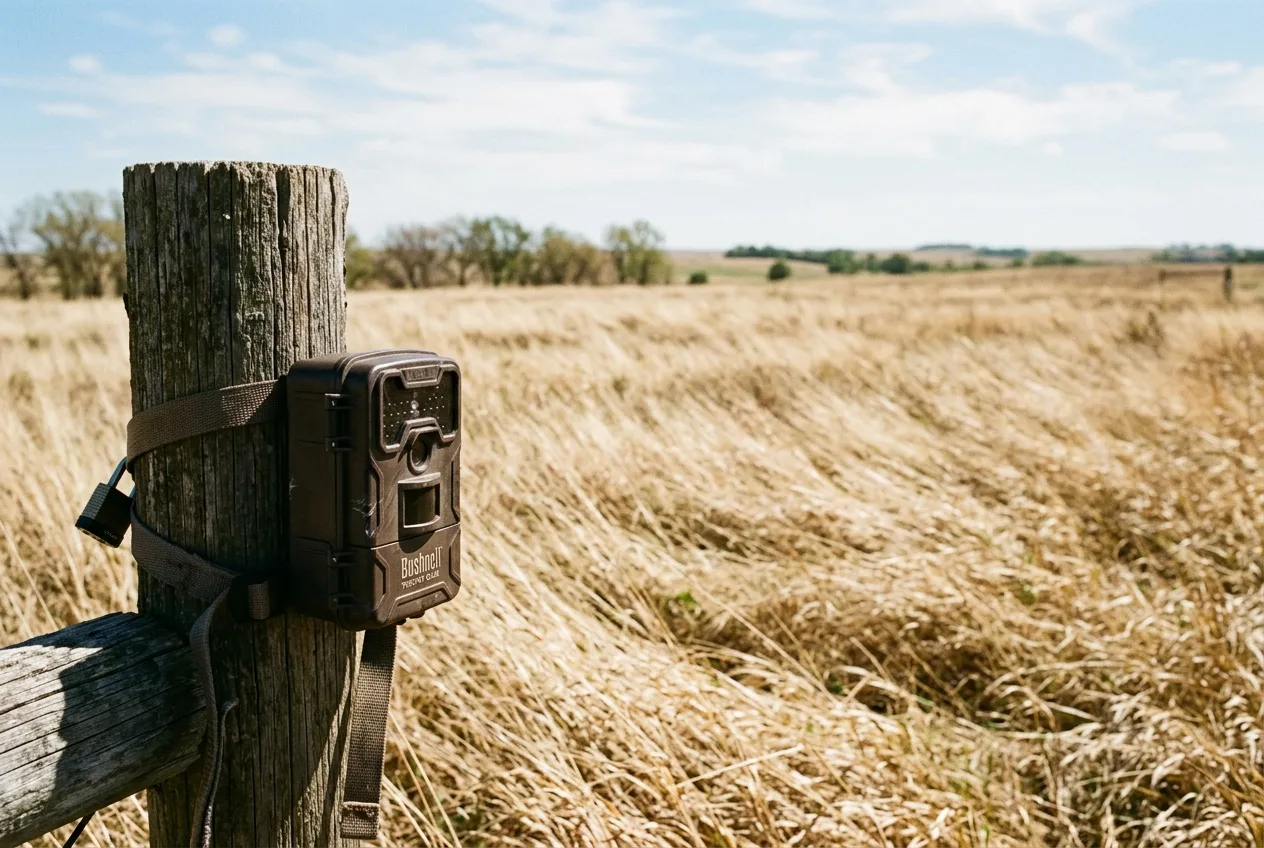
| Mount to something solid | Anchor to a large, sturdy tree; eliminate play inside security boxes with a cable lock or a scrap of foam. | A wobbling camera reads the whole background as "moving heat". |
| Aim away from the sun | In the Northern Hemisphere, face north; in the Southern Hemisphere, face south. | Sun hitting the sensor causes rapid temperature spikes and runaway triggering; it also overexposes your shots. |
| Don't point at open sky or hot, bare ground | Keep the horizon roughly centered; avoid framing big patches of rock, sand, or dead grass. | Open sky and heat-soaking surfaces create the strongest false thermal signals. |
| Tune sensitivity to the conditions | Lower it in windy/open spots; in winter and snow use "low"; raise it on very hot days or for small/fast animals. | Sensitivity is the false-trigger-vs-missed-animal dial — see below. |
| Use a trigger interval / recovery delay | Set a minimum gap between shots so a windy spell can't bank thousands of frames. | Caps the damage to battery and card even when triggers happen. |
| Angle the camera ~45° to the trail | Set it across the path, not straight down it. | Animals cross more detection zones and stay in frame longer, beating the late-trigger empty. |
A few of these deserve a word more.
On clearing vegetation: it's the single most repeated piece of advice in every guide — "clear any vegetation from in front of the PIR sensor, as this can cause unwanted false triggers," and don't point that sensor at the sun while you're at it. It's tedious and it doesn't last, though. Carry clippers and a small saw, but know that a spot you prune in early spring will be overgrown after the next growth spurt — so either pick spots with no signs of fast growth, or plan to come back and freshen the set. A research network that synthesized the literature found exactly this in the field: cameras showed "higher frequencies of false triggers most likely due to direct sunlight and higher wind. After leaf removal directly around the camera site, however, false triggers dropped quite a bit".
On sensitivity — the honest trade-off. This is the setting everyone reaches for first, and it's real, but it cuts both ways. Turn sensitivity down and you'll get fewer empties; turn it down too far and the camera starts missing actual wildlife. A university extension guide frames the sweet spot well: "Lowering the sensitivity can reduce unwanted photos of swaying plants without much of a loss in the ability of the camera trap to detect and photograph medium and large wildlife species". The catch is small animals — a mouse or small bird throws a faint heat signature and may need high sensitivity to register at all. There's no universal correct setting; manufacturers are upfront that it depends on temperature, season, and what you're after, and the only reliable method is to test it in the actual spot. Before you walk away from any set, wave your hand in front of the camera and confirm it fires — the simplest field check there is.
On timing. Most false triggers cluster in the middle of the day, when the sun has heated some surfaces and not others and the wind is up — one practitioner's data showed them concentrated between roughly 9 a.m. and 5 p.m., while almost all the real animal photos came earlier or later. If your camera supports operating hours and your target species isn't active midday, blanking out the worst window can dramatically cut the clutter — though you'll occasionally miss a rare daytime visitor, so use it judiciously.
Firmware matters too, but lightly here: keep yours updated, since the detection logic and sensitivity behavior live in software, and a better camera simply has a better sensor circuit — cheap cameras have poor detection circuits, and it shows.
Placement beats settings.
The real cost — and the thing that finally fixes review
It's tempting to treat empties as a minor annoyance. They're not. Across nine deployments at deer-carcass sites in the Scottish mountains, false-positive rates ran from 36% all the way to 99%, and one camera recorded 2,459 images with just 3 true positives. Those empties, the researchers wrote, "imposed a substantial drain on resources, in terms of battery power, on-board storage capacity... and time needed for image processing". A separate study lost several cameras outright to "persistent false triggering, which resulted in full memory cards within several days". False triggers don't just waste your afternoon — they can end a deployment before the animal you wanted ever walks by.
And the review burden is brutal at any scale. The flagship Snapshot Serengeti project pulled in 1.2 million photo sets; only about 322,653 held animals — "the remainder were misfires that had been triggered by heat or vegetation". That's roughly three out of every four photos: nothing.
So: chase down the empties at the source with good placement and sensible settings, and let software mop up whatever slips through. That combination is what turns a card full of grass back into a usable scouting tool.
Frequently asked questions
Why does my trail camera take pictures of nothing?
Because it detects a moving difference in surface temperature, not animals — and sun-warmed vegetation blowing in the wind, sliding cloud shadows, heat coming off bare rock or soil, and even a camera wobbling on its mount all create that signal without an animal present.
Is a false trigger the same as a blank or black photo?
No. A false trigger is a normal, well-exposed photo that just happens to have no animal in it — the camera worked correctly. Blank, black, or washed-out images where you can't make out a scene point to a different issue (night-flash, exposure, or a hardware fault), not the PIR firing at the wind.
Does lowering the sensitivity stop false triggers?
It helps, but it's a trade-off, not a cure. Lower sensitivity cuts empties from swaying plants with little loss for medium and large animals — but go too low and you'll start missing real wildlife, especially small or fast species that throw a weak heat signature. Test it in the actual location.
Which way should I face my trail camera to avoid false triggers?
Aim it away from the sun's daily path: north in the Northern Hemisphere, south in the Southern Hemisphere. Letting direct sun hit the sensor causes rapid temperature spikes and runaway triggering (and overexposed photos). Also avoid pointing at open sky or large patches of sun-baked rock or sand.
Why does my camera trigger but the animal isn't in the photo?
That's usually a late trigger, not a false one: the animal tripped the sensor but moved out of the frame before the shutter fired, because the detection zone is often wider than the photo and the camera's trigger speed isn't instant. Angling the camera about 45° across the trail keeps animals in view longer and helps.
Can AI really filter out the empty photos?
Yes — that's one of the most mature uses of AI in this space. Tools built for camera traps separate empty frames from animal frames at well over 99% accuracy in testing, and widely used detectors exist specifically to clear the blanks so you only review photos with something in them.